Welcome, ecology enthusiasts! If you’re currently navigating the fascinating, yet sometimes challenging, terrain of ecological principles, you’ve likely encountered a “Principles of Ecology Worksheet.” These worksheets are designed to solidify your understanding of key concepts like biomes, ecosystems, population dynamics, and the intricate relationships between organisms and their environment. Successfully completing these worksheets requires a firm grasp of these principles, and that’s where this post comes in. We’re going to walk you through common areas covered in these worksheets and provide a resource to check your answers against. Remember, the goal isn’t just to get the right answers, but to understand the “why” behind them. Ecology is all about interconnectedness, and a deep understanding of these fundamental principles will serve you well as you continue your studies.
The beauty of ecology lies in its real-world application. Understanding ecological principles allows us to address pressing environmental issues, such as climate change, biodiversity loss, and pollution. By mastering these foundational concepts, you’ll be better equipped to critically analyze environmental problems and contribute to developing sustainable solutions. Before diving into the answers, remember to always attempt the worksheet independently first. Use the provided answers as a tool to check your work, identify areas where you might need further review, and deepen your understanding. Let’s get started!
Principles of Ecology Worksheet Answers – A Guide
Below is a compilation of typical answers to common questions found in Principles of Ecology Worksheets. Keep in mind that your specific worksheet may vary, so use these answers as a guide and ensure they align with the specific content you are studying. Remember to consult your textbook and class notes for more specific information related to your curriculum.
Common Worksheet Topics & Answers
-
Defining Ecology:
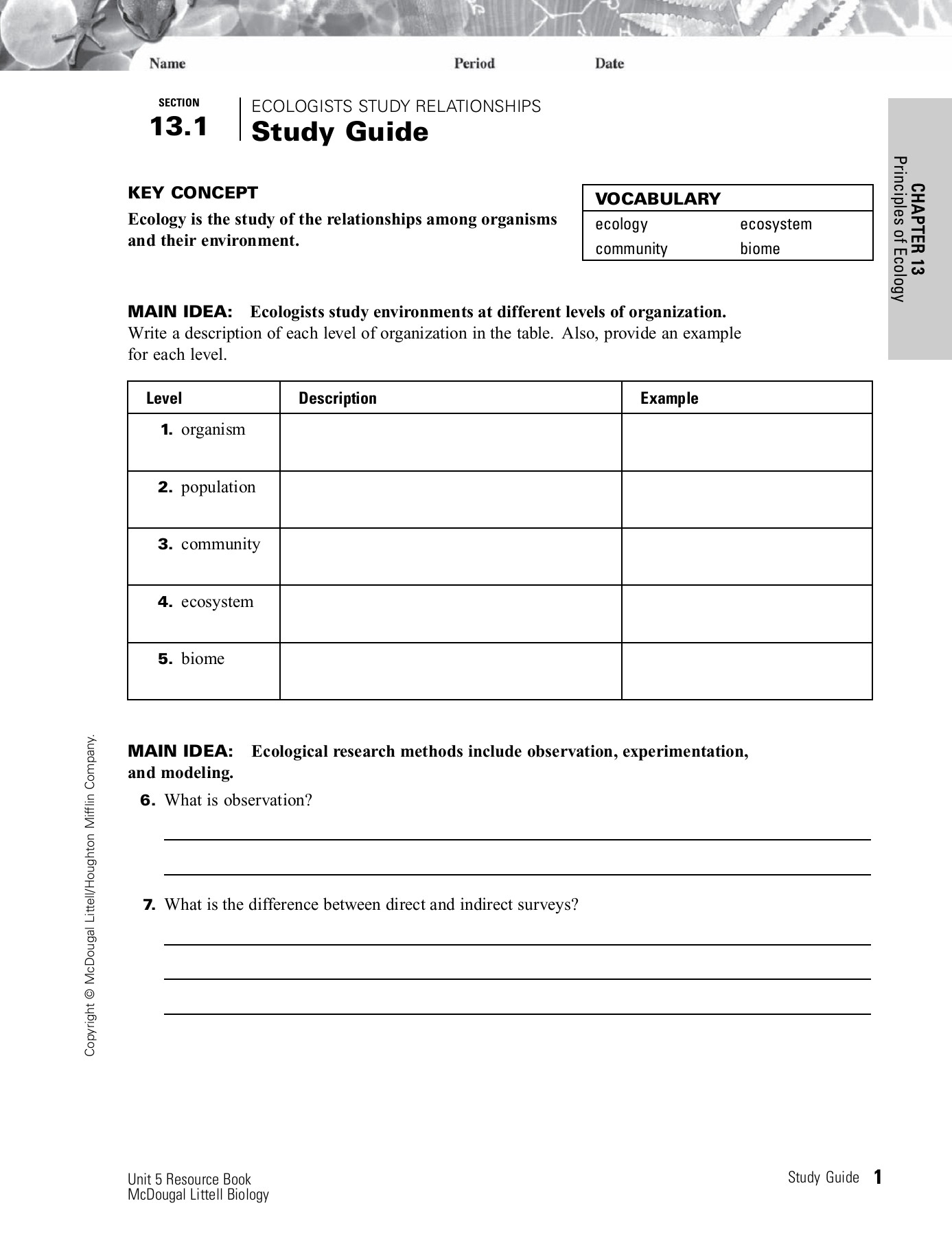
Ecology is the scientific study of the interactions between organisms and their environment. This includes both the biotic (living) components, such as plants, animals, and microorganisms, and the abiotic (non-living) components, such as temperature, water, and sunlight.
-
Levels of Organization in Ecology:
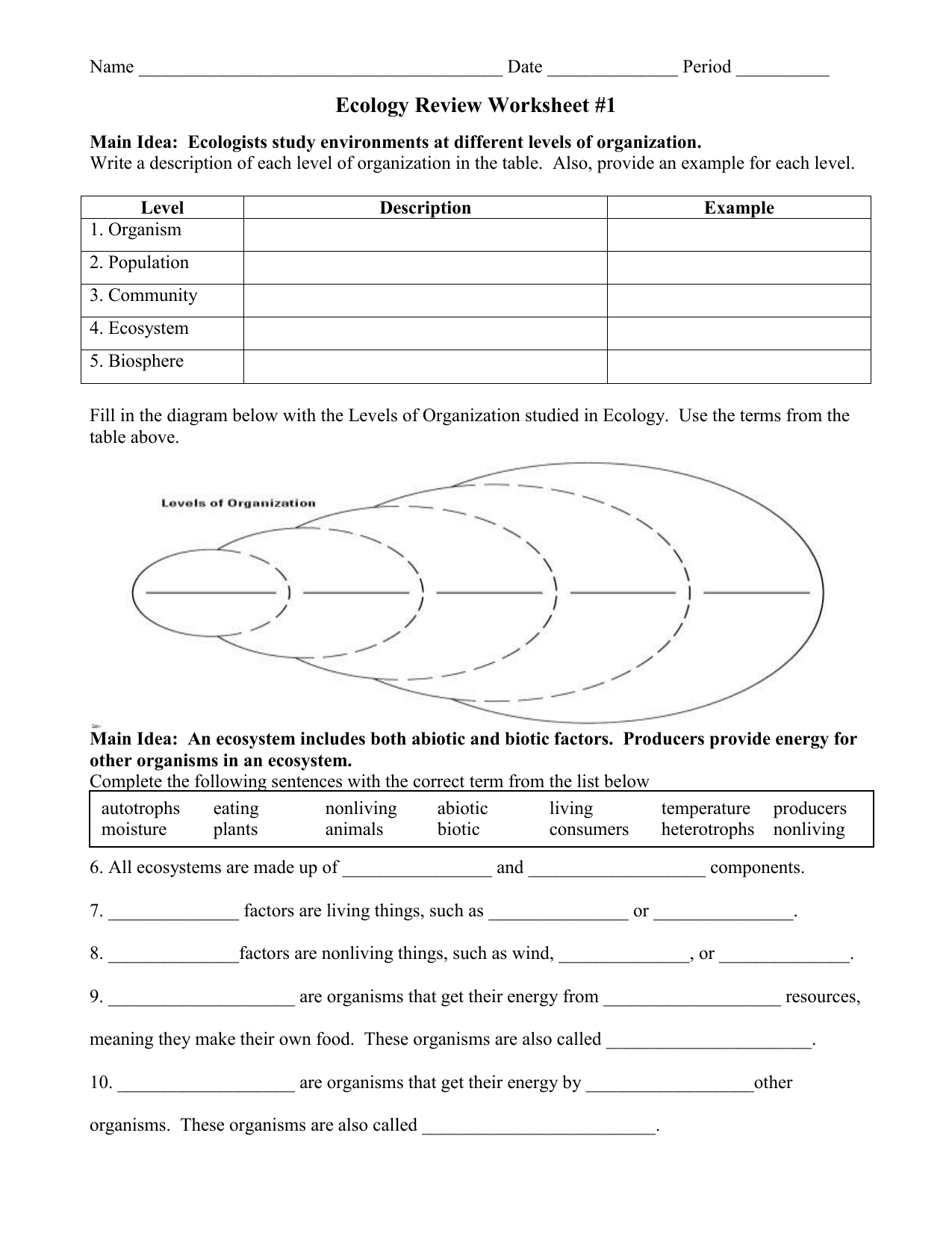
The hierarchical levels of organization in ecology are (from smallest to largest):
- Individual
- Population
- Community
- Ecosystem
- Biome
- Biosphere
-
Biomes:
Examples of different biomes include: Tundra, Taiga (Boreal Forest), Temperate Deciduous Forest, Grassland, Desert, Tropical Rainforest. Factors that determine biome distribution include temperature, precipitation, and latitude.
-
Ecosystem Components:
Ecosystems are composed of biotic (living) and abiotic (non-living) factors. Examples of biotic factors are producers (plants), consumers (animals), and decomposers (bacteria and fungi). Examples of abiotic factors are sunlight, water, temperature, and soil composition.
-
Energy Flow in Ecosystems:
Energy flows through ecosystems in a one-way direction, starting with producers (autotrophs) capturing energy from the sun through photosynthesis. This energy is then transferred to consumers (heterotrophs) through feeding relationships. Approximately 10% of the energy is transferred from one trophic level to the next, with the rest being lost as heat.
-
Food Chains and Food Webs:
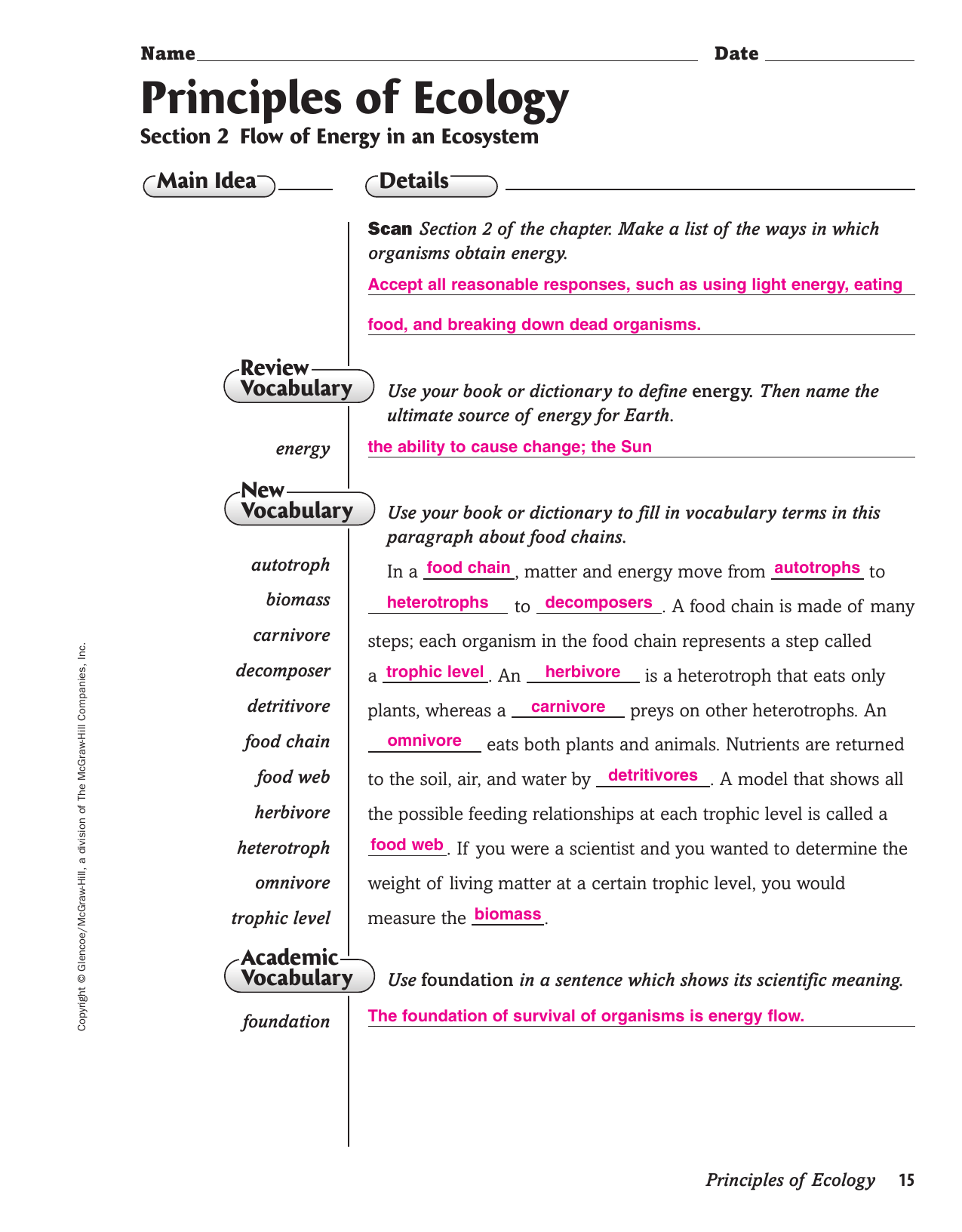
A food chain is a linear sequence of organisms through which nutrients and energy pass as one organism eats another. A food web is a more complex and interconnected network of feeding relationships in an ecosystem. Food webs are more realistic representations of energy flow than food chains because they account for the fact that organisms often consume and are consumed by multiple species.
-
Trophic Levels:
Trophic levels describe the position of an organism in a food chain or food web. Examples include:
- Producers (autotrophs)
- Primary Consumers (herbivores)
- Secondary Consumers (carnivores or omnivores that eat herbivores)
- Tertiary Consumers (carnivores that eat other carnivores)
- Decomposers (break down dead organic matter)
-
Ecological Pyramids:
Ecological pyramids represent the relative amounts of energy, biomass, or numbers of organisms at each trophic level in an ecosystem. The base of the pyramid (producers) is the largest, and each successive level decreases in size.
-
Biogeochemical Cycles:
Biogeochemical cycles involve the movement of nutrients (e.g., carbon, nitrogen, phosphorus, water) through biotic and abiotic components of ecosystems. These cycles are essential for maintaining life on Earth. For example, the carbon cycle involves photosynthesis, respiration, decomposition, and combustion.
-
Population Dynamics:
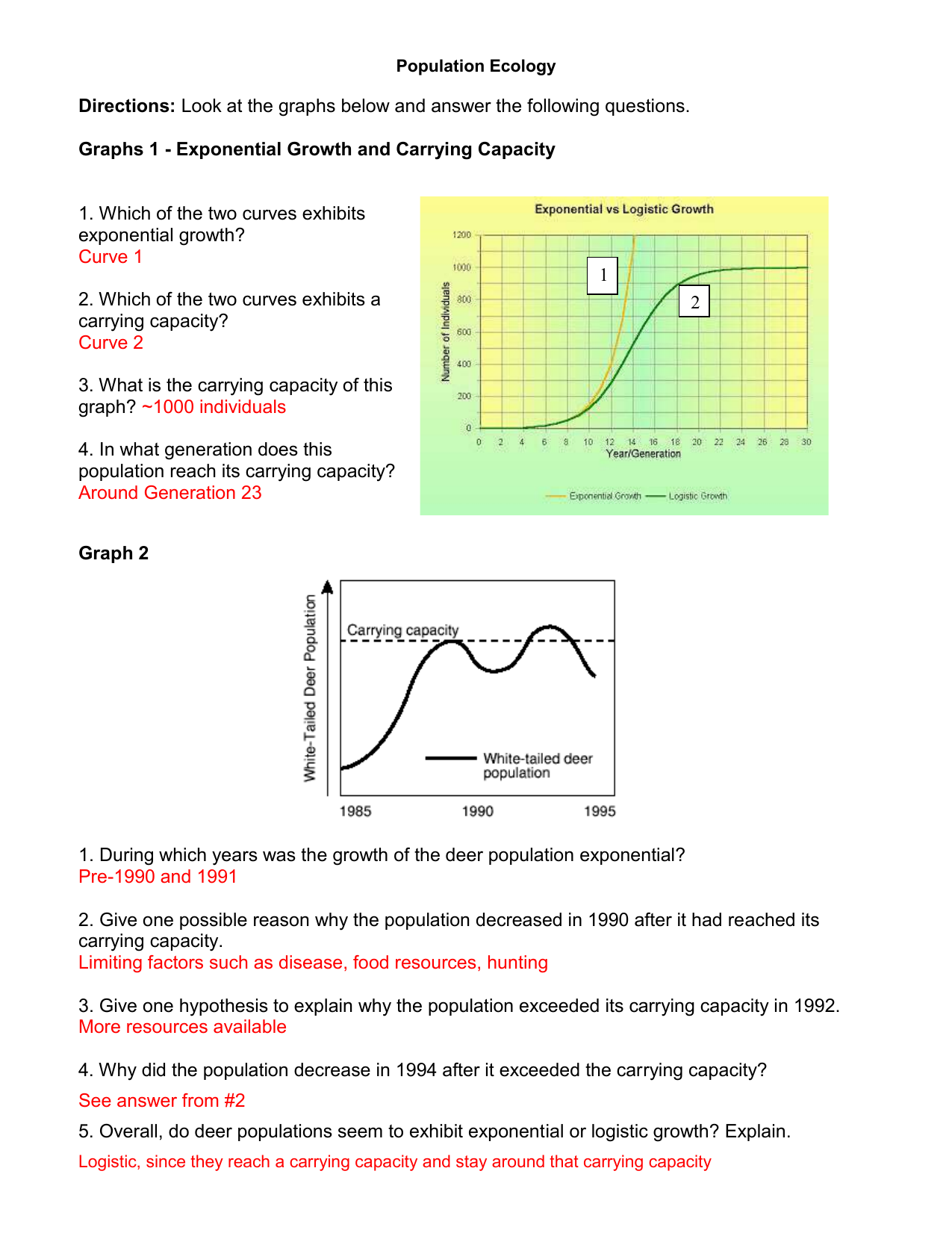
Population dynamics describe how populations change in size and composition over time. Factors that affect population size include birth rate, death rate, immigration, and emigration. Carrying capacity is the maximum population size that an environment can sustainably support.
-
Community Interactions:
Different types of community interactions include competition, predation, parasitism, mutualism, and commensalism. These interactions can have significant effects on population sizes and community structure. For example, competition can limit population growth, while mutualism can benefit both species involved.
-
Succession:
Ecological succession is the gradual process of change in species composition and community structure over time. Primary succession occurs in areas where there is no existing soil (e.g., after a volcanic eruption), while secondary succession occurs in areas where soil is present (e.g., after a forest fire).
-
Limiting Factors:
Limiting factors are environmental conditions that restrict the growth, abundance, or distribution of a population or species in an ecosystem. These factors can be biotic, such as competition for resources, or abiotic, such as temperature or water availability. Liebig’s Law of the Minimum states that growth is limited by the nutrient that is most scarce relative to need.
Remember, these are just examples, and your specific worksheet may cover different aspects of ecological principles. Always refer to your textbook, class notes, and instructor for specific guidance. By thoroughly understanding these fundamental concepts and practicing with worksheets, you’ll be well on your way to mastering the principles of ecology!
If you are searching about Principles Of Ecology Worksheet – prntbl.concejomunicipaldechinu.gov.co you’ve visit to the right web. We have 20 Pics about Principles Of Ecology Worksheet – prntbl.concejomunicipaldechinu.gov.co like SOLUTION: Ecology review worksheet 2 – Studypool – Worksheets Library, Population Ecology Graphs Worksheet Answers – E-streetlight.com and also Population Ecology Graphs Worksheet Answers – E-streetlight.com. Here you go:
Principles Of Ecology Worksheet – Prntbl.concejomunicipaldechinu.gov.co
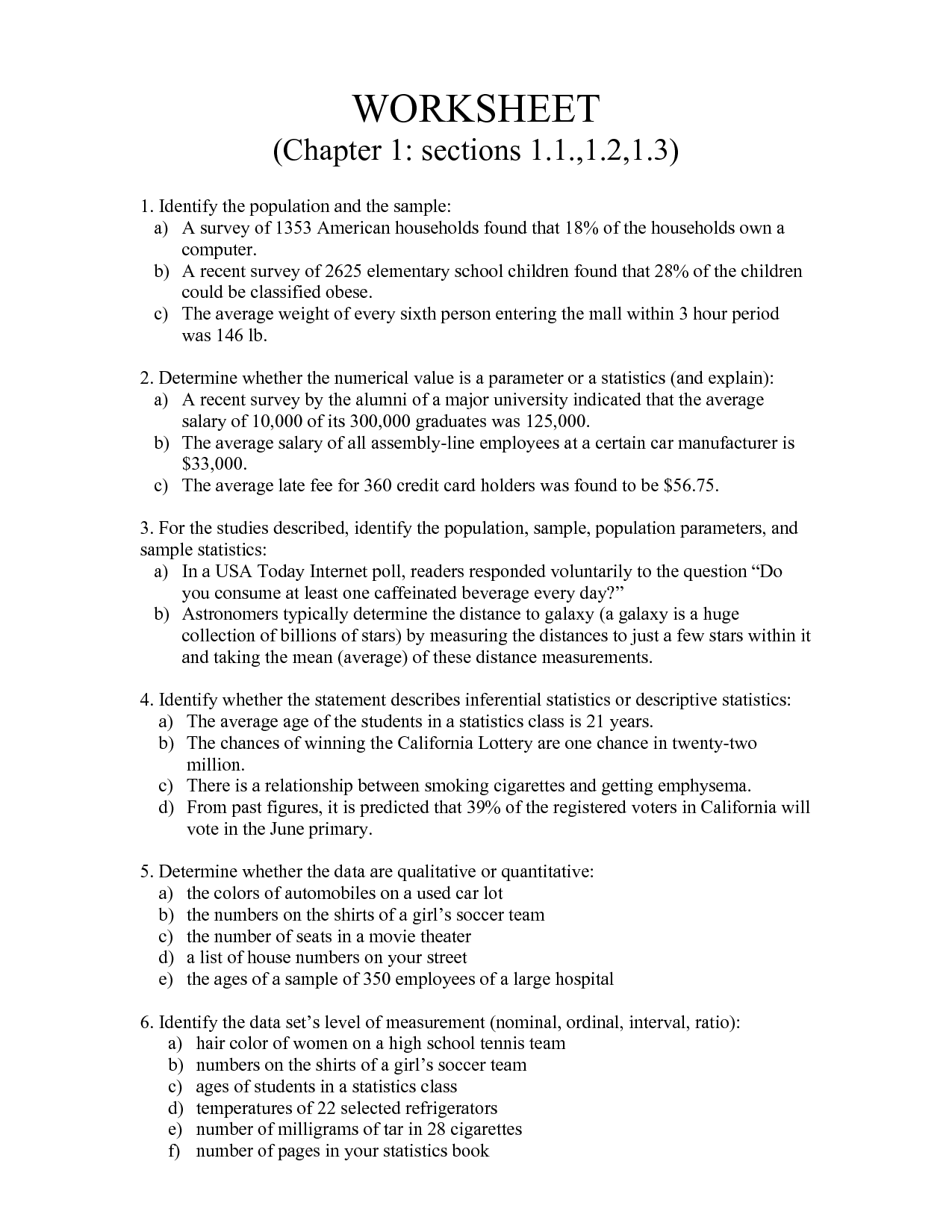
prntbl.concejomunicipaldechinu.gov.co
Principles Of Ecology Worksheet – Prntbl.concejomunicipaldechinu.gov.co
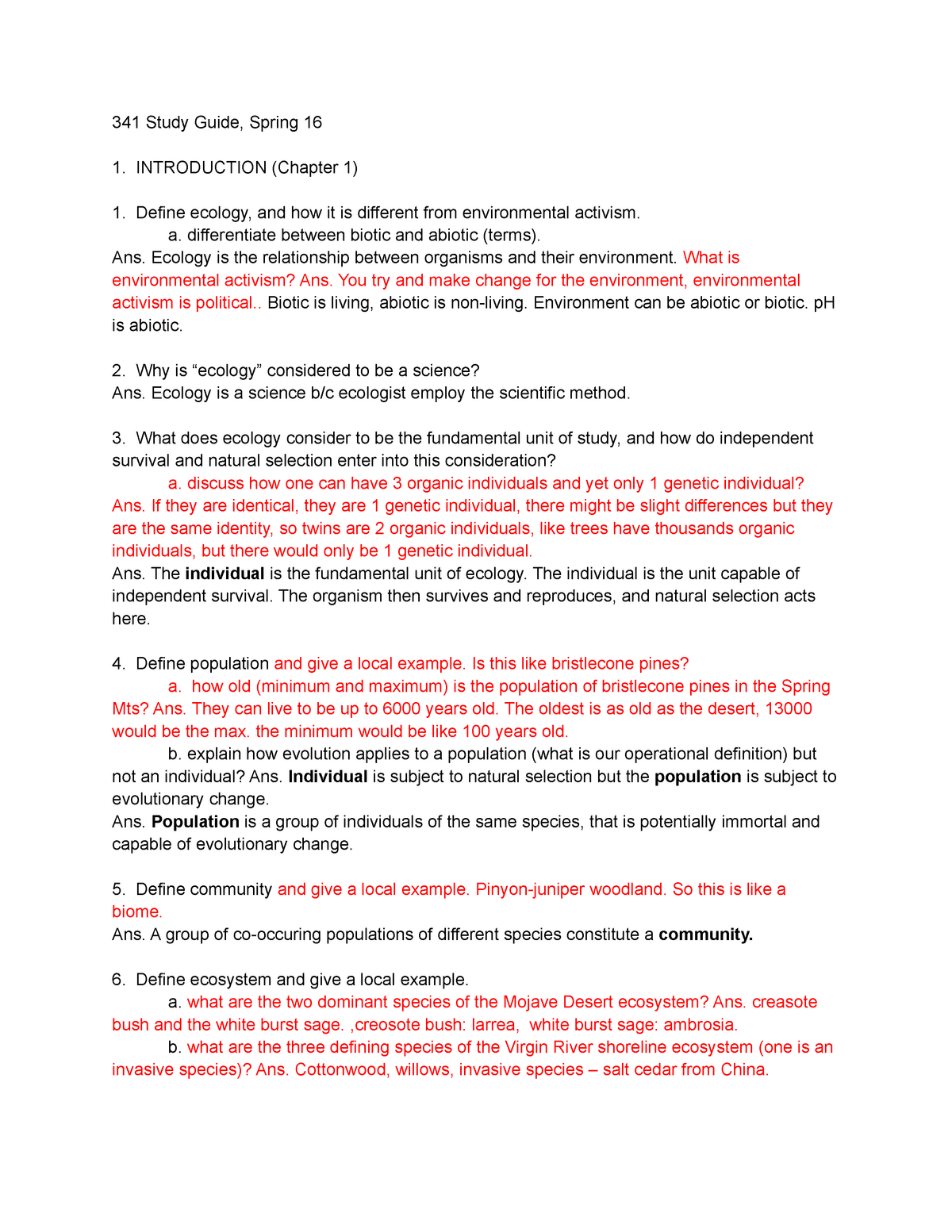
prntbl.concejomunicipaldechinu.gov.co
Principles Of Ecology Worksheet – Printable Word Searches

davida.davivienda.com
Population Ecology Graph Worksheet – Ame.my.id
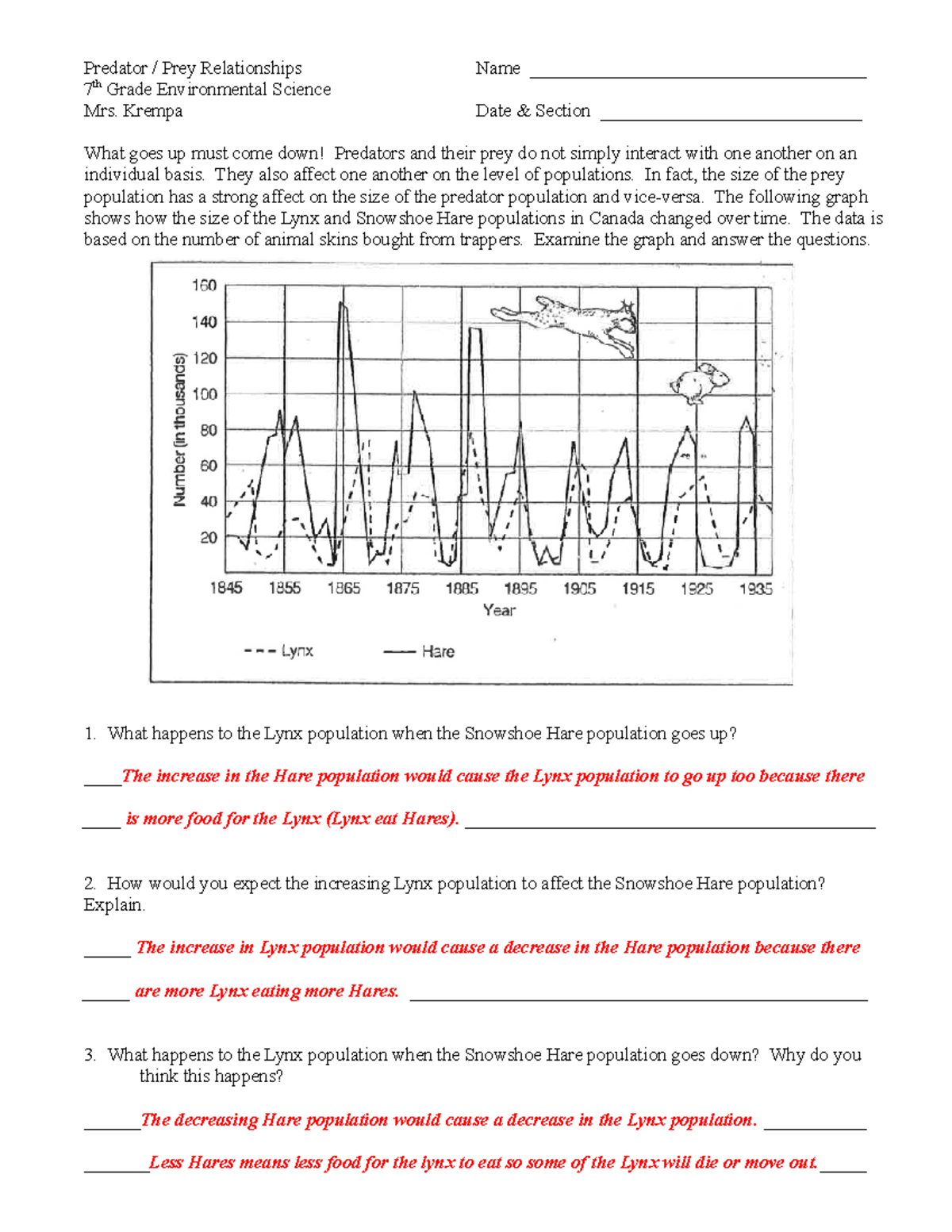
ame.my.id
Population Ecology Graphs Worksheet Answers – E-streetlight.com
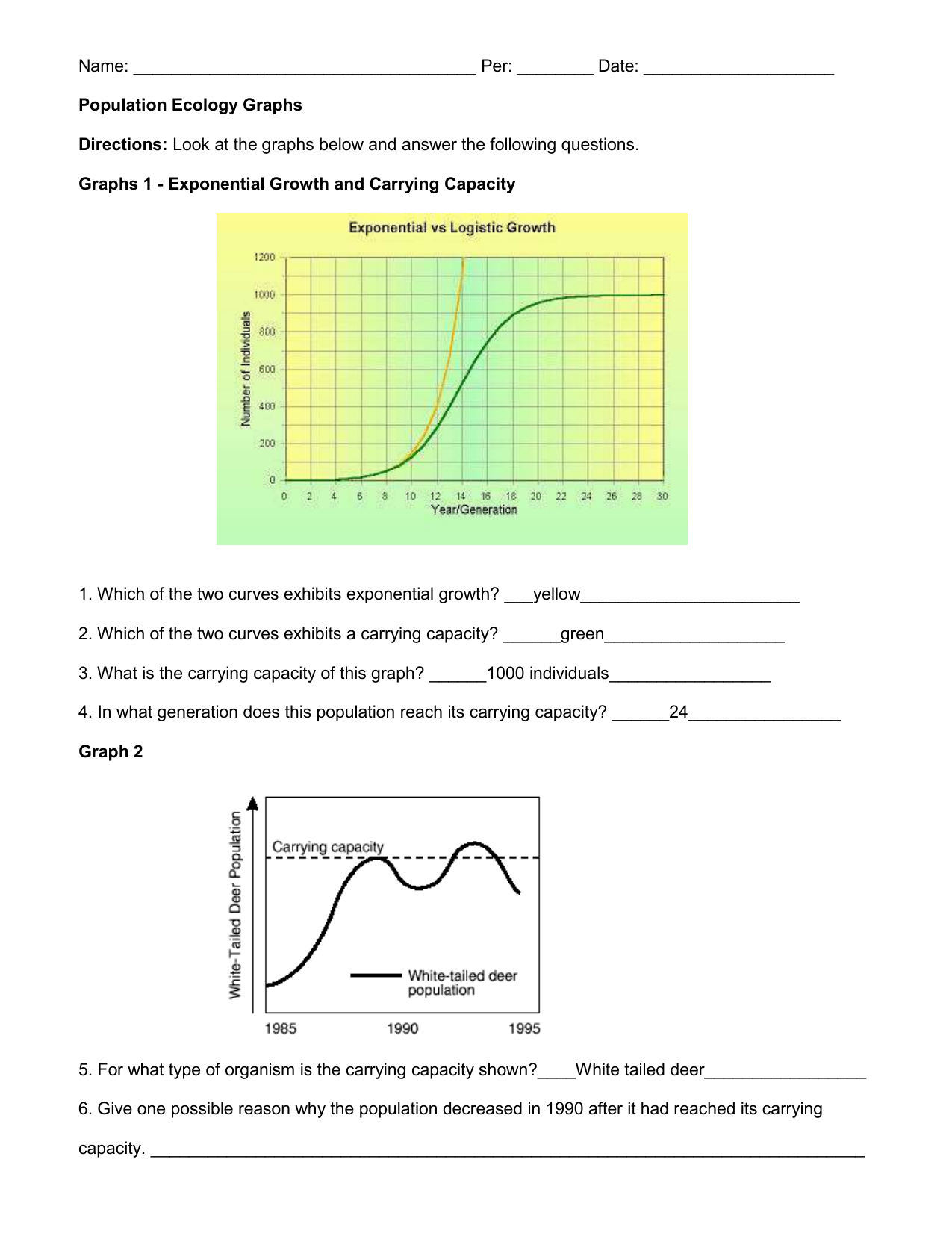
www.e-streetlight.com
Section 18 1 Introduction To Ecology Worksheet Answers ~ Free Math Problems
evolutionworksheetanswers.blogspot.com
Population Ecology Graphs Worksheet Answers – E-streetlight.com
www.e-streetlight.com
Ecology Review Worksheet 1 — Db-excel.com
db-excel.com
Page 4 – Custom Printable Animal Worksheet Templates | Canva

worksheets.clipart-library.com
Free Leaves Worksheet Answers, Download Free Leaves Worksheet Answers

worksheets.clipart-library.com
Ecological Relationships Worksheet Answers – E-streetlight.com
www.e-streetlight.com
Free Mutations Worksheet Answers Biology, Download Free Mutations

worksheets.clipart-library.com
SOLUTION: Ecology Review Worksheet 2 – Studypool – Worksheets Library

worksheets.clipart-library.com
SOLUTION: Lower Secondary Science 8 Worksheet Answers – Cambridge

worksheets.clipart-library.com
The Science Of Ecology Worksheet Answers – Scienceworksheets.net
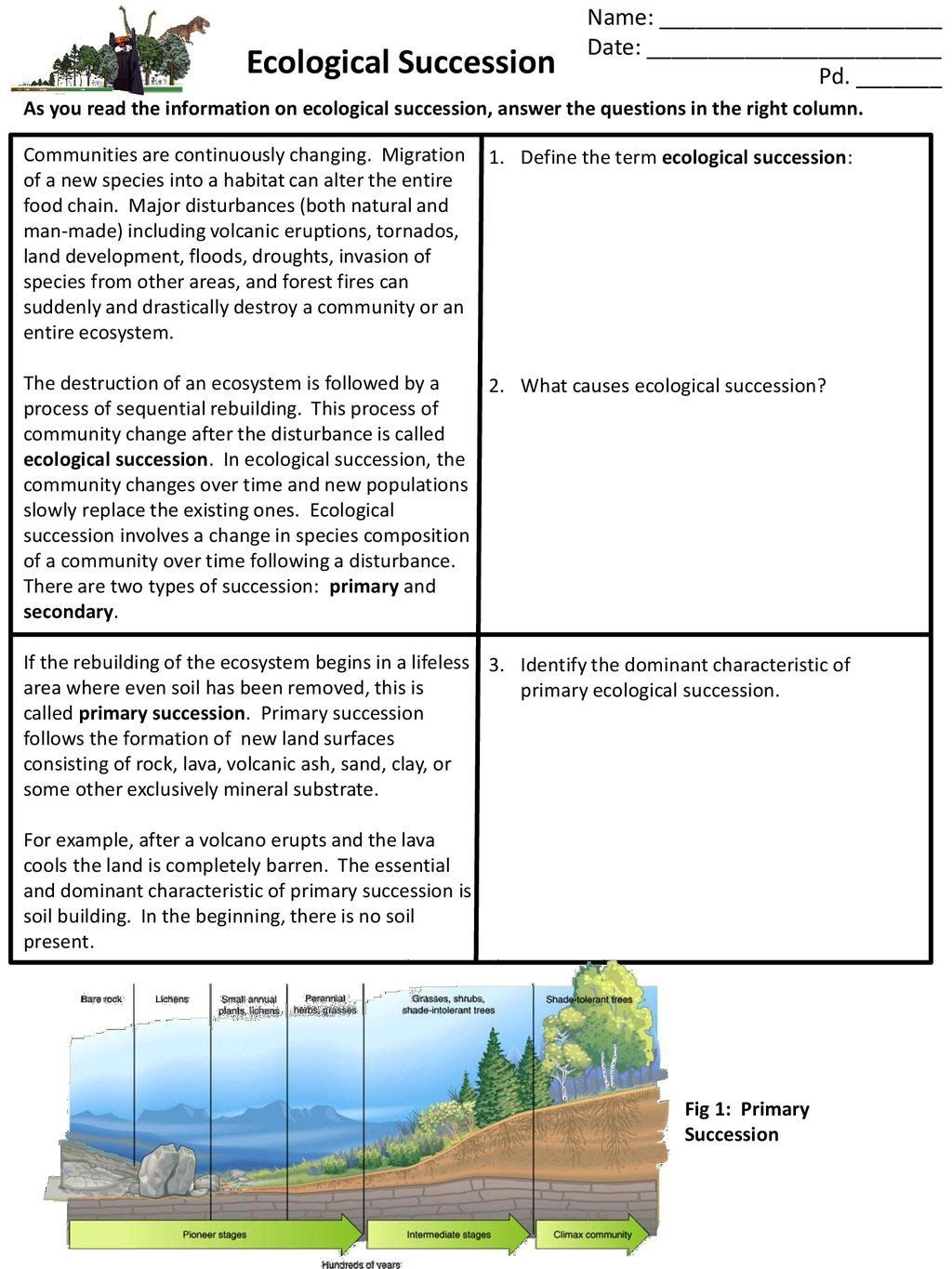
www.scienceworksheets.net
Levels Of Ecological Organization Worksheets – Free Printable

worksheets.clipart-library.com
Principles Of Ecology Worksheet Answers

learningschoolpistadasso.z22.web.core.windows.net
SOLUTION: Ecology Review Worksheet 2 – Studypool – Worksheets Library

worksheets.clipart-library.com
Biogeochemical Cycles – Studocu – Worksheets Library

worksheets.clipart-library.com
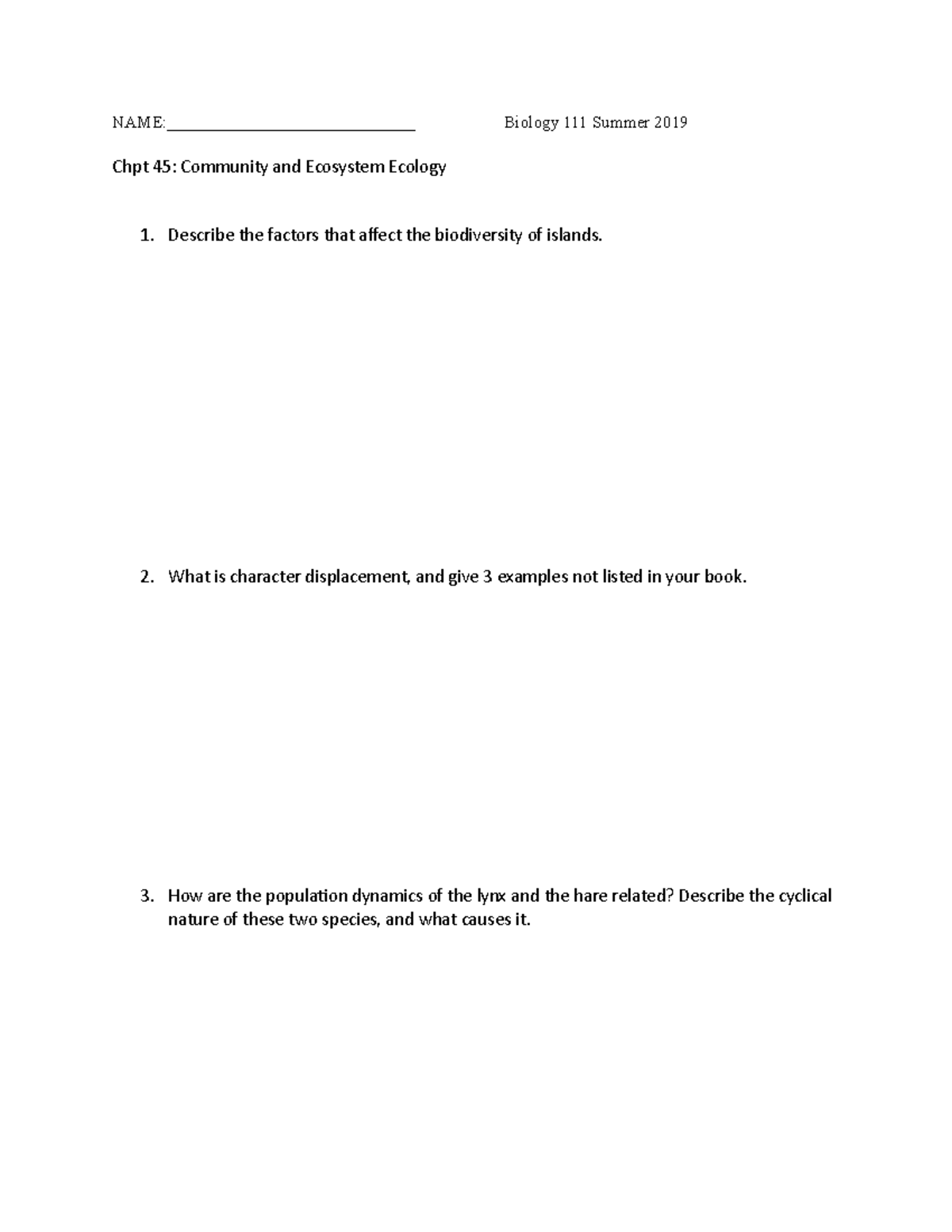
Community Ecosystem Ecology Worksheet – Biology Summer 2019 Chpt 45
www.studocu.com
Levels of ecological organization worksheets. principles of ecology worksheet answers. Solution: lower secondary science 8 worksheet answers