Dive into the fascinating world of chemistry with a fundamental concept: chemical bonds! Understanding how atoms interact and form molecules is crucial for grasping the properties of matter around us. Today, we’re focusing specifically on **ionic bonds**, a type of chemical bond characterized by the transfer of electrons between atoms. This worksheet is designed to solidify your understanding of ionic bonds, their formation, characteristics, and the resulting compounds.
Ionic bonds are responsible for the formation of many everyday substances, including table salt (sodium chloride). They arise when atoms with vastly different electronegativities (a measure of an atom’s ability to attract electrons) interact. One atom, typically a metal, readily *loses* one or more electrons to become a positively charged ion (cation). The other atom, typically a nonmetal, readily *gains* those electrons to become a negatively charged ion (anion). The electrostatic attraction between these oppositely charged ions is what holds the ionic bond together, forming an ionic compound.
This worksheet will test your knowledge on several key aspects of ionic bonds. You’ll be asked to:
* **Identify elements that are likely to form ionic bonds:** Recognize elements that are prone to losing or gaining electrons based on their position in the periodic table. Remember the tendencies of alkali metals, alkaline earth metals, halogens, and chalcogens.
* **Draw Lewis dot structures for ions and ionic compounds:** Visualizing the electron transfer process and the resulting ionic structure is essential.
* **Predict the chemical formulas of ionic compounds:** Use the charges of the ions to determine the correct ratio of cations and anions needed to achieve electrical neutrality. This involves understanding how to balance charges.
* **Understand the properties of ionic compounds:** Relate the strong electrostatic forces in ionic bonds to properties such as high melting points, boiling points, and brittleness. Also, consider their conductivity in the molten state or when dissolved in water.
* **Differentiate between ionic and covalent bonds:** Distinguish ionic bonds from another major type of chemical bond, covalent bonds, where electrons are shared rather than transferred.
* **Name ionic compounds using IUPAC nomenclature rules:** Correctly name ionic compounds using the established naming conventions.
Completing this worksheet will provide you with a solid foundation in ionic bonding and its implications. It’s a stepping stone to understanding more complex chemical structures and reactions. So, grab a pencil, sharpen your mind, and let’s get started!
Chemical Bonds: Ionic Bonds Worksheet – Answer Key
Below you will find a possible answer key for a typical ionic bonds worksheet. Your specific worksheet may have slightly different questions, but this will provide a good guide for understanding the concepts.
Sample Questions & Answers:
- What is an ionic bond?
An ionic bond is a type of chemical bond formed through the electrostatic attraction between oppositely charged ions (cations and anions). It results from the transfer of electrons from one atom to another, typically between a metal and a nonmetal.
- Give an example of an ionic compound and explain how it forms.
Sodium chloride (NaCl), or table salt, is a classic example. Sodium (Na) readily loses one electron to become a Na+ cation. Chlorine (Cl) readily gains one electron to become a Cl– anion. The strong electrostatic attraction between Na+ and Cl– ions forms the ionic bond.
- Draw the Lewis dot structure for magnesium oxide (MgO).
*Note: Formatting Lewis structures precisely in HTML is difficult. This description outlines the expected structure.*
Mg (Magnesium) loses 2 electrons and becomes Mg2+. No dots are shown around Mg2+. Oxygen (O) gains 2 electrons and becomes O2-. Eight dots (representing a full octet) are shown around O2-, enclosed in brackets with a 2- charge outside the brackets. The structures are placed near each other, representing the ionic bond.
- Predict the chemical formula for the ionic compound formed between potassium and sulfur.
Potassium (K) forms a +1 ion (K+). Sulfur (S) forms a -2 ion (S2-). To balance the charges, we need two potassium ions for every sulfur ion. Therefore, the chemical formula is K2S.
- What are some properties of ionic compounds?
Ionic compounds generally have high melting and boiling points due to the strong electrostatic forces between ions. They are often brittle and tend to shatter when struck. They are poor conductors of electricity in the solid state, but conduct electricity when molten or dissolved in water (because the ions become mobile).
- How does an ionic bond differ from a covalent bond?
In an ionic bond, electrons are transferred between atoms, resulting in the formation of ions and electrostatic attraction. In a covalent bond, electrons are shared between atoms.
- Name the following ionic compounds:
- MgCl2: Magnesium chloride
- Al2O3: Aluminum oxide
- KNO3: Potassium nitrate
- Write the chemical formula for the following ionic compounds:
- Calcium bromide: CaBr2
- Iron(III) oxide: Fe2O3
- Ammonium sulfate: (NH4)2SO4
- Which of the following pairs of elements would most likely form an ionic bond: Na and Cl, or C and H? Explain your answer.
Na and Cl are most likely to form an ionic bond. Sodium (Na) is a metal that readily loses an electron to become a positive ion, and chlorine (Cl) is a nonmetal that readily gains an electron to become a negative ion. The large difference in electronegativity between sodium and chlorine favors the transfer of electrons. Carbon (C) and hydrogen (H) have similar electronegativities, so they tend to share electrons, forming a covalent bond instead.
- Why do ionic compounds conduct electricity when dissolved in water?
When ionic compounds dissolve in water, they dissociate into their constituent ions (cations and anions). These ions are free to move throughout the solution. When an electric potential is applied, these mobile ions can carry an electric charge, thus conducting electricity.
If you are searching about AI Approach Optimizes Synthesis of Important Chemical Compounds you’ve came to the right place. We have 20 Pics about AI Approach Optimizes Synthesis of Important Chemical Compounds like Expert Advice for Managing Chemical Hazard | Train and Develop, What Is a Chemical? (and What Isn't One) and also chemicals. Read more:
AI Approach Optimizes Synthesis Of Important Chemical Compounds

www.technologynetworks.com
Aligned Chemical Danger Pictograms – Oxidizing — Stock Photo
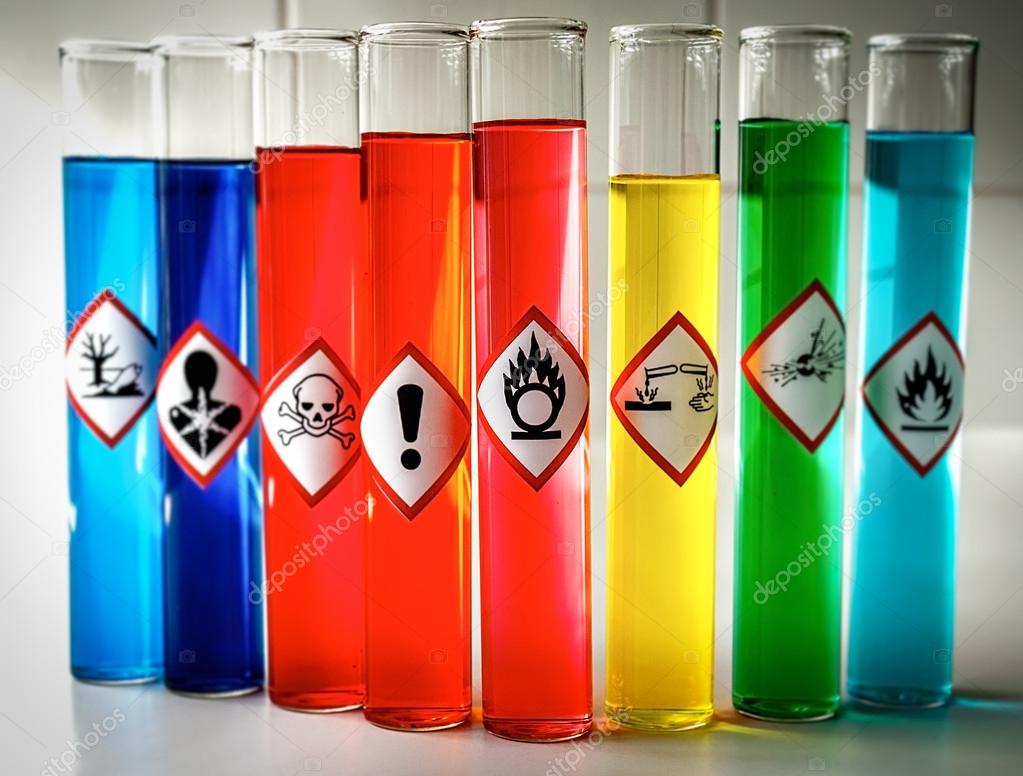
depositphotos.com
Chemical Solution Images

ar.inspiredpencil.com
The Effects Of Time, Temperature, And Concentration In Chemical Reactions
medium.com
Chemistry Pictures Images

ar.inspiredpencil.com
Types Of Chemical Hazards And How To Manage Them Images
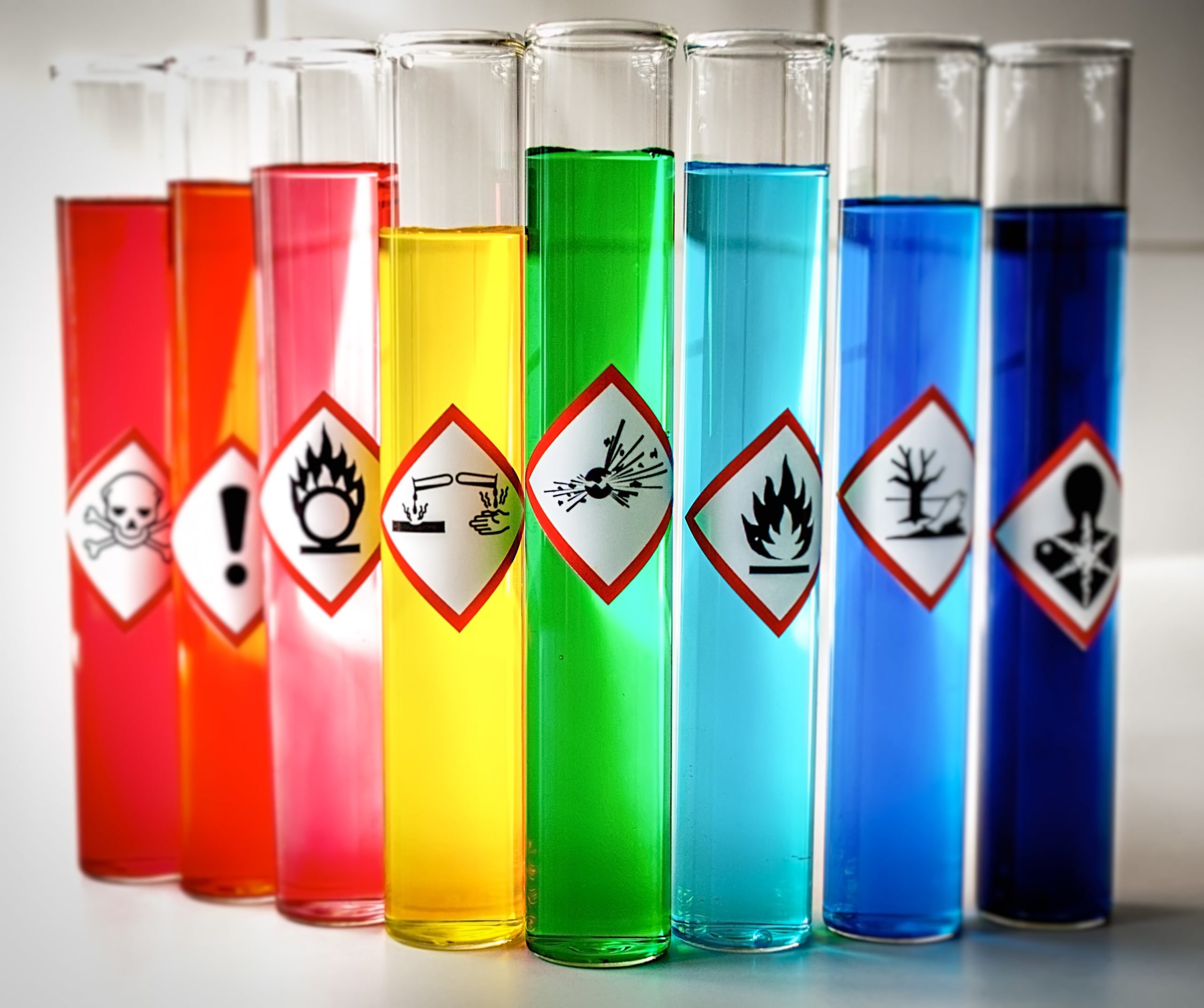
www.tpsearchtool.com
Expert Advice For Managing Chemical Hazard | Train And Develop
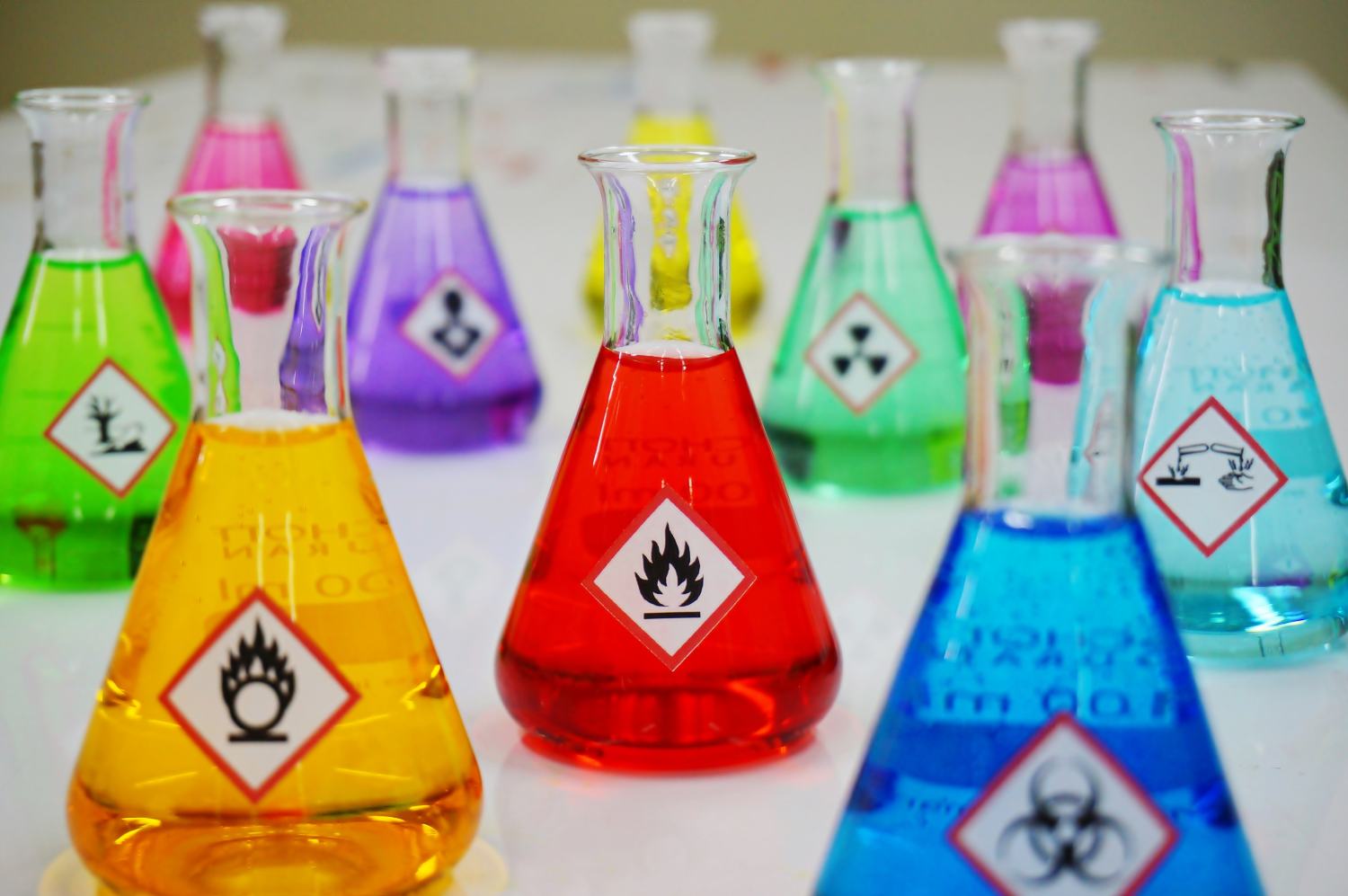
www.trainanddevelop.ca
Chemical – NailKnowledge
nailknowledge.org
Crystal White Laboratory Chemical & Reagents, V India Biosynergy | ID

www.indiamart.com
Role Of Chemical Science/ Chemistry In Our Life – Avens Blog | Avens Blog
www.avensonline.org
Stoichiometry Chemistry Quiz
/molecular-model-illustration-545862141-57dec4f93df78c9cce4ab839.jpg)
www.thoughtco.com
Chemicals
www.realfoodgirlunmodified.com
Chemical Safety: Working With Chemicals At Work – ACT Associates
www.actassociates.co.uk
What Exactly Is A Chemical?

www.reagent.co.uk
Computer System Predicts Products Of Chemical Reactions | MIT News
news.mit.edu
What Is A Chemical? (and What Isn't One)
/chemistry-glassware-56a12a083df78cf772680235.jpg)
www.thoughtco.com
Chemical – Carbon Farming Trust
carbonfarmingtrust.com
Exploring Physical And Chemical Changes – Let's Talk Science

letstalkscience.ca
What Is A Chemical? Definition And Examples

sciencenotes.org
Chemical Safety In Laboratories: Best Practices For Handling And
www.nationallaboratorysales.com
The effects of time, temperature, and concentration in chemical reactions. Chemical safety: working with chemicals at work. What is a chemical? definition and examples