Ecological pyramids are a visual representation of the biomass, numbers, or energy at each trophic level in an ecosystem. They are fundamental tools in ecology for understanding energy flow and the dynamics of food chains and food webs. Students often encounter ecological pyramids in biology classes, and understanding the concepts behind them is crucial. One common way to assess this understanding is through worksheets focused on interpreting and constructing ecological pyramids. These worksheets usually cover concepts like producers, consumers, trophic levels, energy transfer efficiency, and how different types of pyramids (biomass, numbers, and energy) can represent different aspects of an ecosystem. This post aims to provide clear and comprehensive answers to common ecological pyramids worksheet questions, helping students grasp these concepts effectively.
Understanding Ecological Pyramids: A Key to Ecosystem Dynamics
Ecological pyramids are built upon the understanding of food chains. At the base, we have producers, which are typically plants that generate energy through photosynthesis. This energy is then transferred to different levels of consumers. These consumers can be primary consumers (herbivores that eat producers), secondary consumers (carnivores that eat primary consumers), and so on. Each of these levels is known as a trophic level. The flow of energy and biomass between these trophic levels is not perfectly efficient. Typically, only about 10% of the energy from one trophic level is transferred to the next. This inefficiency, primarily due to metabolic processes like respiration and heat loss, explains why ecological pyramids often have a characteristic pyramid shape – the base is much wider than the top.
Worksheets focusing on ecological pyramids often test a student’s ability to identify trophic levels, explain the reasons for energy loss, and differentiate between the different types of pyramids. They might also present scenarios where the structure of the pyramid is altered due to environmental changes and ask students to analyze the potential consequences. Recognizing that students often struggle with these concepts, providing clear and concise answers becomes essential for effective learning and reinforcement.
Common Ecological Pyramids Worksheet Questions and Answers
Below, you’ll find answers to common questions asked in ecological pyramids worksheets. Understanding these answers will improve your comprehension of this essential ecological concept.
- Question 1: Define an ecological pyramid and explain its purpose.
Answer: An ecological pyramid is a graphical representation of the energy, biomass, or number of organisms at each trophic level in an ecosystem. Its purpose is to visualize the flow of energy and the relationship between different trophic levels, illustrating how energy and biomass decrease as one moves up the food chain.
- Question 2: Differentiate between the three types of ecological pyramids: pyramid of numbers, pyramid of biomass, and pyramid of energy.
Answer:
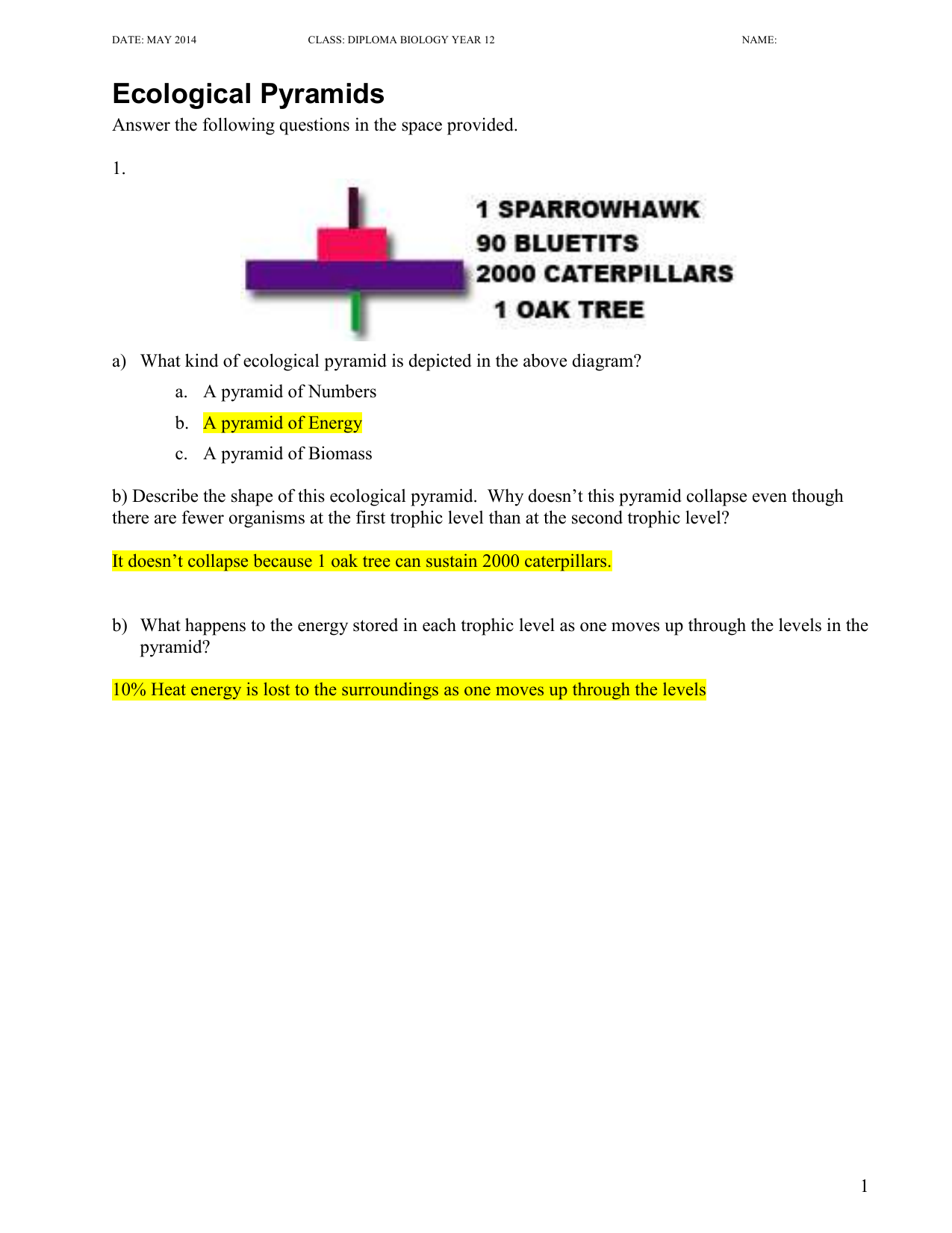
- Pyramid of Numbers: Represents the number of individual organisms at each trophic level. It can sometimes be inverted, especially in cases with one large producer supporting many consumers (e.g., a tree supporting many insects).
- Pyramid of Biomass: Represents the total mass of living organisms at each trophic level. It usually shows a decrease in biomass from producers to top consumers, but can also be inverted in aquatic ecosystems where producers (phytoplankton) have a high turnover rate.
- Pyramid of Energy: Represents the amount of energy available at each trophic level. This type of pyramid is always upright because energy is always lost as it moves up the trophic levels due to metabolic processes (respiration, heat loss). It provides the most accurate representation of the energy flow in an ecosystem.
- Question 3: Explain why energy decreases as it moves up the trophic levels.
Answer: Energy decreases as it moves up trophic levels primarily due to the second law of thermodynamics, which states that energy conversions are never 100% efficient. Organisms at each trophic level use a significant portion of the energy they consume for their own metabolic processes, such as respiration, movement, and maintaining body temperature. A large portion of energy is also lost as heat during these processes. Additionally, some energy is not consumed or is indigestible and is lost as waste. On average, only about 10% of the energy from one trophic level is transferred to the next, leading to a progressive decrease in energy at higher levels.
- Question 4: What is the 10% rule in ecology?
Answer: The 10% rule in ecology states that approximately only 10% of the energy stored as biomass in one trophic level is converted to biomass in the next trophic level. The remaining 90% is lost as heat, used for metabolic processes, or excreted as waste. This rule explains why food chains are typically limited to 4-5 trophic levels; beyond that, there is insufficient energy to support additional levels.
- Question 5: Provide an example of an inverted pyramid of numbers and explain why it can occur.
Answer: An example of an inverted pyramid of numbers is a forest ecosystem where a single tree (the producer) supports a large number of insects (primary consumers). The pyramid is inverted because the number of insects is greater than the number of trees. This can occur because a single large producer, like a tree, can provide enough resources to support many smaller consumers.
- Question 6: How does the type of ecological pyramid influence the conclusions we can draw about an ecosystem?
Answer: The type of ecological pyramid used provides different insights into an ecosystem. A pyramid of numbers can highlight the numerical relationships between organisms, but it doesn’t account for their size or biomass. A pyramid of biomass provides a better indication of the amount of living material at each level but doesn’t account for the rate of energy flow. The pyramid of energy is the most accurate representation of energy transfer and is essential for understanding the carrying capacity and sustainability of the ecosystem.
By understanding these answers and the concepts behind them, students can confidently tackle ecological pyramids worksheets and gain a deeper appreciation for the intricate relationships that govern the flow of energy and matter in ecosystems. Continued practice and a solid understanding of these fundamentals will be beneficial for future studies in ecology and environmental science.
If you are looking for Copy of Ecological Pyramids Pogil – 2022 – Ecological Pyramids How you’ve came to the right web. We have 20 Pictures about Copy of Ecological Pyramids Pogil – 2022 – Ecological Pyramids How like Ecological Pyramids Worksheet Answers Unique Food Chains Food Webs and, Ecological Pyramids Worksheet Answers – E-streetlight.com and also Ecological Pyramids Worksheet Answers – E-streetlight.com. Here it is:
Copy Of Ecological Pyramids Pogil – 2022 – Ecological Pyramids How

worksheets.clipart-library.com
Ecological Pyramids Worksheet – Kid Worksheet Printable
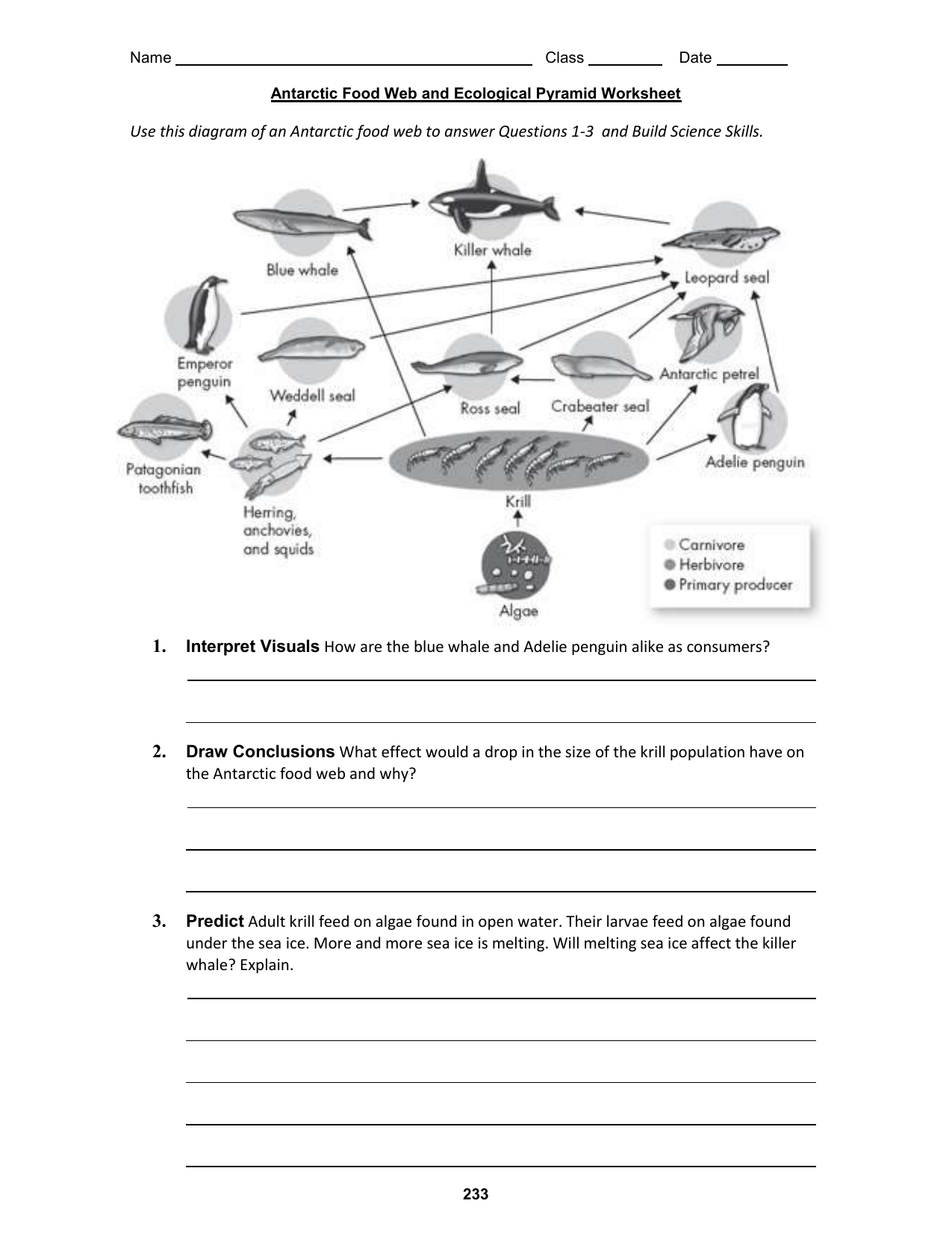
kidprintablesheet101.blogspot.com
Ecological Pyramids Worksheet Answers – Pro Worksheet
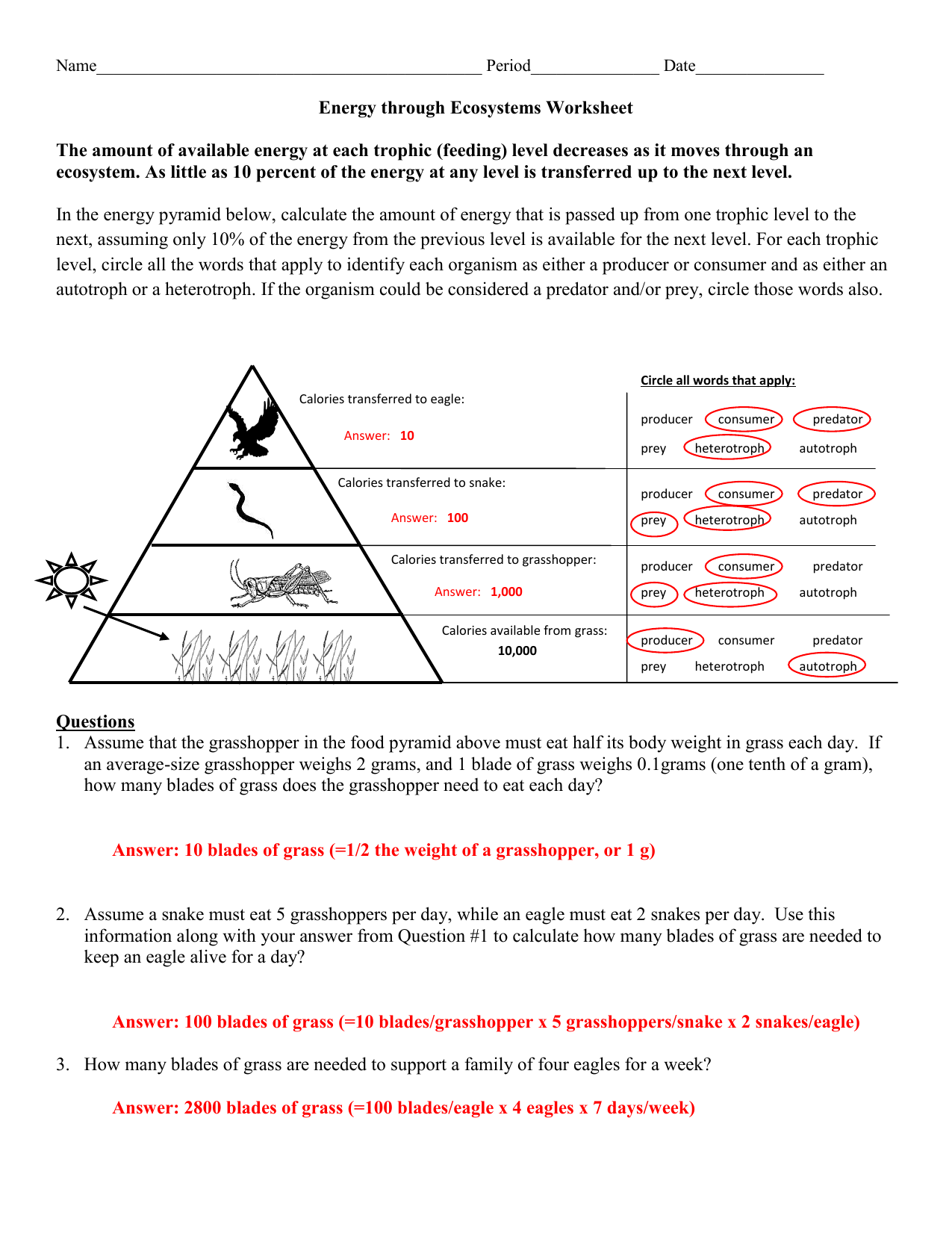
www.proworksheet.my.id
Volume Of Pyramids And Cones Worksheet | Fun And Engaging 8th

worksheets.clipart-library.com
Ecological Pyramids Worksheet Answers – Pro Worksheet
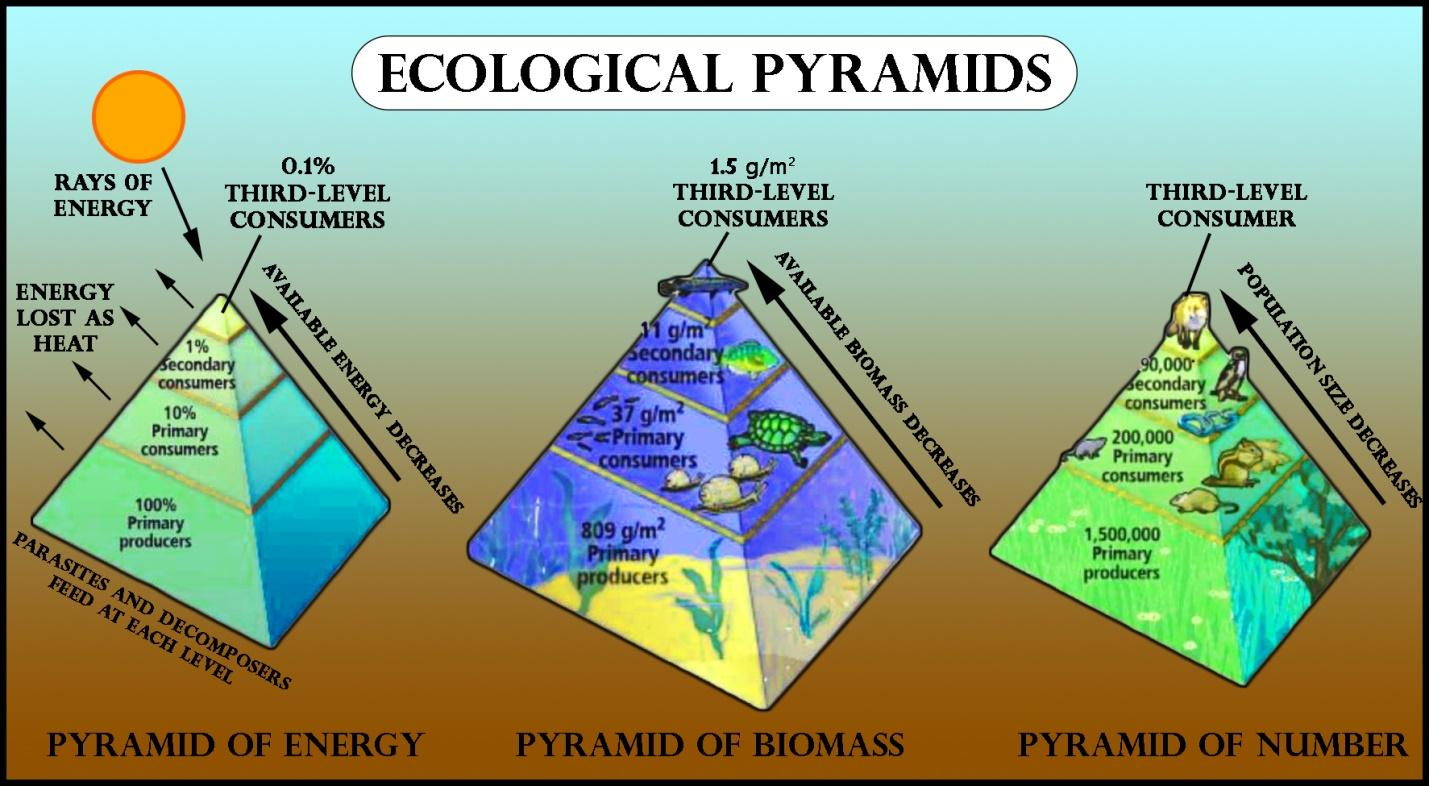
www.proworksheet.my.id
Ecological Relationships Worksheet Answers – E-streetlight.com
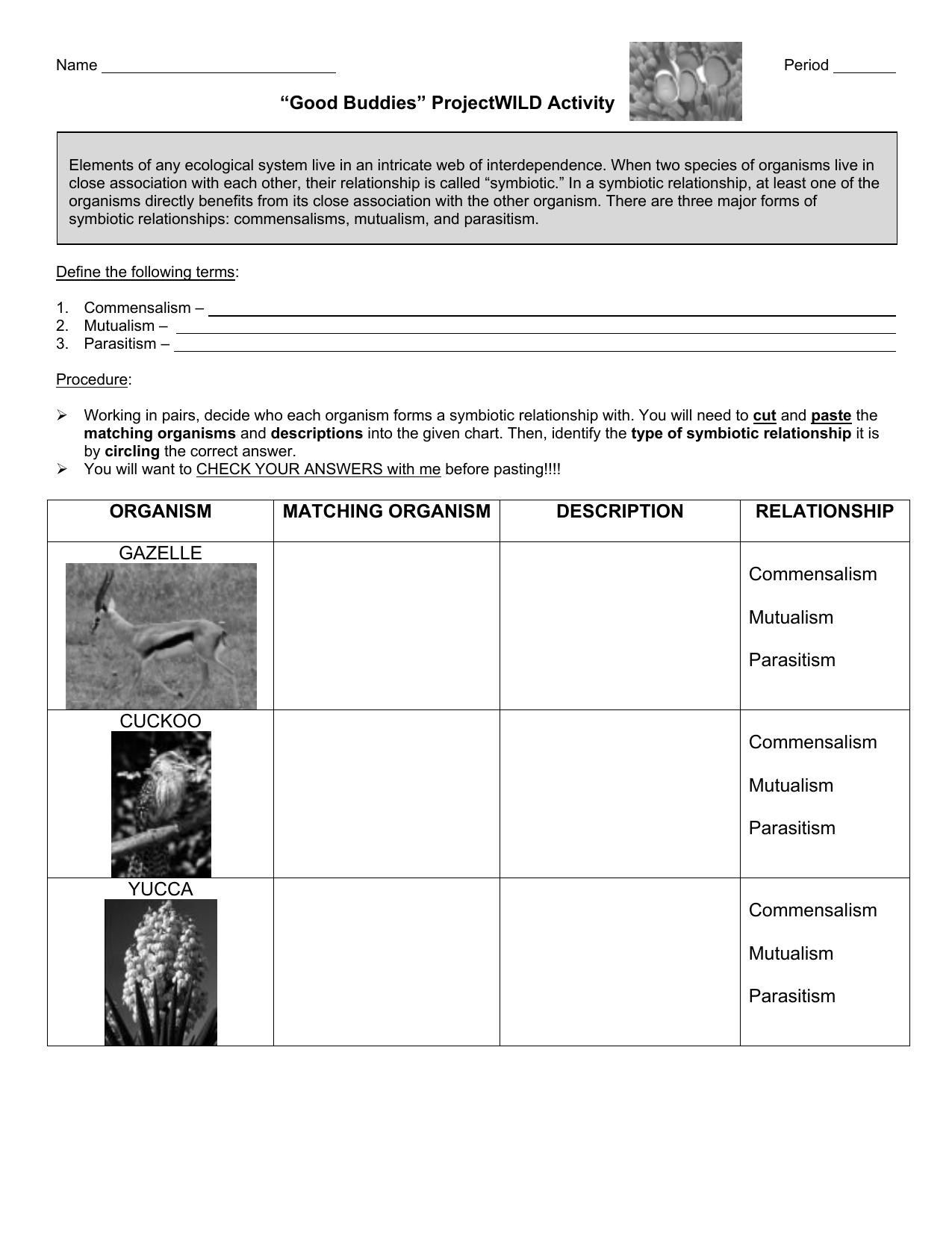
www.e-streetlight.com
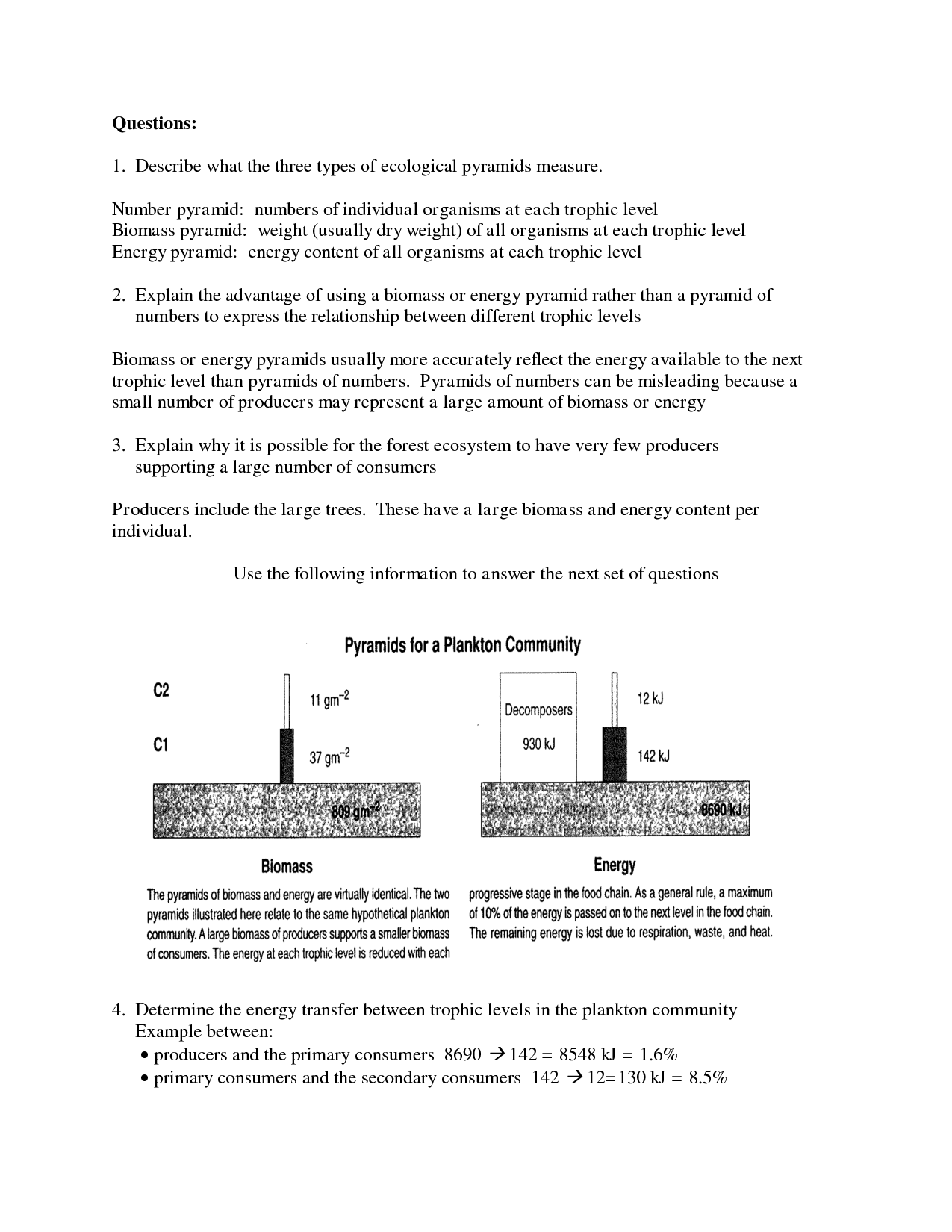
Ecological Pyramids Worksheet – Herbalens
herbalens.blogspot.com
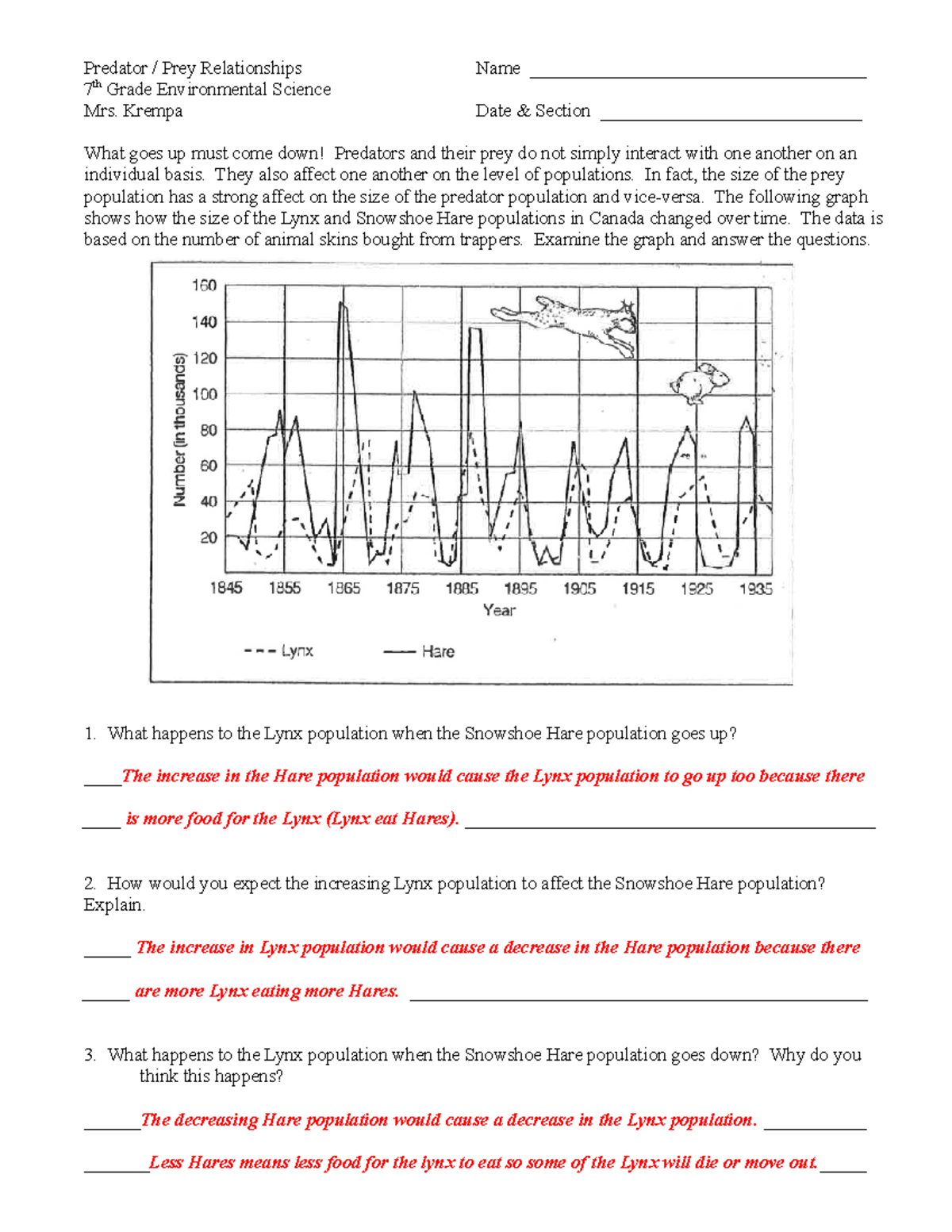
Ecological Relationships Worksheet Answers – E-streetlight.com
www.e-streetlight.com
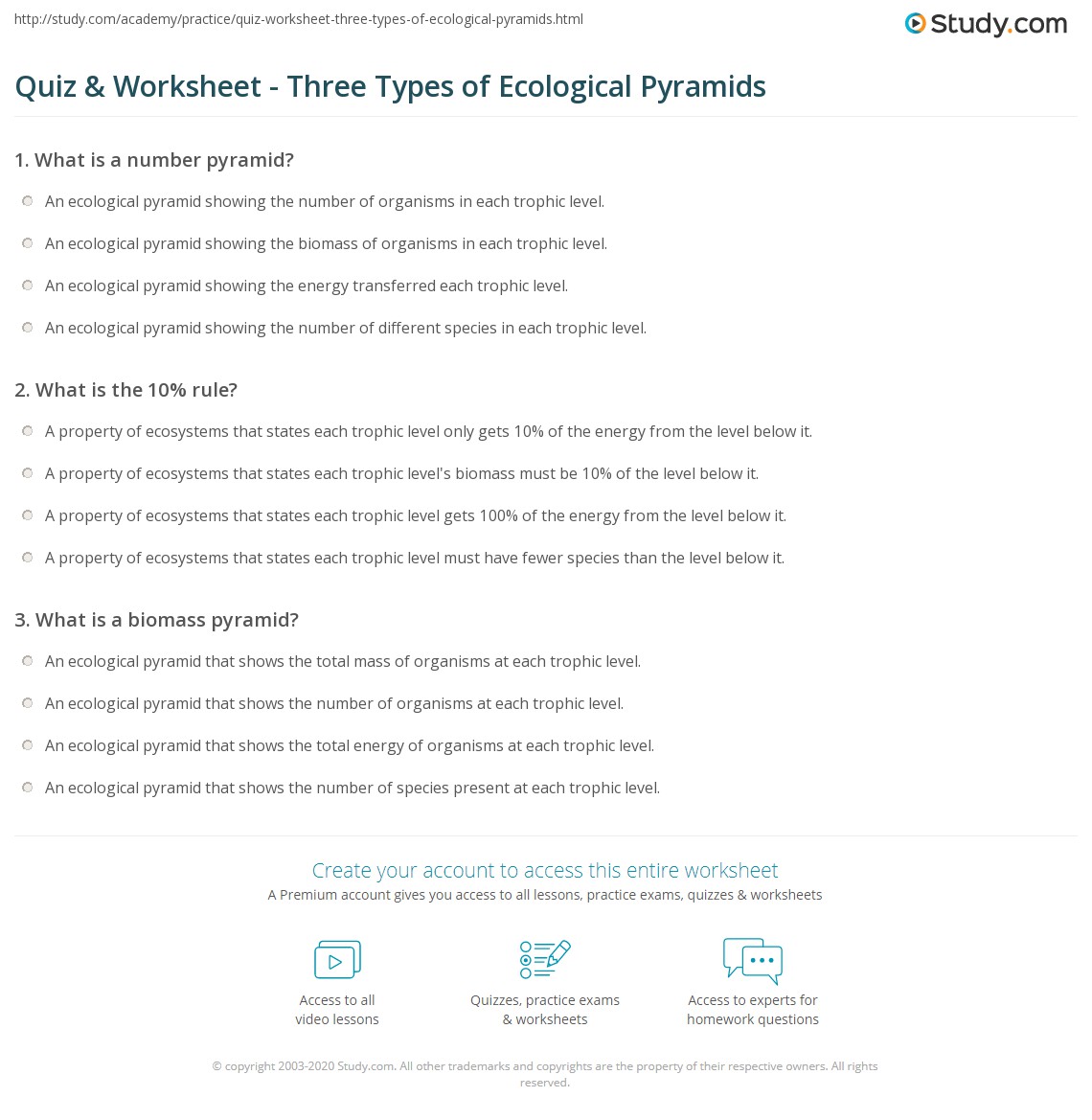
Ecological Pyramids Worksheet Answers – E-streetlight.com
www.e-streetlight.com
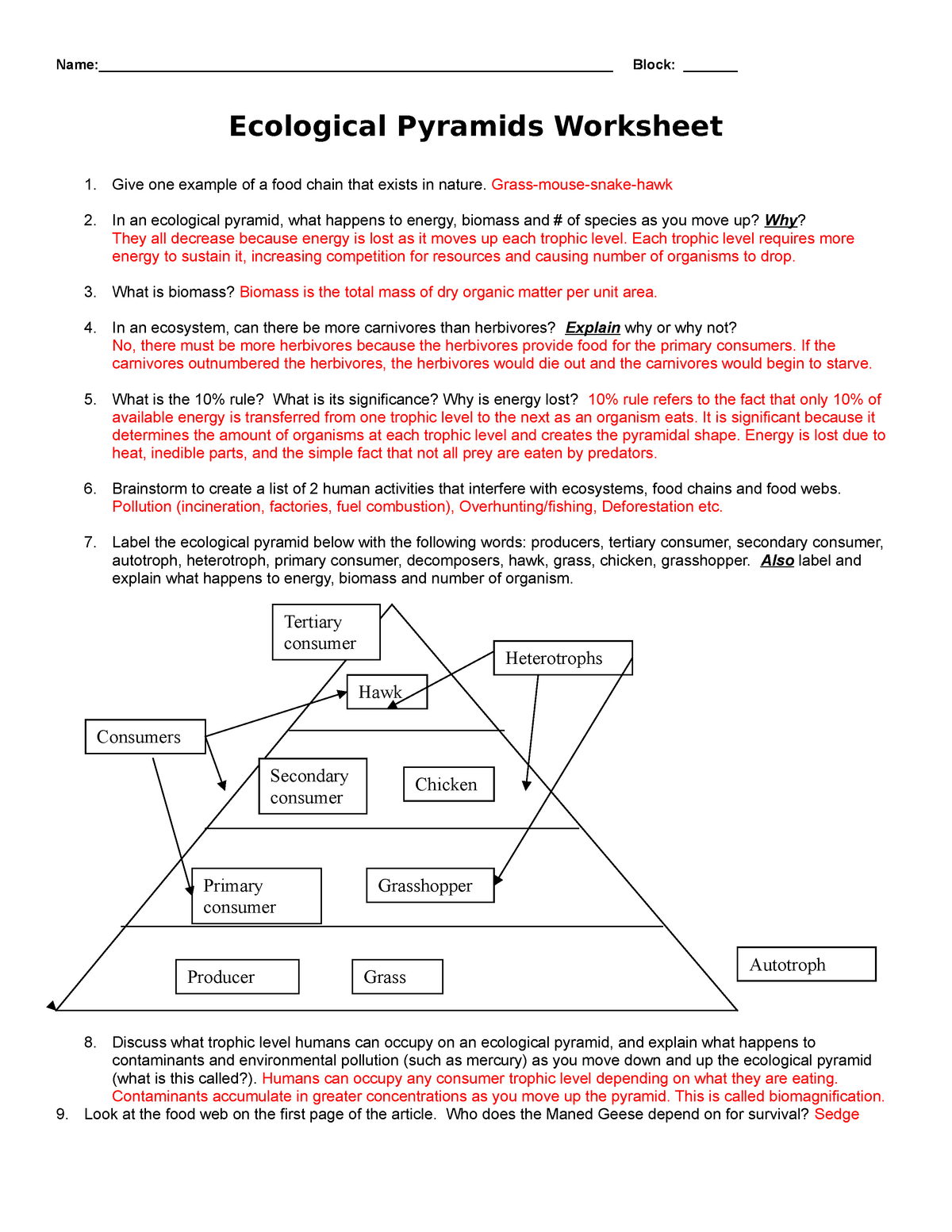
Ecological Pyramids Worksheet Answers – E-streetlight.com
www.e-streetlight.com
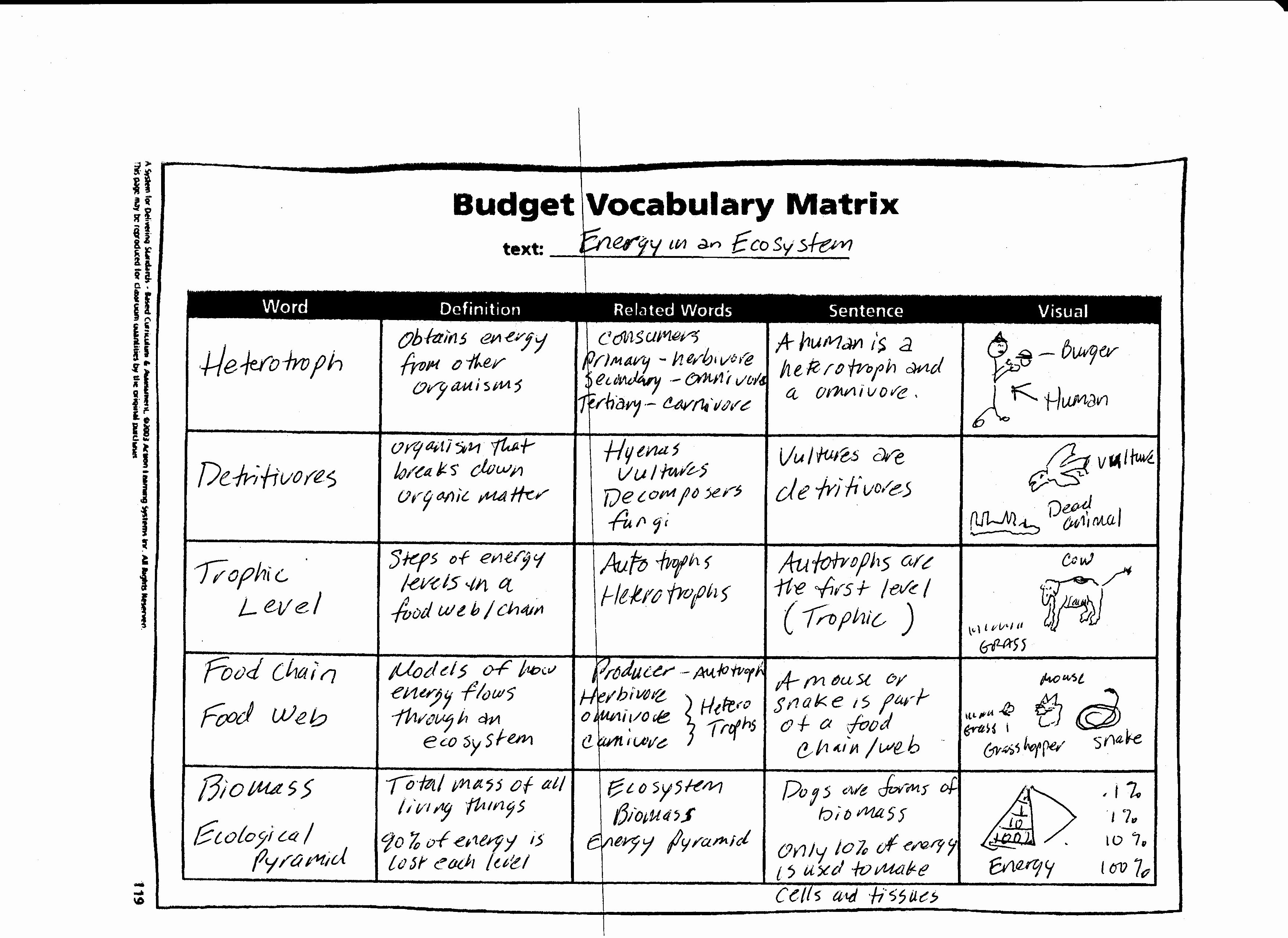
Ecological Pyramids Worksheet Answers Unique Food Chains Food Webs And
chessmuseum.org
Ecological Pyramids Worksheet – Kid Worksheet Printable

kidprintablesheet101.blogspot.com
Ecological Pyramids Worksheet Answers – E-streetlight.com

www.e-streetlight.com
Explore The Beauty Of Ecological Pyramids

www.pinterest.com
Ecological Pyramids Worksheet Answers – E-streetlight.com
www.e-streetlight.com
Ecological Pyramid Worksheet Wwwgalleryhipcom The, Ecological | Free

www.housview.com
Ecological Pyramids Worksheet – Kid Worksheet Printable

kidprintablesheet101.blogspot.com
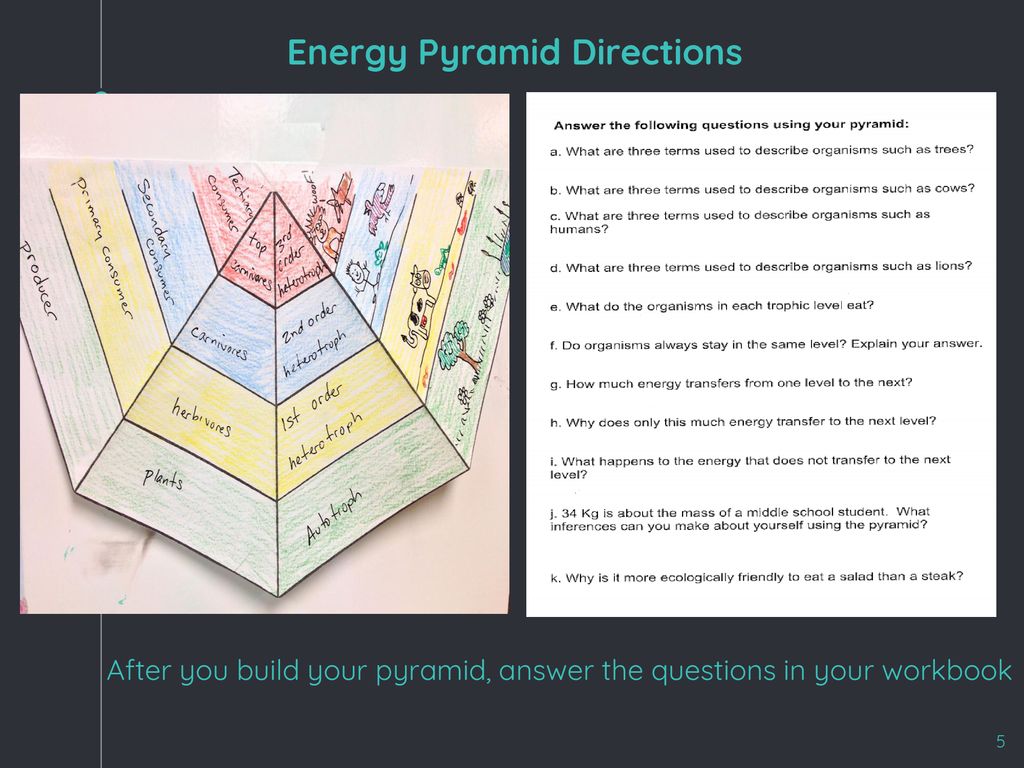
Ecological Pyramids Worksheet Answers – E-streetlight.com
www.e-streetlight.com
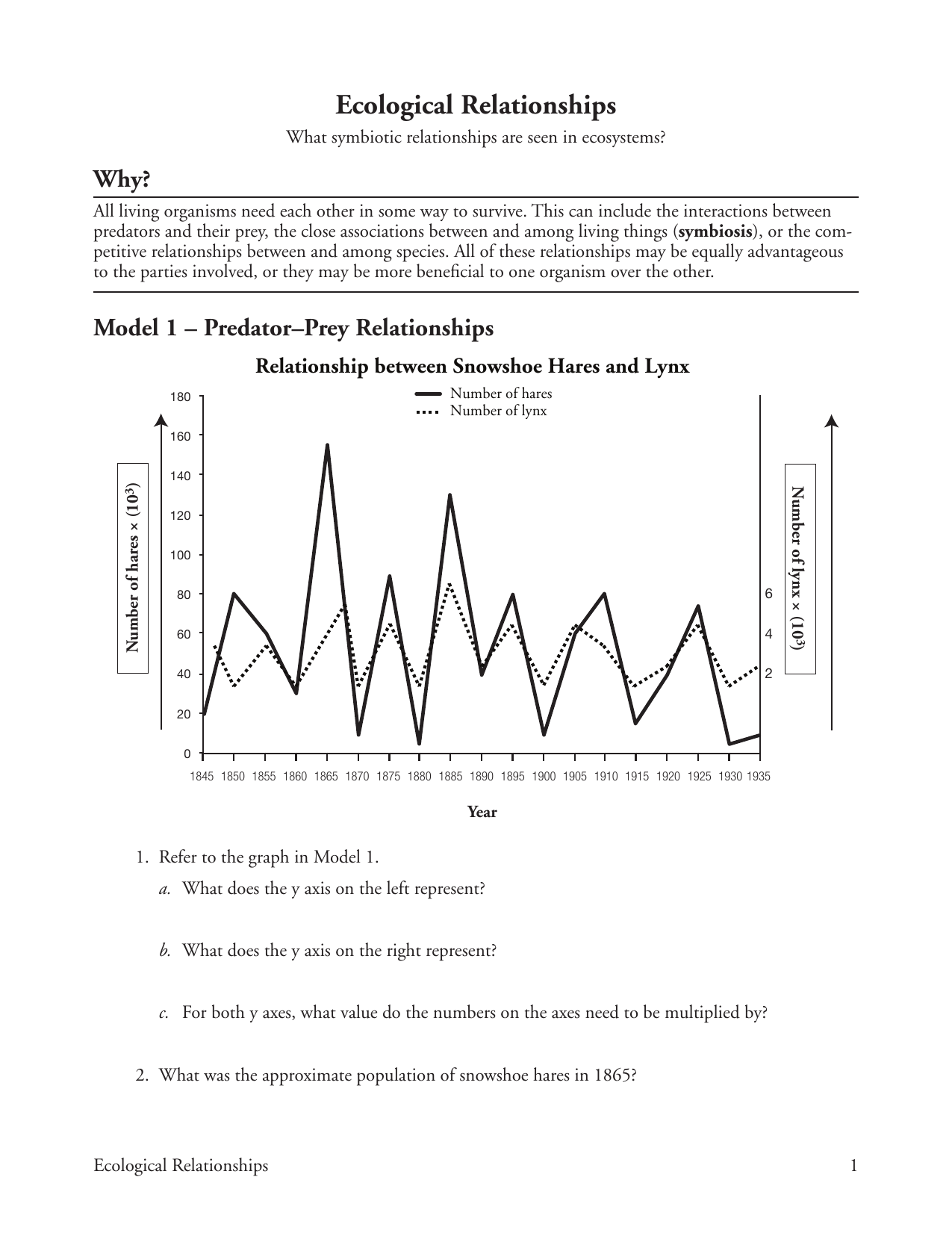
Ecological Relationships Worksheet Answers – Pro Worksheet
www.proworksheet.my.id
Ecological Pyramids Worksheet Answers – Objectives Define Ecology

pixjennifer41.blogspot.com
ecological pyramids worksheet. ecological pyramids worksheet answers. Ecological pyramids worksheet