p>Understanding symbiotic relationships is crucial for grasping the intricate web of life that connects all organisms on Earth. From the tiniest microbes to the largest mammals, species interact in countless ways, some beneficial, some harmful, and some neutral. Symbiosis, derived from the Greek word meaning “living together,” describes any type of close and long-term biological interaction between two different biological organisms, be it mutualistic, commensalistic, or parasitic. A Symbiotic Relationships Worksheet aims to test and solidify this knowledge. This post provides a comprehensive resource for checking your answers and deepening your understanding of these fascinating relationships. It’s not just about getting the correct answers; it’s about learning *why* those answers are correct and how they reflect real-world ecological principles.
Decoding Symbiotic Relationships: Your Answer Key
The following is a possible answer key for a typical Symbiotic Relationships Worksheet. Note that definitions of symbiotic relationships can vary slightly, so if your teacher provided specific definitions, adhere to those. This key offers a broad overview and common examples.
Mutualism
- Definition: A symbiotic relationship where both organisms benefit from the interaction.
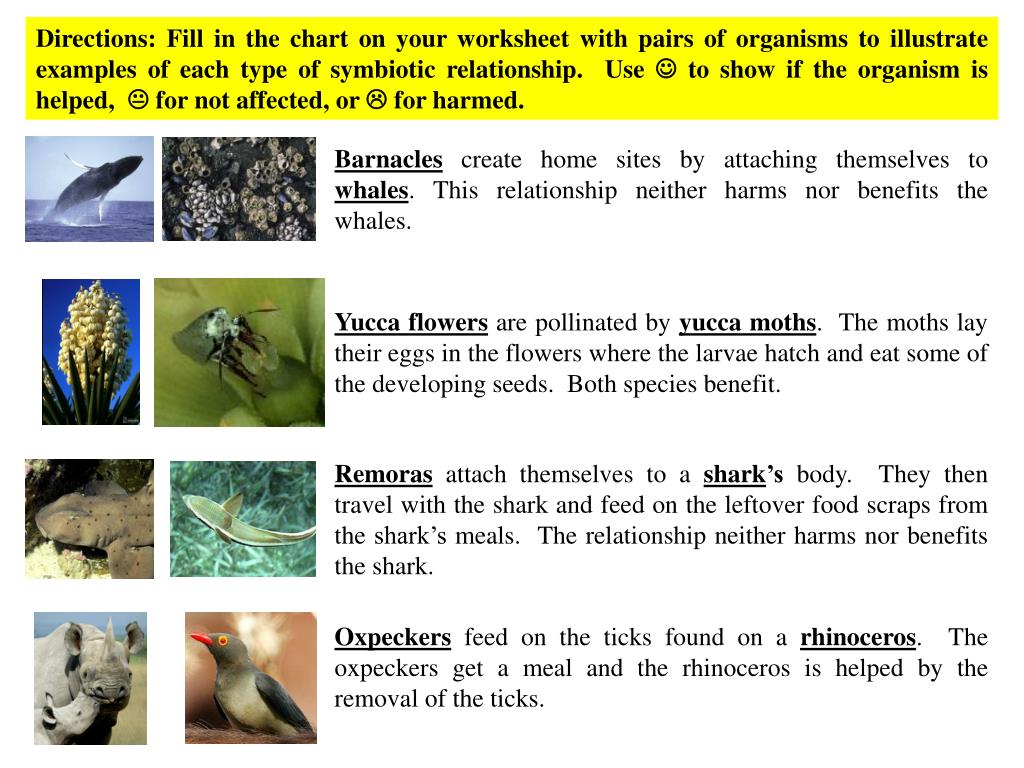
- Example 1: Bees and flowers. Bees collect nectar from flowers for food, while simultaneously pollinating the flowers, facilitating their reproduction.
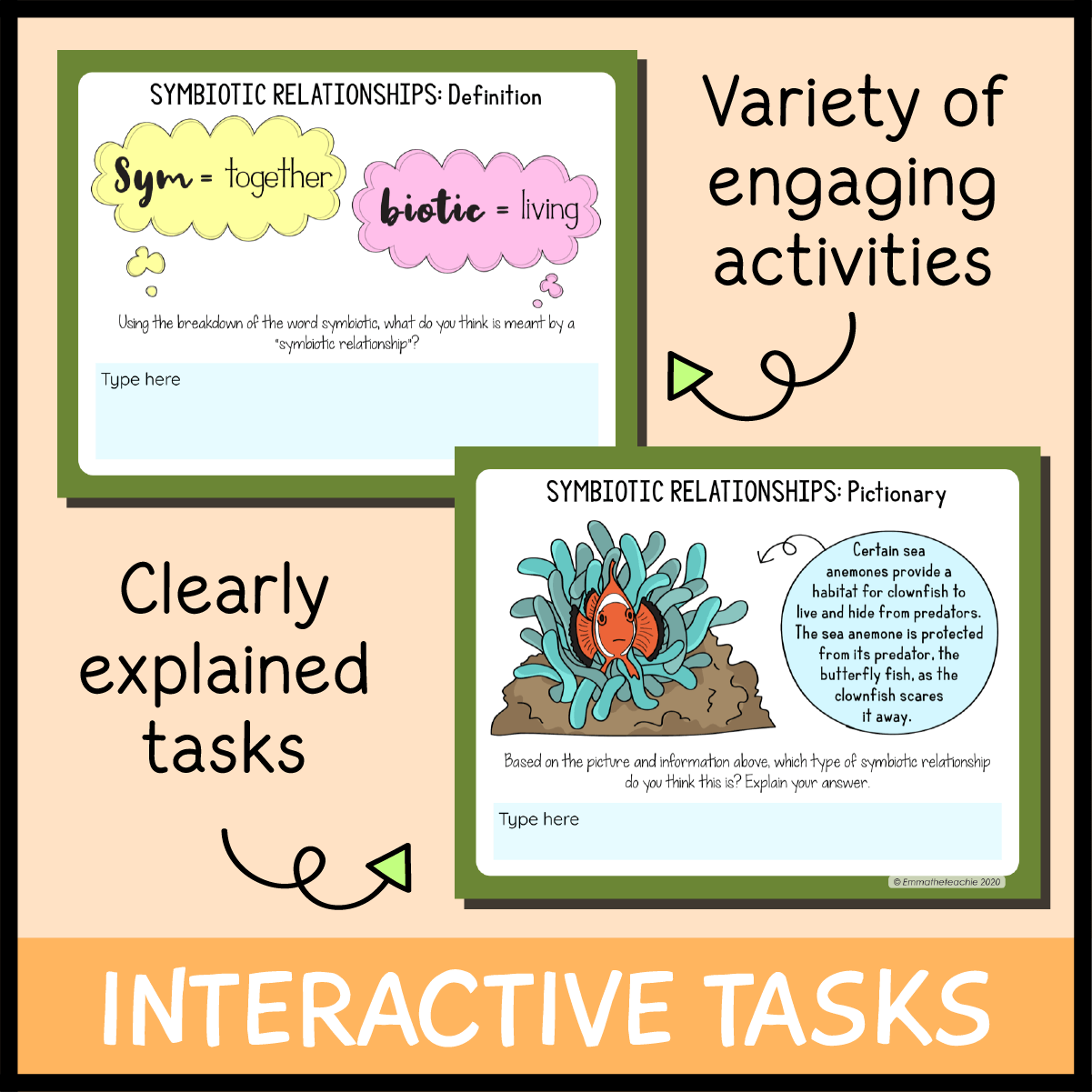
- Example 2: Clownfish and sea anemones. Clownfish are protected from predators by the stinging tentacles of the anemone, while the anemone benefits from the clownfish’s waste products as fertilizer and from the clownfish chasing away some anemone-eating fish.
- Example 3: Lichens (algae and fungi). Algae provide food through photosynthesis, and fungi provide structure and protection from the elements.
- Why is it Mutualistic? In each case, both species involved gain something positive from the interaction. The relationship enhances their survival and reproduction.
Commensalism
- Definition: A symbiotic relationship where one organism benefits, and the other is neither harmed nor helped.
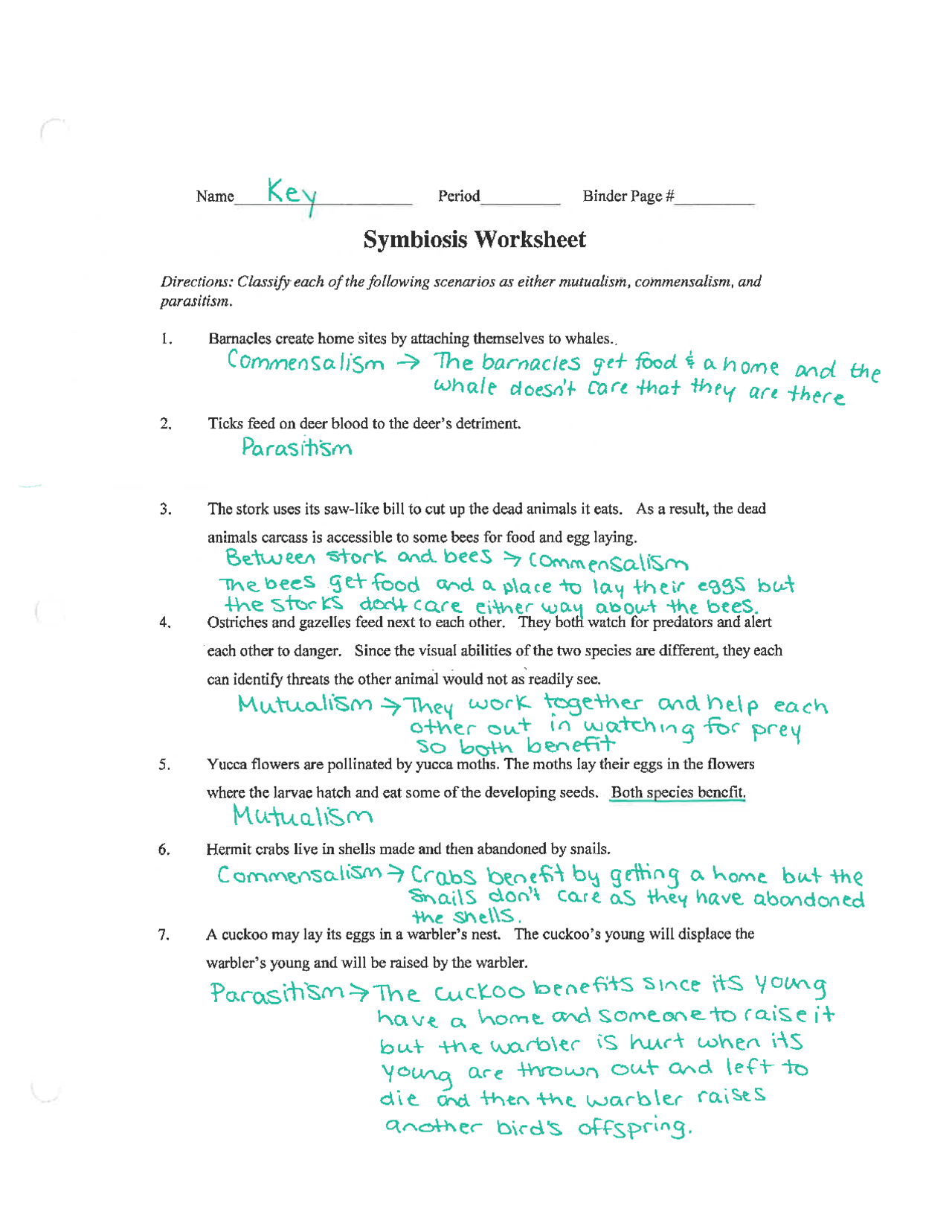
- Example 1: Barnacles on whales. Barnacles attach to whales for transportation to nutrient-rich waters, but the whale is generally unaffected.
- Example 2: Cattle egrets and cattle. Cattle egrets follow cattle and eat insects that are stirred up by the cattle’s grazing. The cattle are neither helped nor harmed.
- Example 3: Orchids growing on trees. Orchids gain access to sunlight by growing on tree branches, but the tree is neither benefited nor harmed.
- Why is it Commensalistic? One organism thrives due to the relationship, while the other experiences no significant change (positive or negative). It’s a one-sided benefit.
Parasitism
- Definition: A symbiotic relationship where one organism (the parasite) benefits at the expense of the other organism (the host).
- Example 1: Ticks on dogs. Ticks feed on the dog’s blood, harming the dog and potentially transmitting diseases.
- Example 2: Tapeworms in humans. Tapeworms live in the human intestines, absorbing nutrients and causing malnutrition.
- Example 3: Mistletoe on trees. Mistletoe extracts water and nutrients from the host tree, weakening it over time.
- Why is it Parasitic? The parasite benefits by deriving nourishment or shelter from the host, causing harm or detriment to the host’s health and well-being.
Beyond the Answers: Deeper Understanding
Memorizing the definitions and examples is a good start, but truly understanding symbiotic relationships requires more than just rote learning. Consider these points to solidify your knowledge:
* Context Matters: The type of symbiotic relationship can sometimes be fluid and dependent on the specific circumstances. For example, a relationship that appears commensalistic under normal conditions might become parasitic if resources are scarce.
* Evolutionary Significance: Symbiotic relationships have played a critical role in the evolution of life. Many complex structures and functions, like the endosymbiotic theory (the origin of mitochondria and chloroplasts), are believed to have arisen through symbiosis.
* Ecological Importance: Symbiotic relationships are essential for maintaining healthy ecosystems. They contribute to nutrient cycling, pollination, and other vital ecological processes.
* Real-World Applications: Understanding symbiotic relationships can inform conservation efforts, agricultural practices, and even medical treatments. For example, understanding the gut microbiome (a complex community of symbiotic bacteria) is crucial for human health.
By examining the answers and considering the broader context, you can move beyond simply answering the worksheet and gain a deeper appreciation for the complex and interconnected nature of life on Earth. Keep exploring, keep questioning, and keep learning about the fascinating world of symbiotic relationships!
If you are searching about Symbiotic Relationships Worksheet Good Buddies – Ame.my.id you’ve came to the right place. We have 20 Images about Symbiotic Relationships Worksheet Good Buddies – Ame.my.id like Symbiotic Relationships Worksheet Answers Inspirational Worksheet Types, Symbiotic relationships worksheet answers – Artofit and also Symbiotic Relationships Worksheet Answers – Owhentheyanks.com. Here it is:
Symbiotic Relationships Worksheet Good Buddies – Ame.my.id
ame.my.id
Symbiotic Relationships Google Slides – Emmatheteachie
emmatheteachie.com
Angle Relationships And Algebra Worksheet Answers – Angleworksheets.com

www.angleworksheets.com
Symbiosis Symbiotic Interactions Relationship Worksheet Key – Docsity
www.docsity.com
Ecological Relationships Worksheet Answers – Pro Worksheet
www.proworksheet.my.id
Edia | Free Math Homework In Minutes – Worksheets Library

worksheets.clipart-library.com
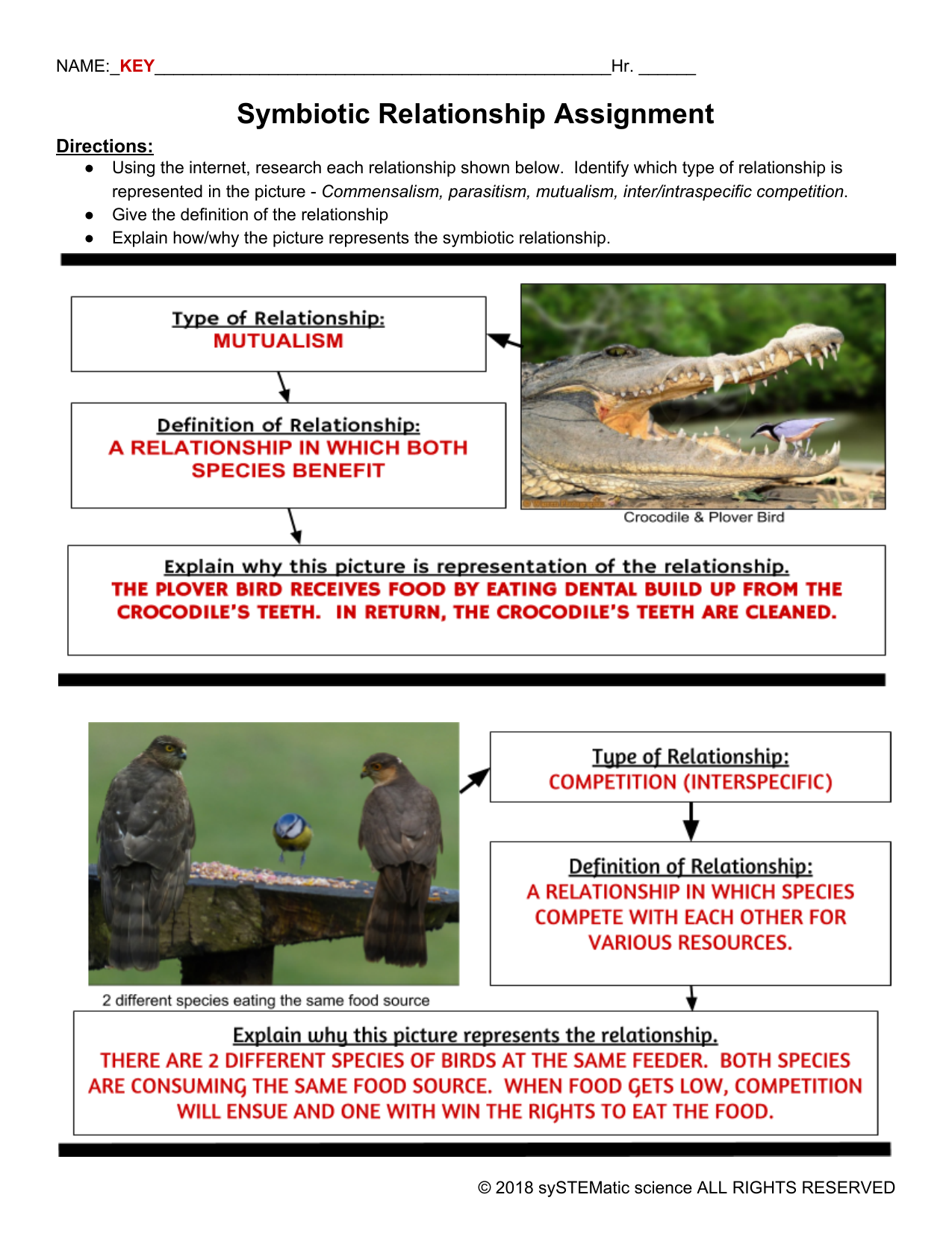
Symbiotic Relationships Worksheet Answers – Owhentheyanks.com
www.owhentheyanks.com
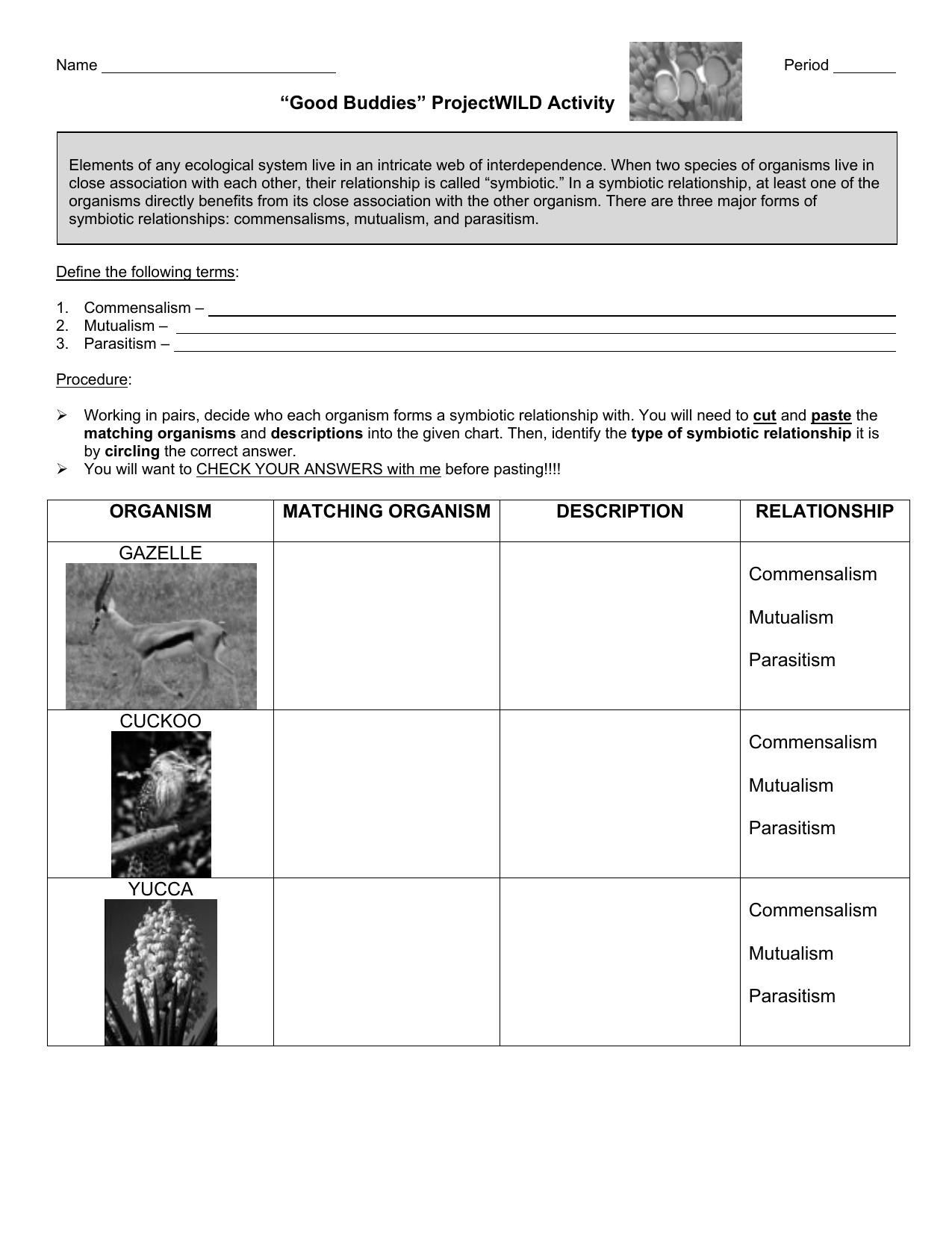
Symbiotic Relationships Worksheet Good Buddies – Ame.my.id
ame.my.id
SOLUTION: Symbiotic Relationships Review Answers Paper – Studypool

www.studypool.com
Symbiotic Relationships Anchor Chart (biology) | Biology Classroom

www.pinterest.com
Symbiotic Relationships Worksheet Good Buddies – E Street Light

www.e-streetlight.com
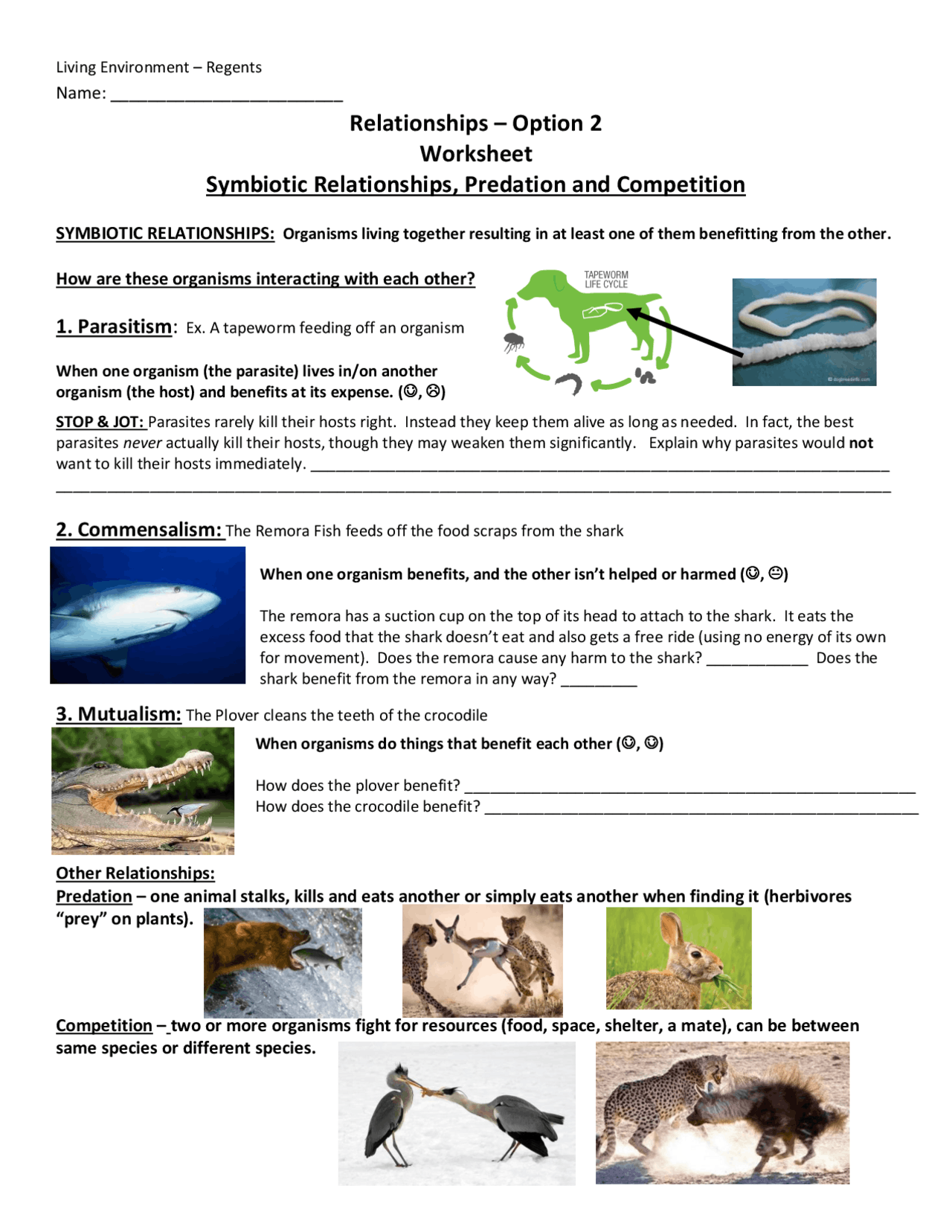
Symbiotic Relationships, Predation And Competition | Study Notes
www.docsity.com
Symbiotic Relationships Worksheet Answers – Artofit

www.artofit.org
Identifying Angle Pairs Worksheet Answers – Angleworksheets.com

www.angleworksheets.com
Ecological Relationships Worksheet Answers : Activity Relationships In

meehan10photo.blogspot.com
Free Mutations Worksheet Answers Biology, Download Free Mutations

worksheets.clipart-library.com
Analogies Worksheet For 3rd – 6th Grade | Lesson Planet – Worksheets

worksheets.clipart-library.com
Symbiotic Relationships Worksheet Answers – Owhentheyanks.com

www.owhentheyanks.com
Symbiotic Relationships Worksheet Answers Inspirational Worksheet Types
chessmuseum.org
Symbiotic Relationships Worksheet Review Ecological Relationships-1
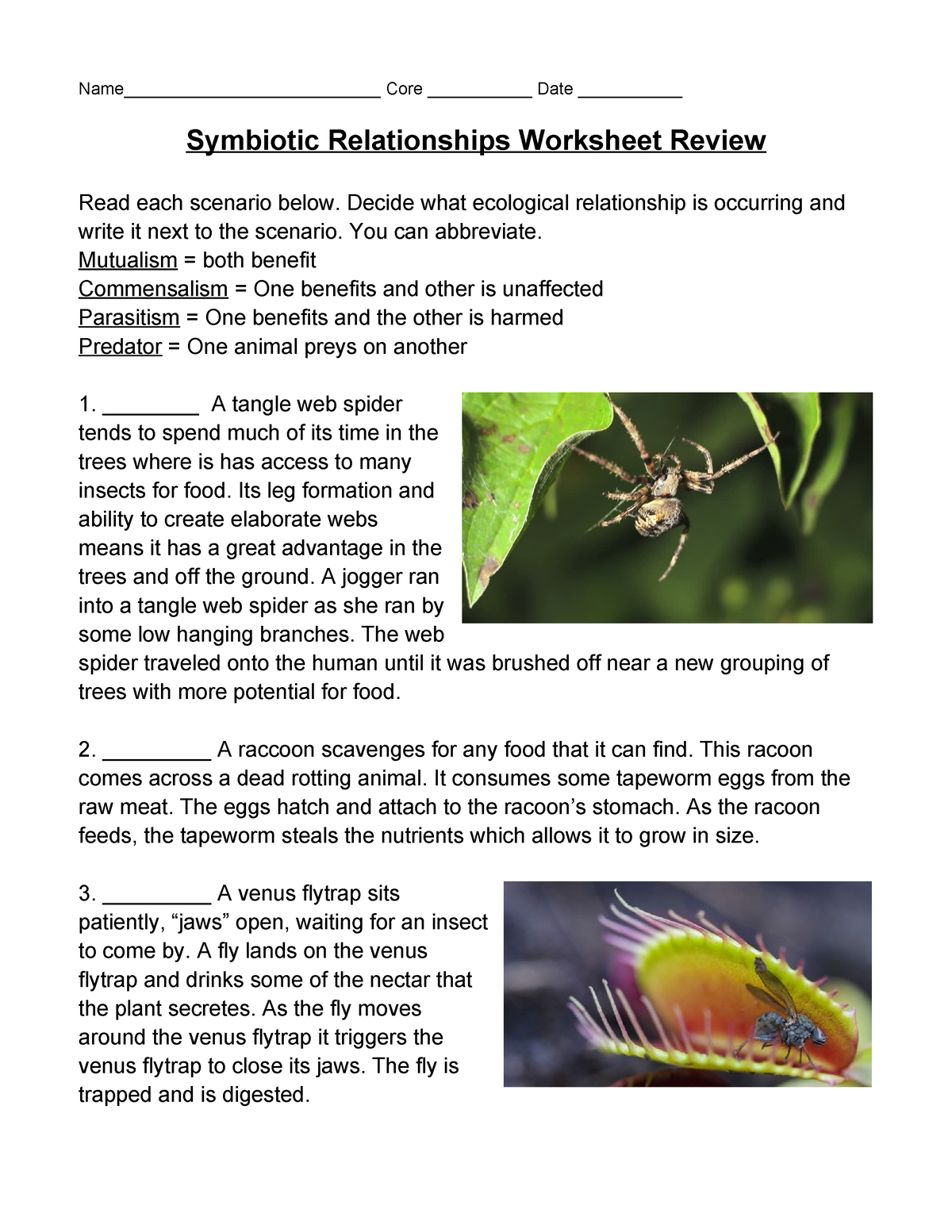
www.studocu.com
symbiotic relationships worksheet answers – artofit. Ecological relationships worksheet answers : activity relationships in …. Identifying angle pairs worksheet answers