Chemistry can feel like learning a whole new language, especially when you start delving into the microscopic world of atoms and molecules. One of the fundamental concepts to master is chemical bonding – how atoms stick together to form everything around us. Understanding ionic, covalent, and metallic bonds is crucial, and worksheets are a common tool used to reinforce this knowledge. But sometimes, those worksheets can feel like a roadblock. This post aims to provide the answers to a typical Chemical Bonds Worksheet, but more importantly, to explain *why* those answers are correct. We’ll break down the concepts and reasoning so you can confidently tackle chemical bonding problems. Remember, it’s not just about memorizing the answers, but understanding the principles behind them!
Chemical Bonds Worksheet Answers
Below, you’ll find the answers to a hypothetical Chemical Bonds Worksheet. The questions cover the main types of chemical bonds, electronegativity, and how to predict bond types. We’ll follow each answer with a brief explanation.
Part 1: Identifying Bond Types
-
Question: What type of bond is formed between Sodium (Na) and Chlorine (Cl)?
Answer: Ionic Bond
Explanation: Sodium is a metal that readily loses an electron to form a positive ion (Na+), while Chlorine is a nonmetal that readily gains an electron to form a negative ion (Cl-). The electrostatic attraction between these oppositely charged ions creates an ionic bond. The large difference in electronegativity between Na (0.93) and Cl (3.16) also indicates an ionic bond. -
Question: What type of bond is formed between two Oxygen atoms (O2)?
Answer: Covalent Bond (specifically, a nonpolar covalent bond)
Explanation: Oxygen is a nonmetal, and when two identical oxygen atoms bond, they share electrons equally. Since the electronegativity difference is zero, this is a nonpolar covalent bond. Each oxygen atom contributes electrons to form a double bond, satisfying the octet rule. -
Question: What type of bond is formed between Hydrogen (H) and Oxygen (O) in a water molecule (H2O)?
Answer: Covalent Bond (specifically, a polar covalent bond)
Explanation: Both Hydrogen and Oxygen are nonmetals, so they share electrons. However, Oxygen is more electronegative (3.44) than Hydrogen (2.20), meaning it pulls the shared electrons closer to itself. This unequal sharing creates partial positive charges on the Hydrogen atoms and a partial negative charge on the Oxygen atom, resulting in a polar covalent bond. -
Question: What type of bond holds Copper atoms together in a copper wire?
Answer: Metallic Bond
Explanation: Copper is a metal. Metallic bonds are characterized by a “sea” of delocalized electrons surrounding positively charged metal ions. These delocalized electrons are free to move throughout the metal, which is what gives metals their characteristic properties like conductivity.
Part 2: Electronegativity and Bond Polarity
-
Question: Which is more electronegative: Potassium (K) or Bromine (Br)?
Answer: Bromine (Br)
Explanation: Electronegativity generally increases across a period (left to right) and decreases down a group in the periodic table. Bromine is located to the right of Potassium on the periodic table, making it more electronegative. -
Question: Explain how electronegativity differences can be used to predict bond polarity.
Answer: The greater the difference in electronegativity between two bonded atoms, the more polar the bond. A large electronegativity difference (typically greater than 1.7) indicates an ionic bond, where one atom essentially “steals” the electron. A smaller difference (between 0.4 and 1.7) indicates a polar covalent bond, where electrons are shared unequally. A very small difference (less than 0.4) indicates a nonpolar covalent bond, where electrons are shared almost equally. A difference of zero, as in a bond between two identical atoms, is perfectly nonpolar. -
Question: Rank the following bonds from least polar to most polar: C-H, O-H, N-H, F-H.
Answer: C-H < N-H < O-H < F-H
Explanation: We need to look at the electronegativity differences:- C-H: 2.55 – 2.20 = 0.35
- N-H: 3.04 – 2.20 = 0.84
- O-H: 3.44 – 2.20 = 1.24
- F-H: 3.98 – 2.20 = 1.78
The larger the difference, the more polar the bond.
Part 3: Predicting Bond Types
-
Question: Predict the type of bond that will form between Magnesium (Mg) and Oxygen (O).
Answer: Ionic Bond
Explanation: Magnesium is a metal (low electronegativity), and Oxygen is a nonmetal (high electronegativity). The electronegativity difference is large (O: 3.44 – Mg: 1.31 = 2.13), indicating that Oxygen will strongly attract electrons from Magnesium, forming Mg2+ and O2- ions, which are held together by an ionic bond. -
Question: Predict the type of bond that will form between Carbon (C) and Sulfur (S).
Answer: Covalent Bond (likely polar covalent, but slightly borderline)
Explanation: Both Carbon and Sulfur are nonmetals. The electronegativity difference is relatively small (S: 2.58 – C: 2.55 = 0.03). This suggests a covalent bond. While the difference is small, Sulfur is slightly more electronegative, making the bond slightly polar.
Remember that these are just examples, and your specific worksheet might have different questions. However, the underlying principles remain the same. By understanding the concepts of electronegativity, ionization energy, and the octet rule, you can predict the type of bond that will form between different atoms. Practice, review, and don’t hesitate to ask for help if you’re struggling. Good luck!
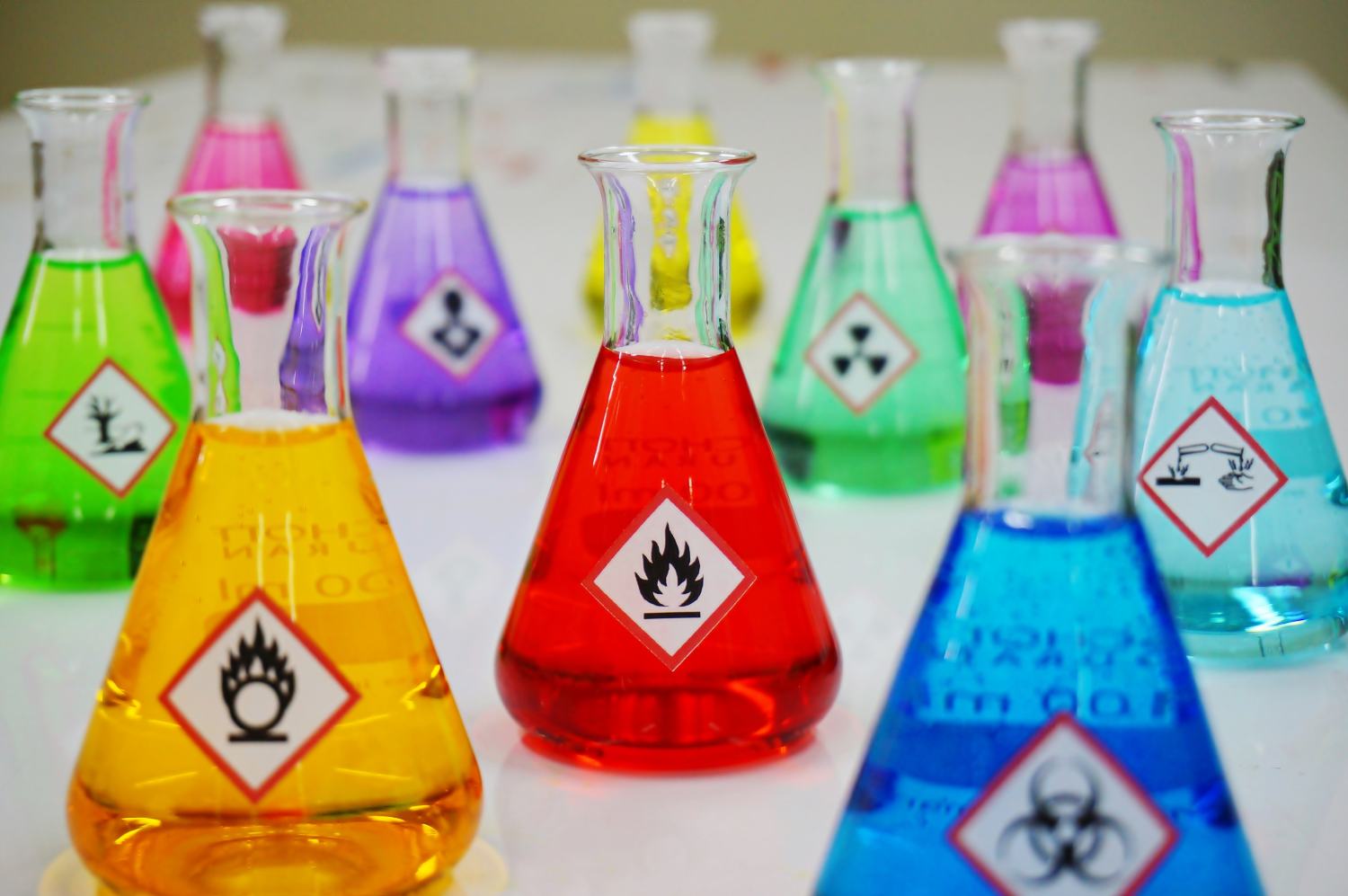
If you are looking for Expert Advice for Managing Chemical Hazard | Train and Develop you’ve came to the right web. We have 20 Pics about Expert Advice for Managing Chemical Hazard | Train and Develop like Expert Advice for Managing Chemical Hazard | Train and Develop, What Is a Chemical? (and What Isn't One) and also Chemical Safety: Working With Chemicals At Work – ACT Associates. Here it is:
Expert Advice For Managing Chemical Hazard | Train And Develop
www.trainanddevelop.ca
What Is A Chemical? (and What Isn't One)
/chemistry-glassware-56a12a083df78cf772680235.jpg)
www.thoughtco.com
Exploring Physical And Chemical Changes – Let's Talk Science

letstalkscience.ca
Role Of Chemical Science/ Chemistry In Our Life – Avens Blog | Avens Blog
www.avensonline.org
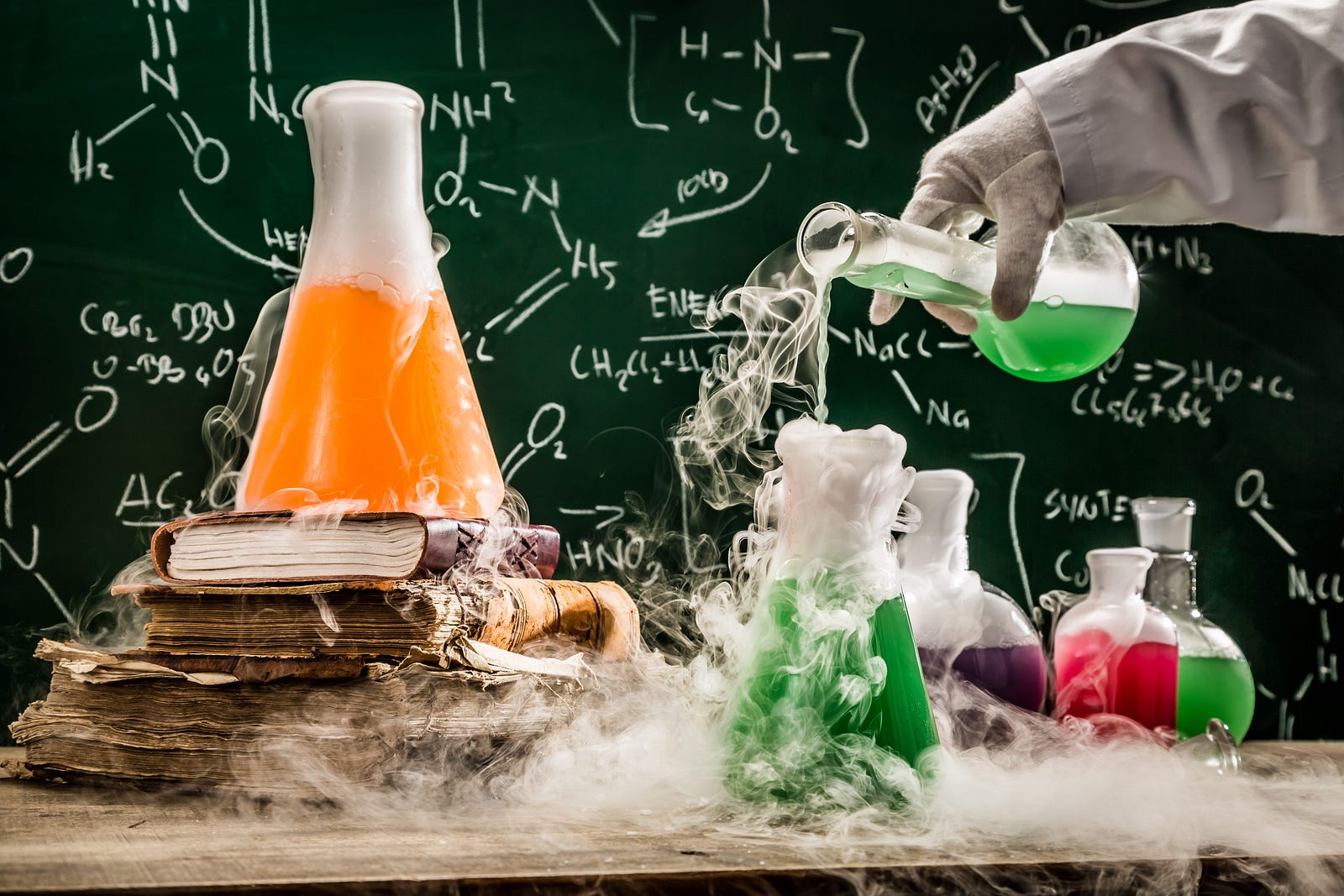
The Effects Of Time, Temperature, And Concentration In Chemical Reactions
medium.com
Chemical Solution Images
ar.inspiredpencil.com
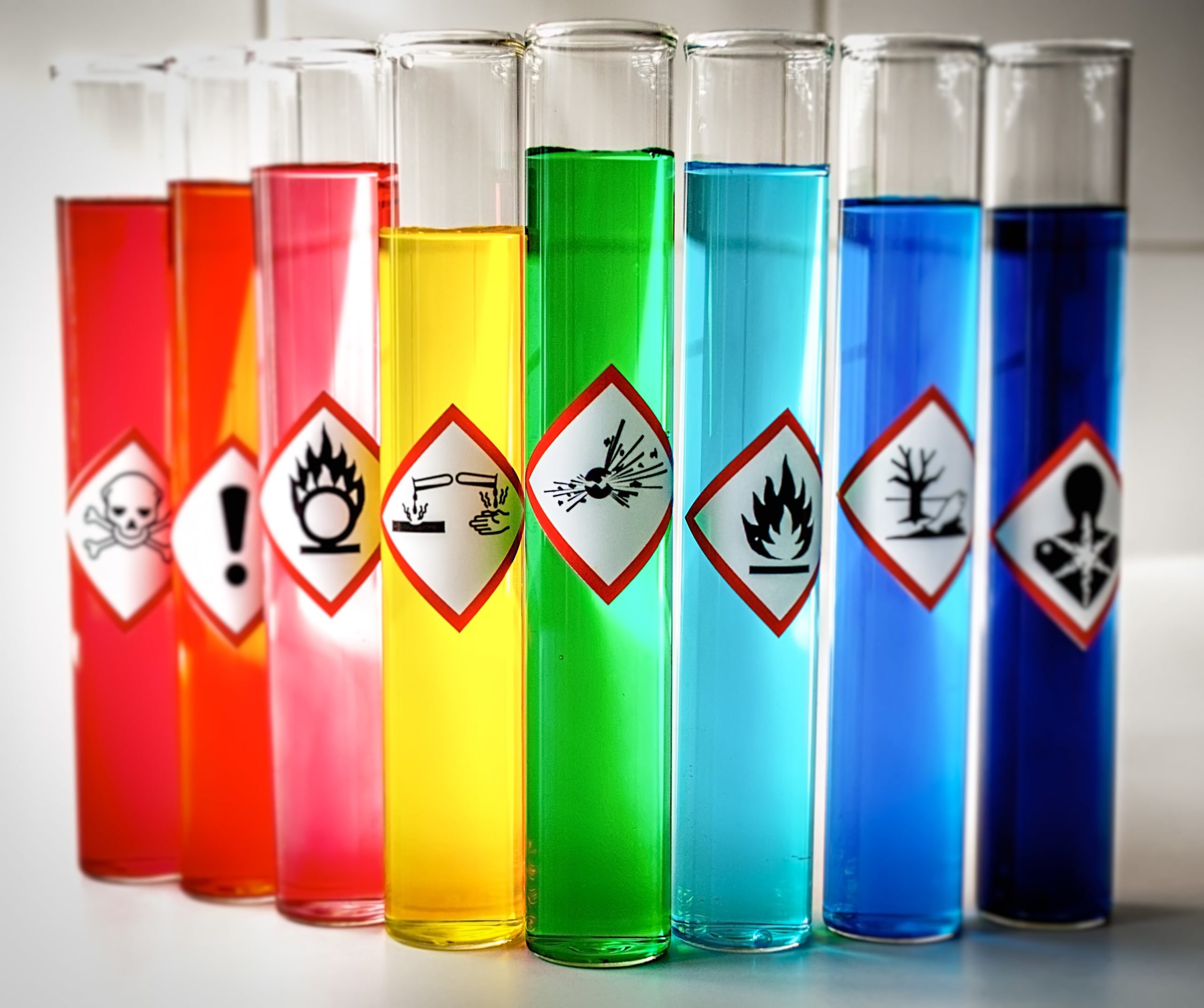
Types Of Chemical Hazards And How To Manage Them Images
www.tpsearchtool.com
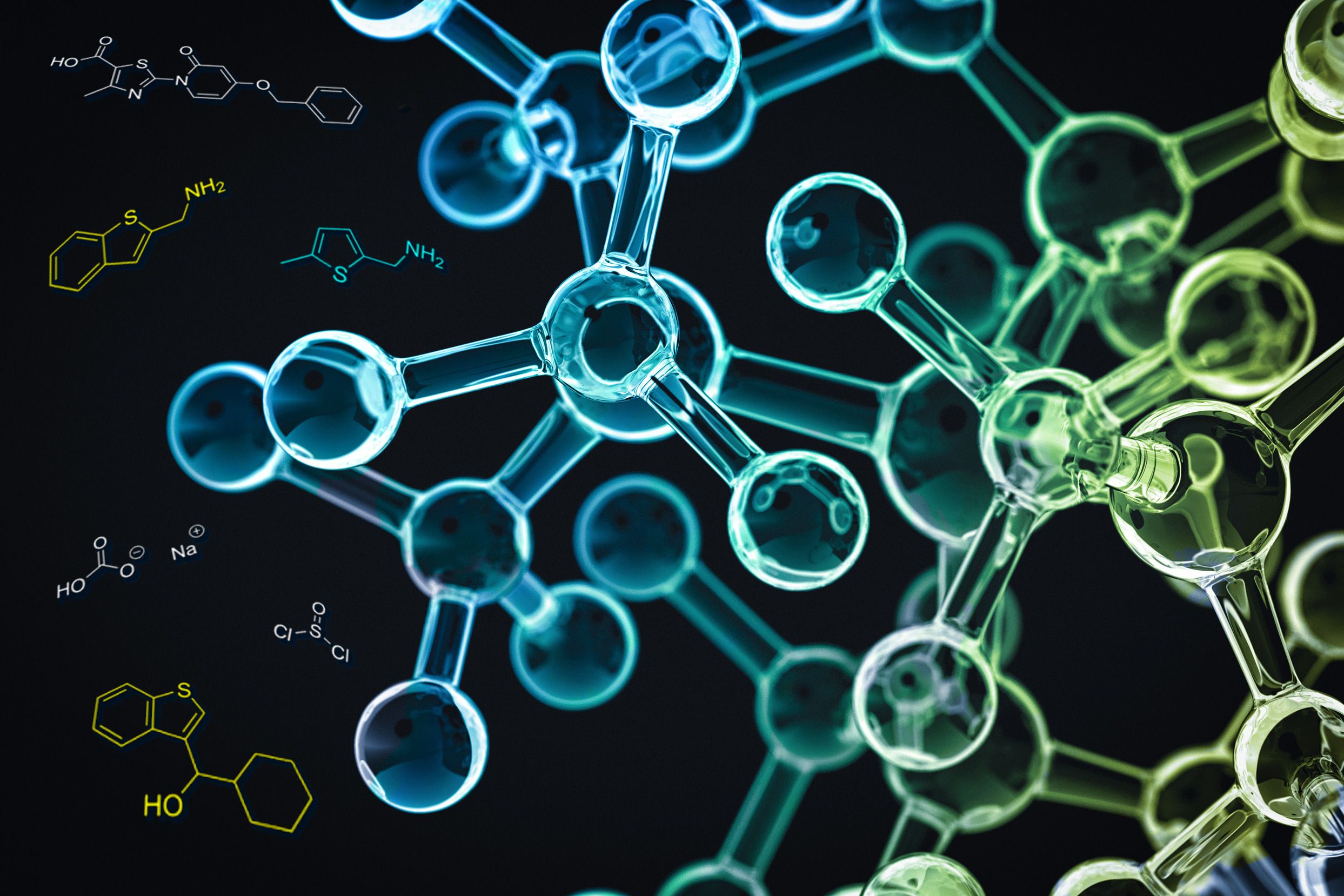
Computer System Predicts Products Of Chemical Reactions | MIT News
news.mit.edu
What Exactly Is A Chemical?

www.reagent.co.uk
Chemicals
www.realfoodgirlunmodified.com
Chemical Safety: Working With Chemicals At Work – ACT Associates
www.actassociates.co.uk
Crystal White Laboratory Chemical & Reagents, V India Biosynergy | ID

www.indiamart.com
AI Approach Optimizes Synthesis Of Important Chemical Compounds

www.technologynetworks.com
Chemistry Pictures Images
ar.inspiredpencil.com
Chemical Safety In Laboratories: Best Practices For Handling And
www.nationallaboratorysales.com
What Is A Chemical? Definition And Examples

sciencenotes.org
Stoichiometry Chemistry Quiz
/molecular-model-illustration-545862141-57dec4f93df78c9cce4ab839.jpg)
www.thoughtco.com
Chemical – Carbon Farming Trust
carbonfarmingtrust.com
Aligned Chemical Danger Pictograms – Oxidizing — Stock Photo
depositphotos.com
Chemical – NailKnowledge
nailknowledge.org
Chemical safety: working with chemicals at work. Role of chemical science/ chemistry in our life. chemical solution images