Are you delving into the fascinating world of chemistry and grappling with the fundamental concepts of ionic and covalent bonds? Understanding these bonds is absolutely crucial for grasping how atoms interact, molecules form, and ultimately, how matter behaves. A well-designed worksheet can be an invaluable tool in solidifying your understanding and putting your knowledge to the test.
Many students find the distinction between ionic and covalent bonds a bit tricky at first. It’s easy to mix up the “transferring” of electrons in ionic bonds with the “sharing” of electrons in covalent bonds. That’s where practice comes in! By working through a variety of examples and scenarios, you’ll start to recognize the patterns and predict the types of bonds that will form between different elements.
This post aims to provide a resource for those seeking to master ionic and covalent bonding through practice. While we won’t directly give away the answers without encouraging the work, we can provide a guide to help understand a typical worksheet on the topic. A successful learning strategy involves attempting the questions first, then comparing your reasoning to a solution key or explanatory guide. By working through the worksheet independently, you’ll identify the areas where you need the most support. You’ll also retain the information much more effectively than if you simply looked up the answers.
Therefore, let’s assume you’ve attempted a worksheet focusing on identifying ionic and covalent bonds based on various properties and examples. Let’s discuss what might be found within a typical worksheet, and then give solutions, so that you can check your work.
Understanding the Ionic and Covalent Bond Worksheet
A typical Ionic and Covalent Bonds Worksheet may include the following types of questions:
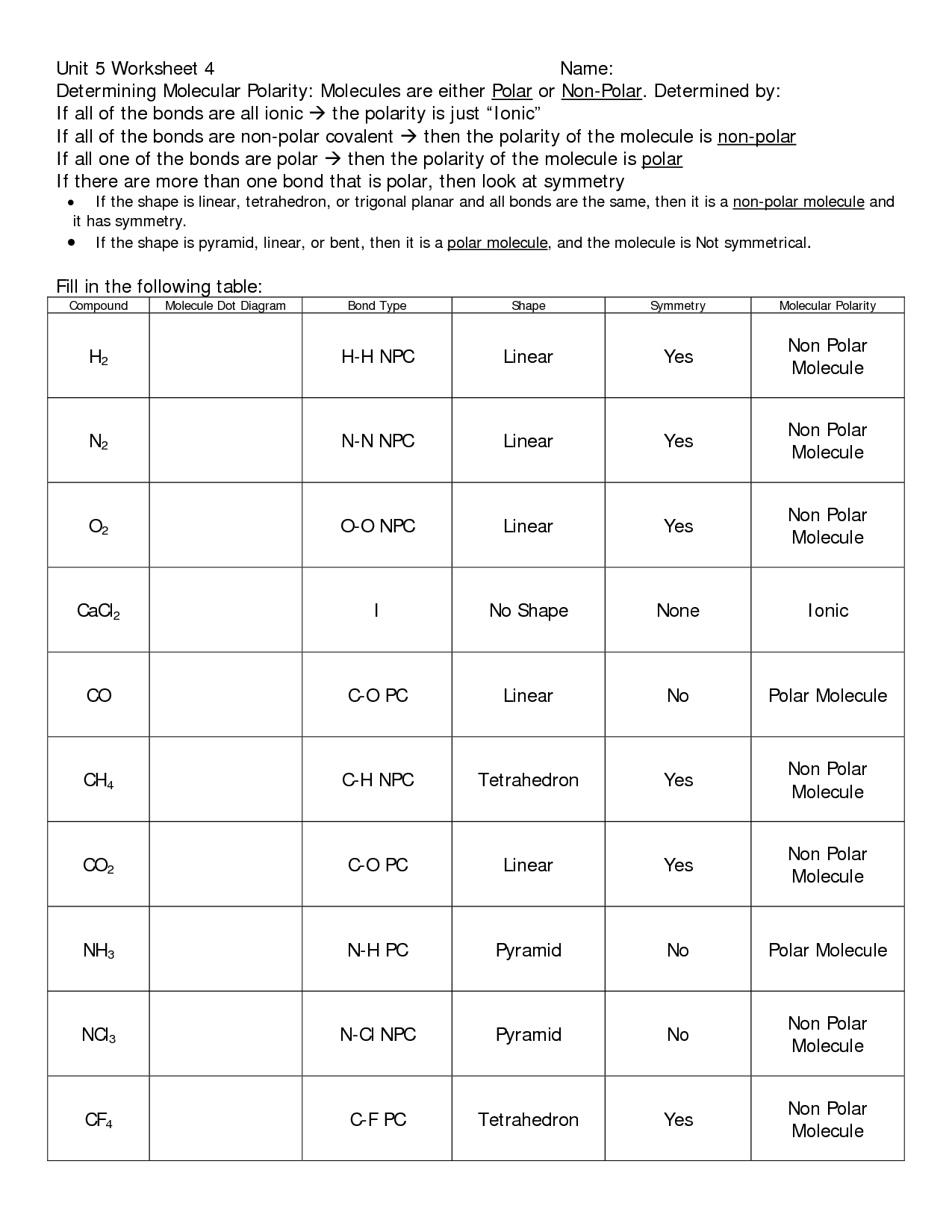
- Identifying Bond Types Based on Electronegativity: You’ll be given two elements and their electronegativity values and asked to determine the type of bond that would form between them. Remember, a large electronegativity difference (typically greater than 1.7) suggests an ionic bond, while a smaller difference suggests a covalent bond.
- Lewis Dot Structures: You’ll be asked to draw Lewis dot structures for various molecules and ions, illustrating how electrons are shared or transferred. This is a visual way to understand the formation of bonds.
- Properties of Compounds: You’ll be given the properties of a compound (e.g., melting point, boiling point, conductivity) and asked to determine whether it’s likely to be ionic or covalent. Ionic compounds generally have higher melting and boiling points and conduct electricity when dissolved in water, while covalent compounds typically have lower melting and boiling points and do not conduct electricity well.
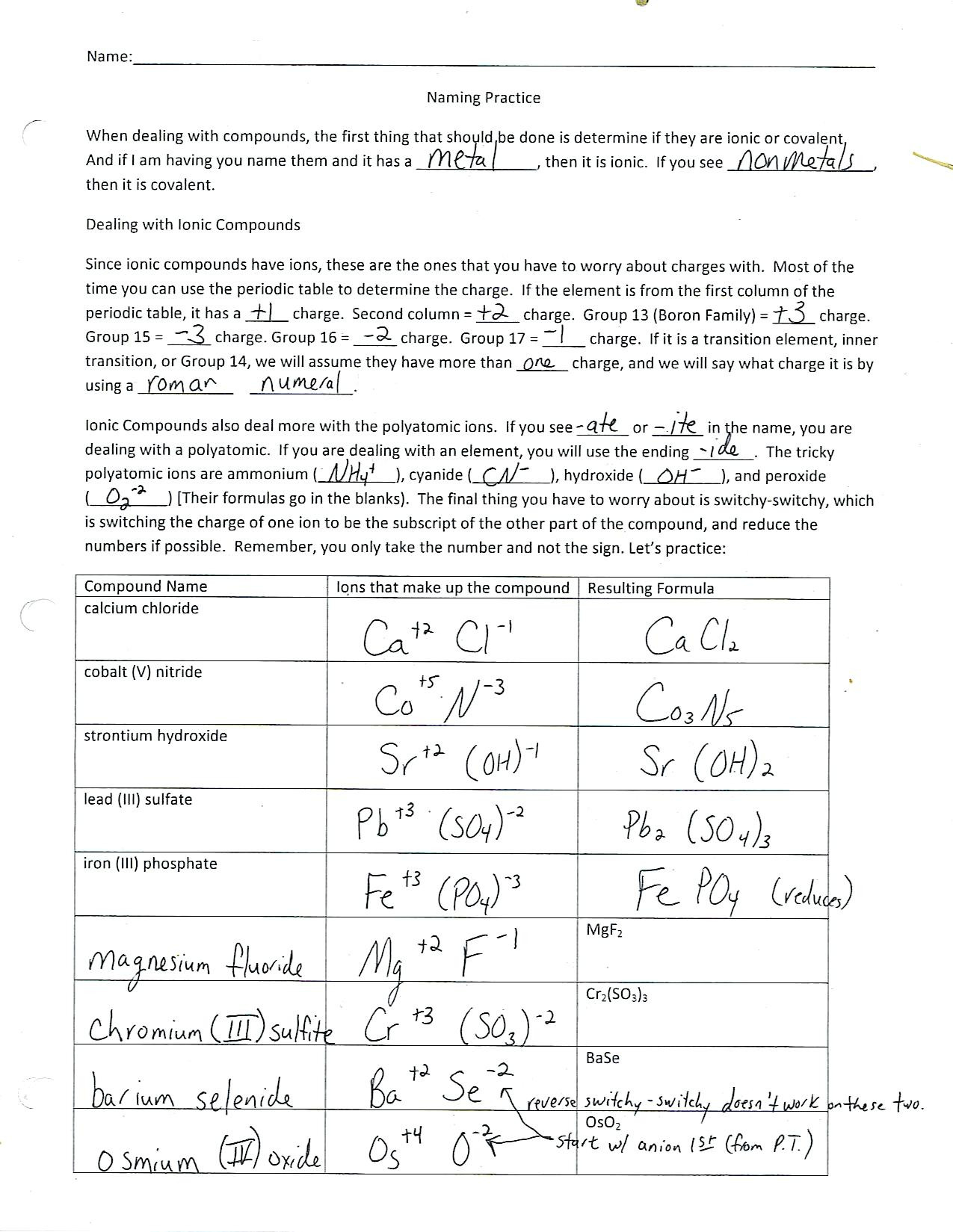
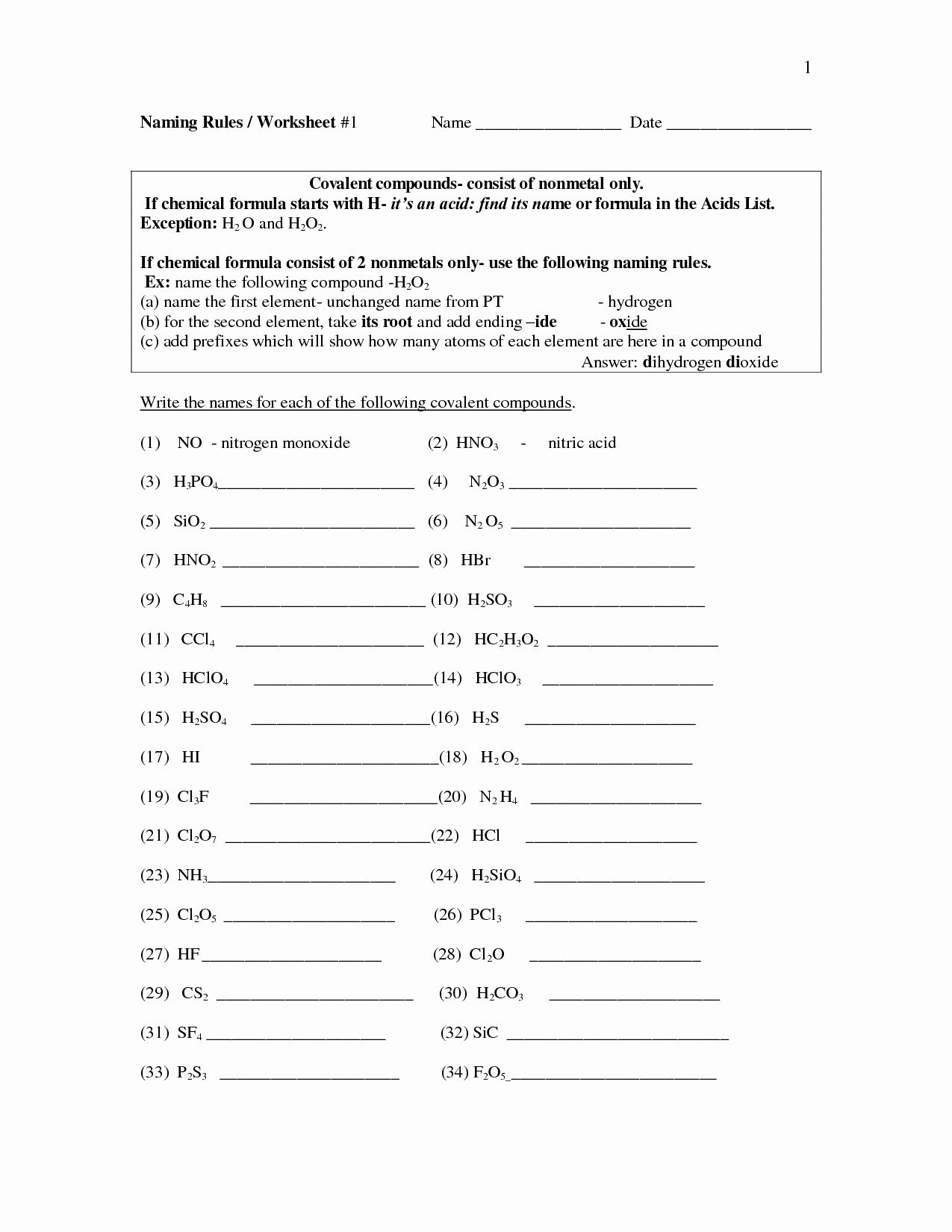
- Naming Compounds: You’ll be asked to name ionic and covalent compounds using the appropriate nomenclature rules. Remember, ionic compounds use the element name followed by the anion name (often with an “-ide” suffix), while covalent compounds use prefixes to indicate the number of atoms of each element (e.g., di-, tri-, tetra-).
- Formation of Ions: You’ll be asked which ions different elements form in order to achieve a stable octet. This ties directly to the elements placement within the periodic table.
Check Your Work: Solutions to a Hypothetical Worksheet
Below, we’ve presented a sample answer key for the kinds of questions described above. Remember to compare the answers with your own attempts to check your understanding and reasoning! Do not just copy the answers! Focus on understanding the *why* behind each answer. Consider this a chance to learn and review the content.
The following is an example of what the answer key may look like. Keep in mind that actual worksheets and answers will vary, depending on the teacher’s intent and subject matter.
Ionic and Covalent Bonds Worksheet – Sample Solutions
-
Question: Determine the type of bond formed between Sodium (Na) and Chlorine (Cl). Electronegativity of Na = 0.93, Electronegativity of Cl = 3.16.
Answer: Ionic. The electronegativity difference is 3.16 – 0.93 = 2.23, which is greater than 1.7. Therefore, Na donates an electron to Cl, forming an ionic bond. -
Question: Draw the Lewis dot structure for Carbon Dioxide (CO2).
Answer: O=C=O (Each oxygen atom shares two electrons with the carbon atom, forming double covalent bonds). The carbon has 4 valence electrons, and needs 4 more. Oxygen has 6, and needs 2 more. This leads to two double bonds. -
Question: A compound has a high melting point, conducts electricity when dissolved in water, and is formed from a metal and a nonmetal. Is it likely ionic or covalent?
Answer: Ionic. These properties are characteristic of ionic compounds. -
Question: Name the compound NaCl.
Answer: Sodium Chloride. -
Question: Name the compound N2O4.
Answer: Dinitrogen Tetroxide. -
Question: What ion does Potassium (K) form to achieve a stable octet?
Answer: K+. Potassium loses one electron to achieve the electron configuration of the noble gas Argon. -
Question: What ion does Oxygen (O) form to achieve a stable octet?
Answer: O2-. Oxygen gains two electrons to achieve the electron configuration of the noble gas Neon. -
Question: Determine the type of bond formed between two Chlorine (Cl) atoms. Electronegativity of Cl = 3.16
Answer: Nonpolar Covalent. The electronegativity difference is 3.16 – 3.16 = 0. Therefore, electrons are equally shared between both atoms. -
Question: What makes an ionic bond strong?
Answer: The strong electrostatic attraction between oppositely charged ions. -
Question: What type of bond holds water molecules together in liquid water?
Answer: Hydrogen bonds. (Note: The bonds *within* a water molecule are polar covalent, but the attraction between water molecules is due to hydrogen bonding.)
By carefully reviewing your work and the solutions, you can reinforce your understanding of ionic and covalent bonds. Remember that practice and a good understanding of the underlying principles are key to mastering this important concept in chemistry.
If you are searching about Identifying Ionic And Covalent Bonds Worksheet Answer Key – Printable you’ve came to the right place. We have 20 Pics about Identifying Ionic And Covalent Bonds Worksheet Answer Key – Printable like Ionic & Covalent Bonding – ppt download – Worksheets Library, Ionic And Covalent Bonds Worksheet With Answers – Worksheets For and also 11 Ionic And Covalent Compounds Worksheet / worksheeto.com. Read more:
Identifying Ionic And Covalent Bonds Worksheet Answer Key – Printable

davida.davivienda.com
WORKSHEET: NOMECLATURE OF IONIC AND COVALENT COMPOUNDS | Exercises

worksheets.clipart-library.com
Naming Mixed Ionic And Covalent Compounds Worksheet For 9th – 12th

worksheets.clipart-library.com
Ionic And Covalent Bonds Worksheet – Printable Calendars AT A GLANCE

ataglance.randstad.com
Ionic And Covalent Bonds Worksheet With Answers – Worksheets For

worksheets.ekocraft-appleleaf.com
[NEW] Identifying Ionic And Covalent Bonds Worksheet
![[NEW] Identifying Ionic And Covalent Bonds Worksheet](http://66.39.52.159/ddavis/CHif40.bmp)
negkatuco.weebly.com
11 Ionic And Covalent Compounds Worksheet / Worksheeto.com
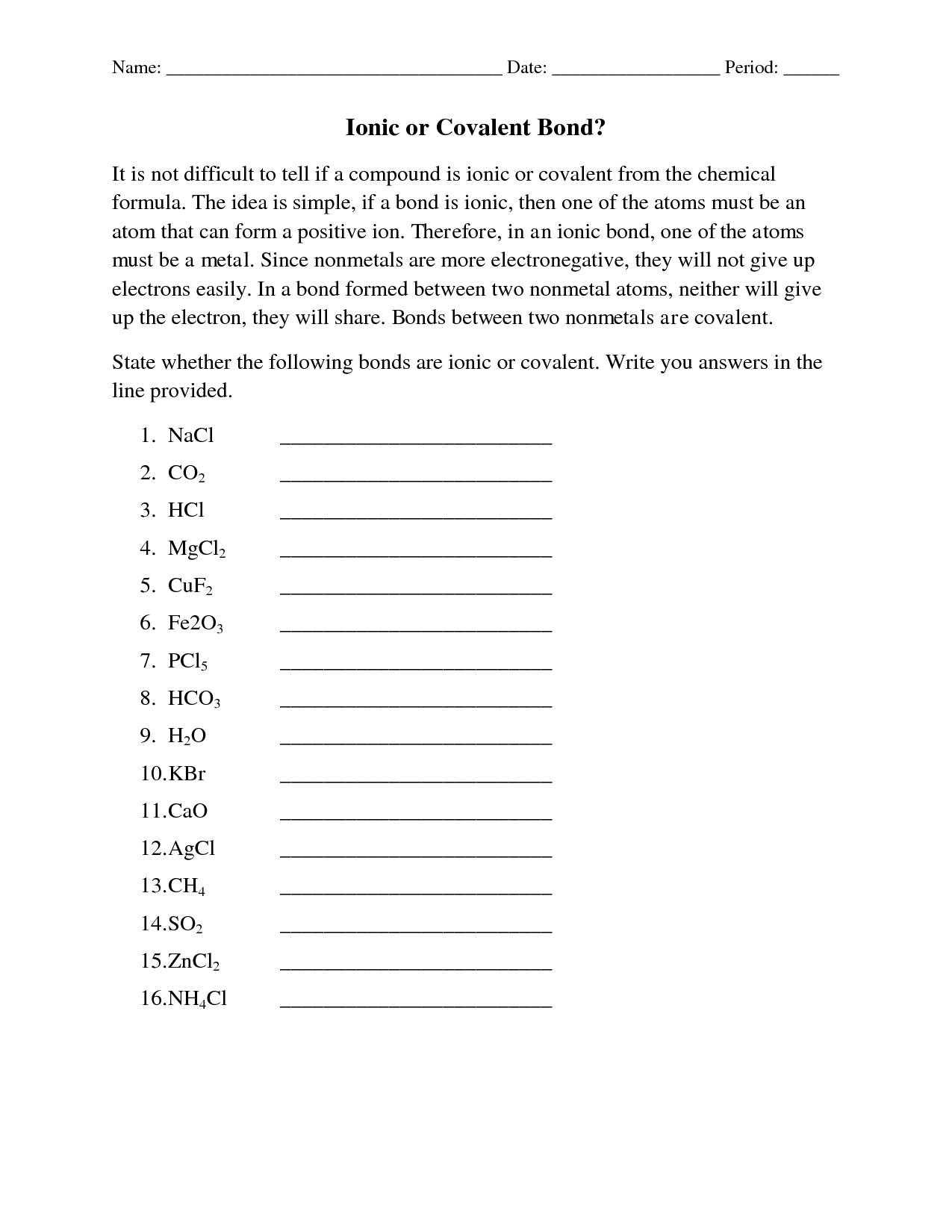
www.worksheeto.com
Kami Export – Ionic And Covalent Bonding Practice (1) – WLHS

worksheets.clipart-library.com
Unit 6 Worksheet 3 Ionic Compounds At Netcoltonblog Blog
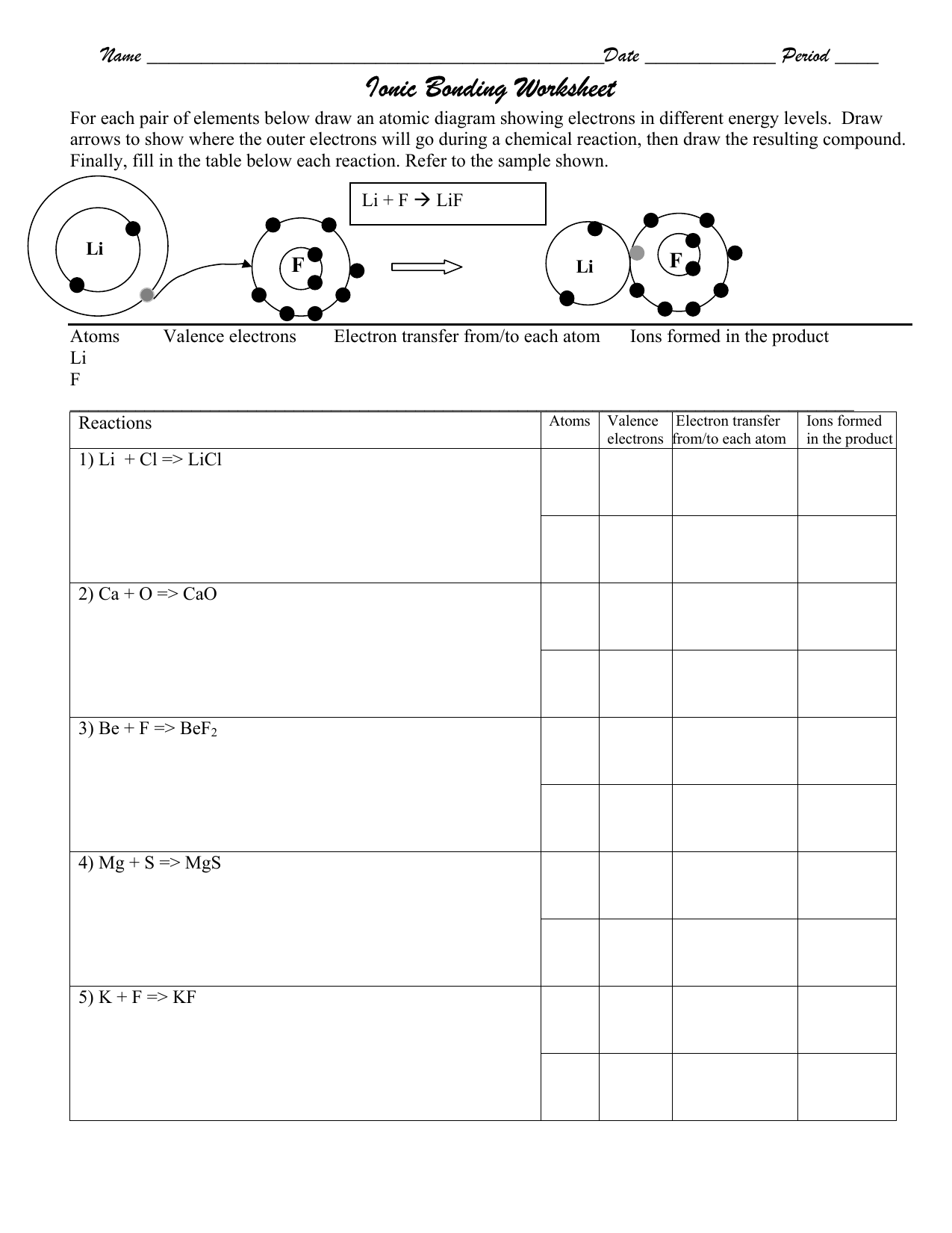
netcoltonblog.blob.core.windows.net
Ionic & Covalent Bonding – Ppt Download – Worksheets Library

worksheets.clipart-library.com
Ionic And Covalent Bonds Coloring Worksheets

worksheetcampusguy.z13.web.core.windows.net
WS – Drawing Covalent Bond Diagrams PDF – Name: Class: Date

worksheets.clipart-library.com
Ionic And Covalent Bonds Coloring Worksheet – Printable Word Searches
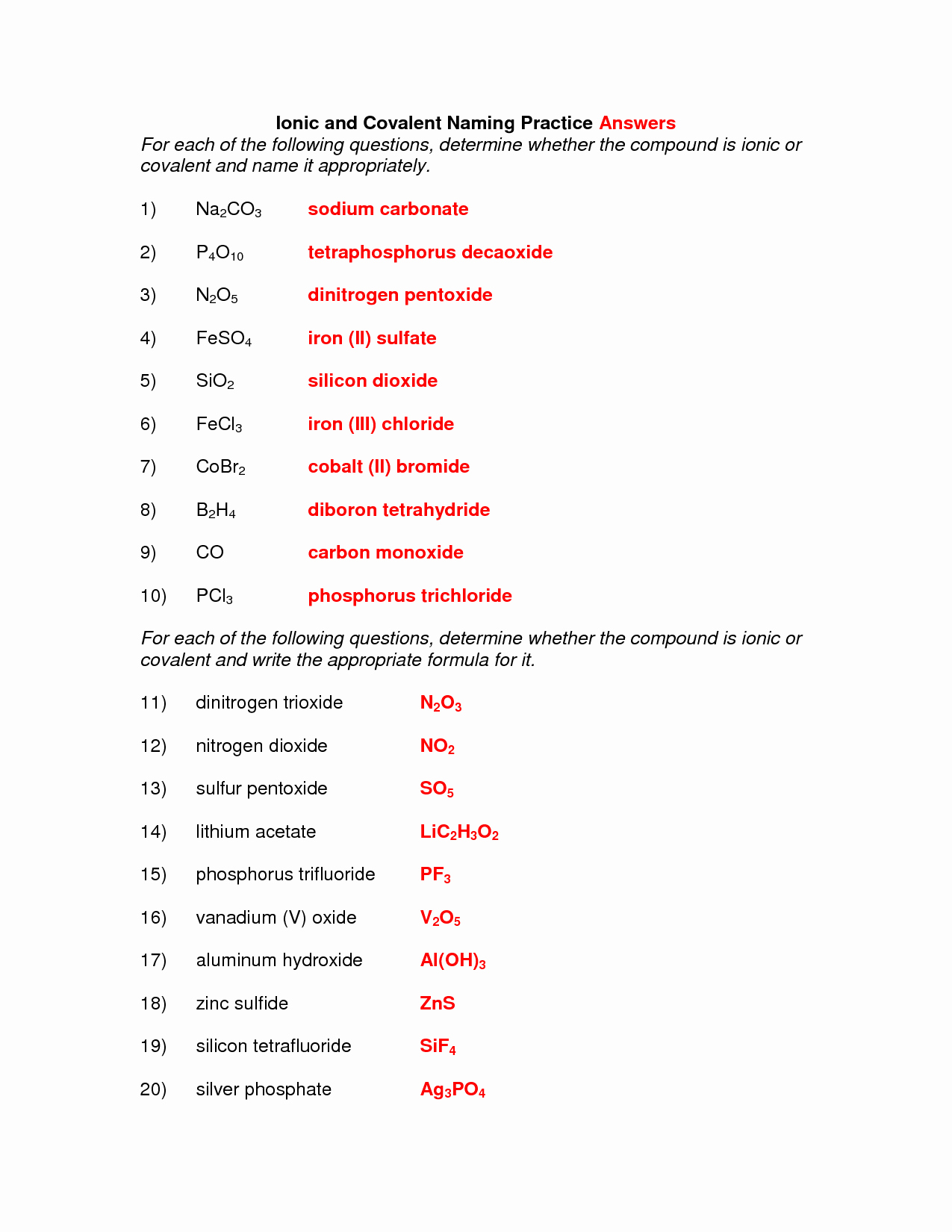
davida.davivienda.com
Ionic And Covalent Bonding Worksheet – Printable Word Searches

davida.davivienda.com
Naming Ionic Compounds Worksheet Pdf – CompoundWorksheets.com
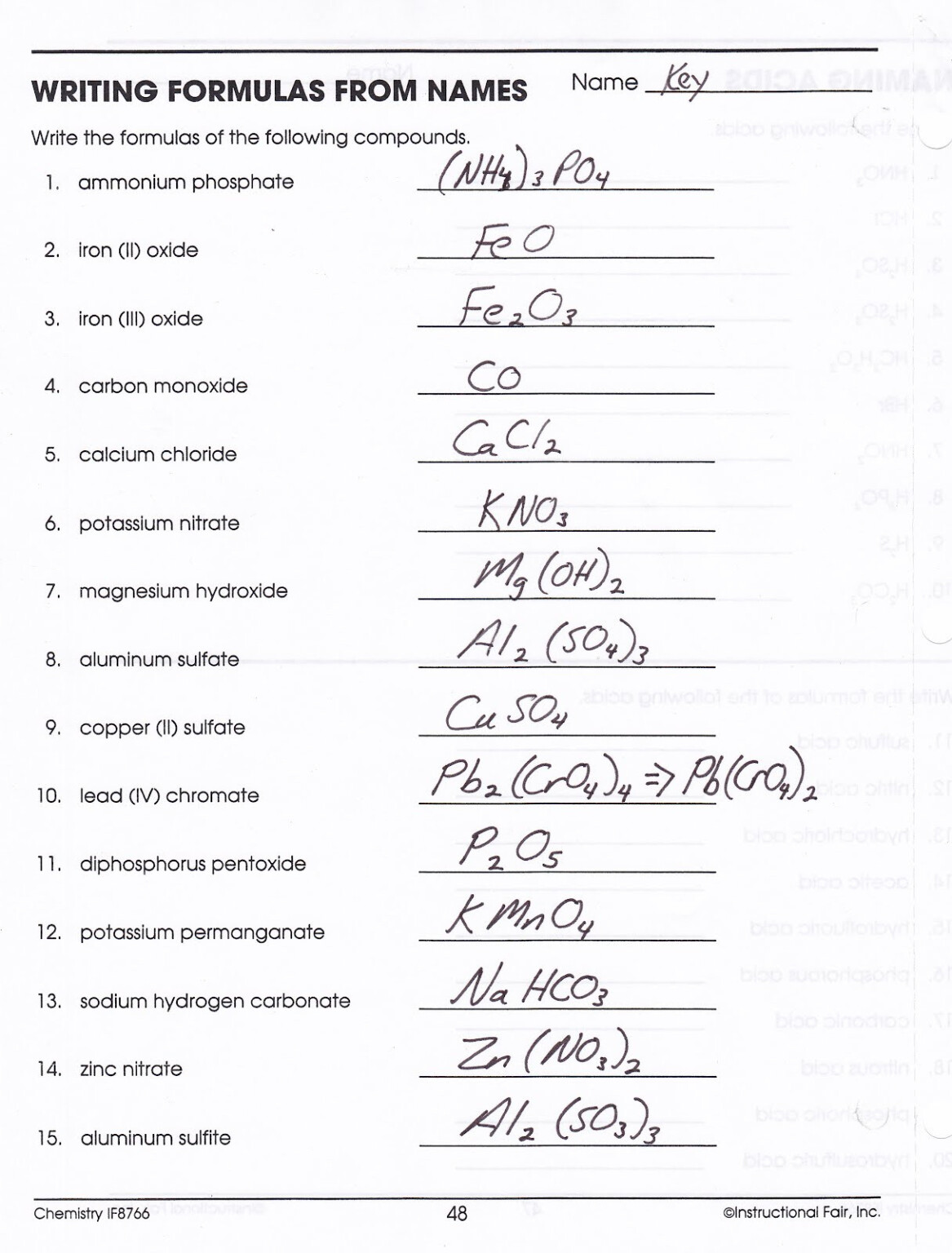
www.compoundworksheets.com
Ionic And Covalent Bonds Color Worksheet | Coloring Pages
master.d1auo82m53mcxd.amplifyapp.com
Naming Compounds Practice Worksheet Inspirational Mixed Ionic Covalent
www.compoundworksheets.com
Bonding Basics Ionic Bonds Worksheet
consumo372lessonlearning.z13.web.core.windows.net
Ionic Bond And Covalent Bond Venn Diagram

tacavasa0wlessonmedia.z14.web.core.windows.net
Covalent Bonds Gizmo – Name: Date: Student Exploration: Ionic Bonds
www.studocu.com
Naming compounds practice worksheet inspirational mixed ionic covalent. Identifying ionic and covalent bonds worksheet answer key. Ionic and covalent bonds worksheet