The integumentary system, our body’s largest organ, is a fascinating and complex network responsible for protecting us from the outside world. It’s more than just skin deep! Understanding its structure and function is crucial in biology and essential for healthcare professionals. Many students encounter the integumentary system in their anatomy and physiology courses, often through worksheets designed to test their knowledge. Let’s face it, those worksheets can be challenging! So, if you’re struggling to nail those answers, you’ve come to the right place. This post provides insights into some common integumentary system worksheet questions and offers a helpful answer key to guide your learning. Remember, simply copying answers isn’t the goal – it’s about understanding the *why* behind each one.
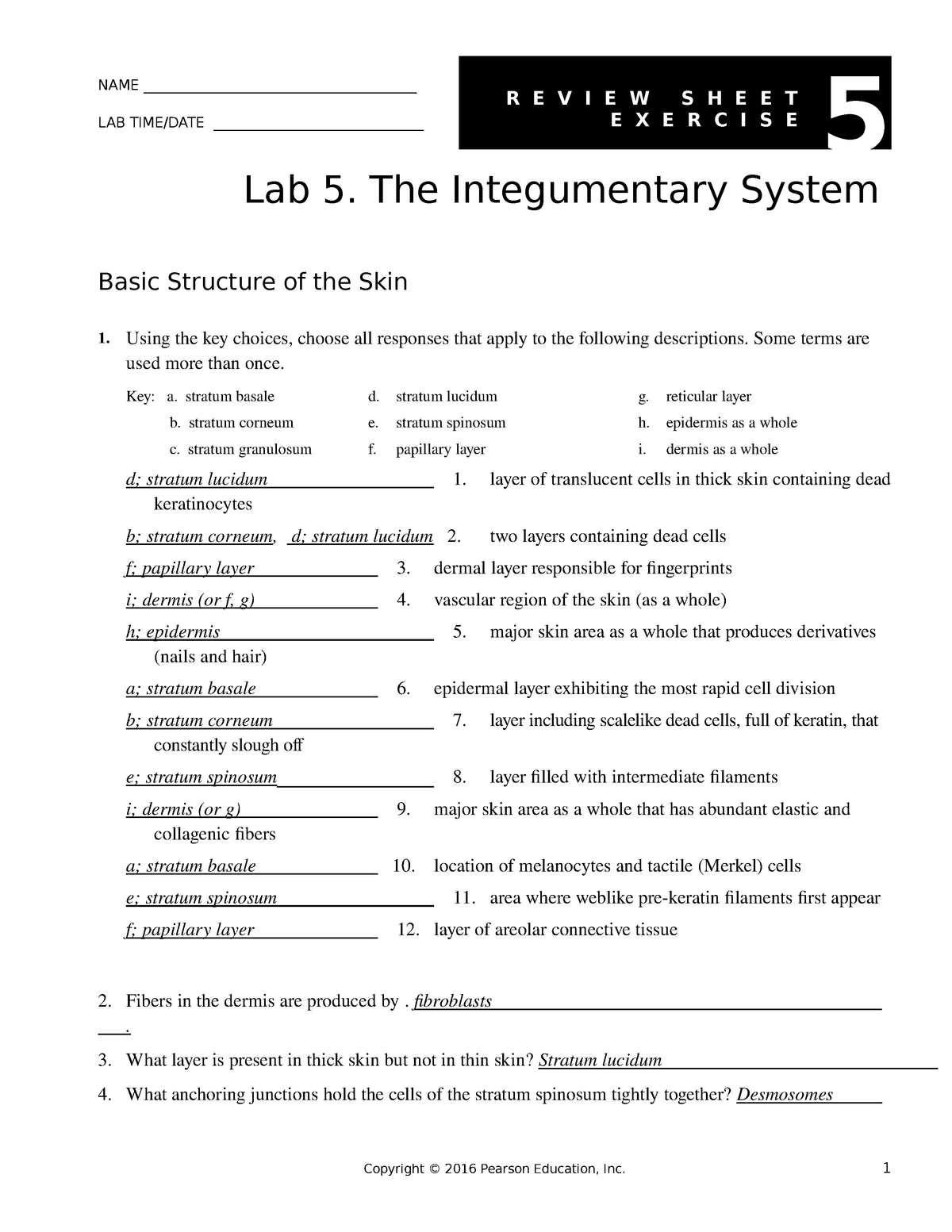
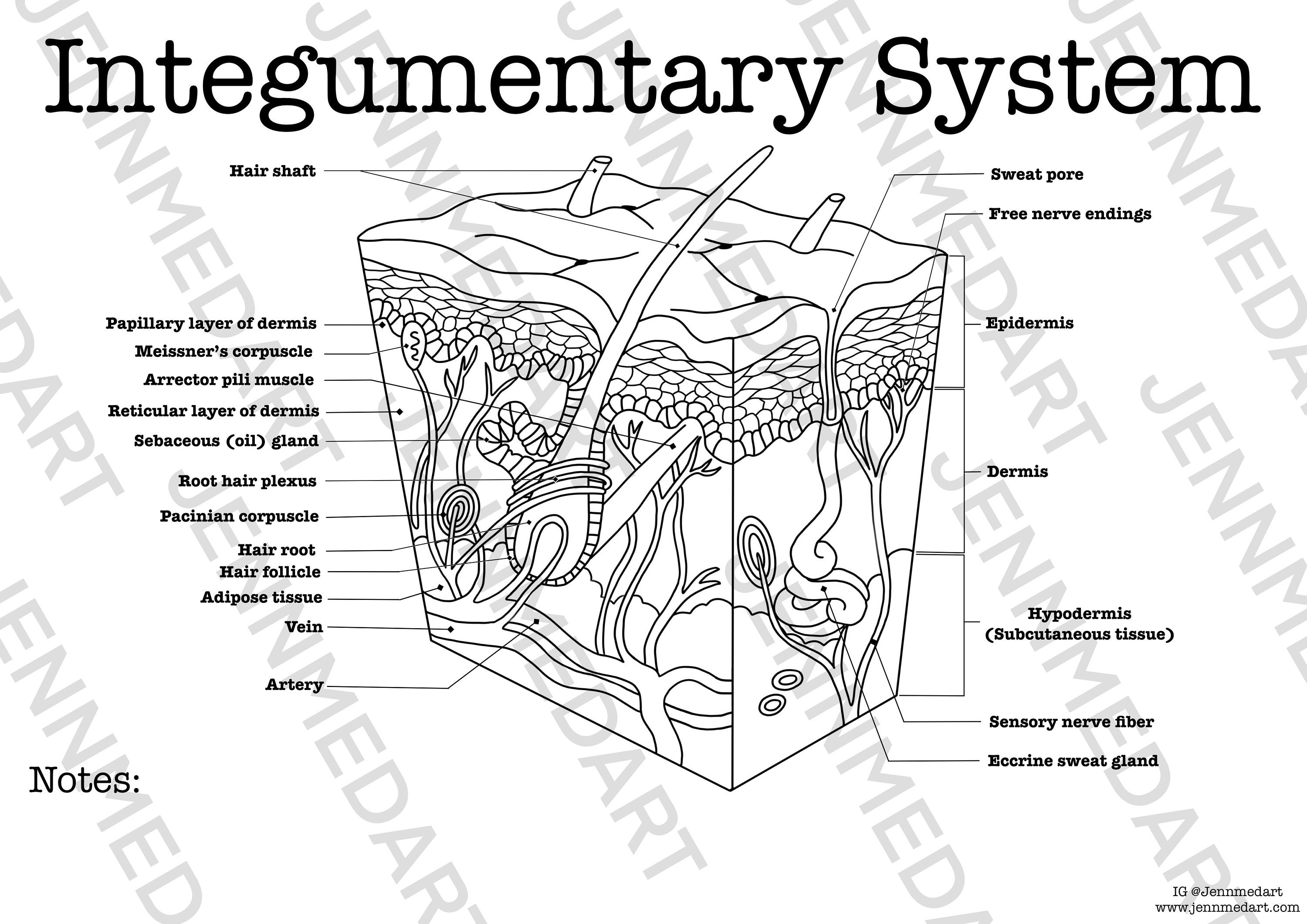
Worksheets on the integumentary system commonly cover topics ranging from the layers of the skin (epidermis, dermis, hypodermis) and their specific cells to the accessory structures (hair, nails, sweat glands) and their functions. Understanding these components and how they work together is key to mastering this system. Let’s delve into some typical questions and explore the answers in detail.
Integumentary System Worksheet Answers
Below, you will find a list of potential questions you might encounter on an integumentary system worksheet, followed by their corresponding answers. Remember to use this as a study guide and refer back to your textbook or notes for a more in-depth understanding. The purpose of providing the answer is not merely copy-and-paste. It is to learn, to expand your learning horizon.
Sample Questions and Answers:
-
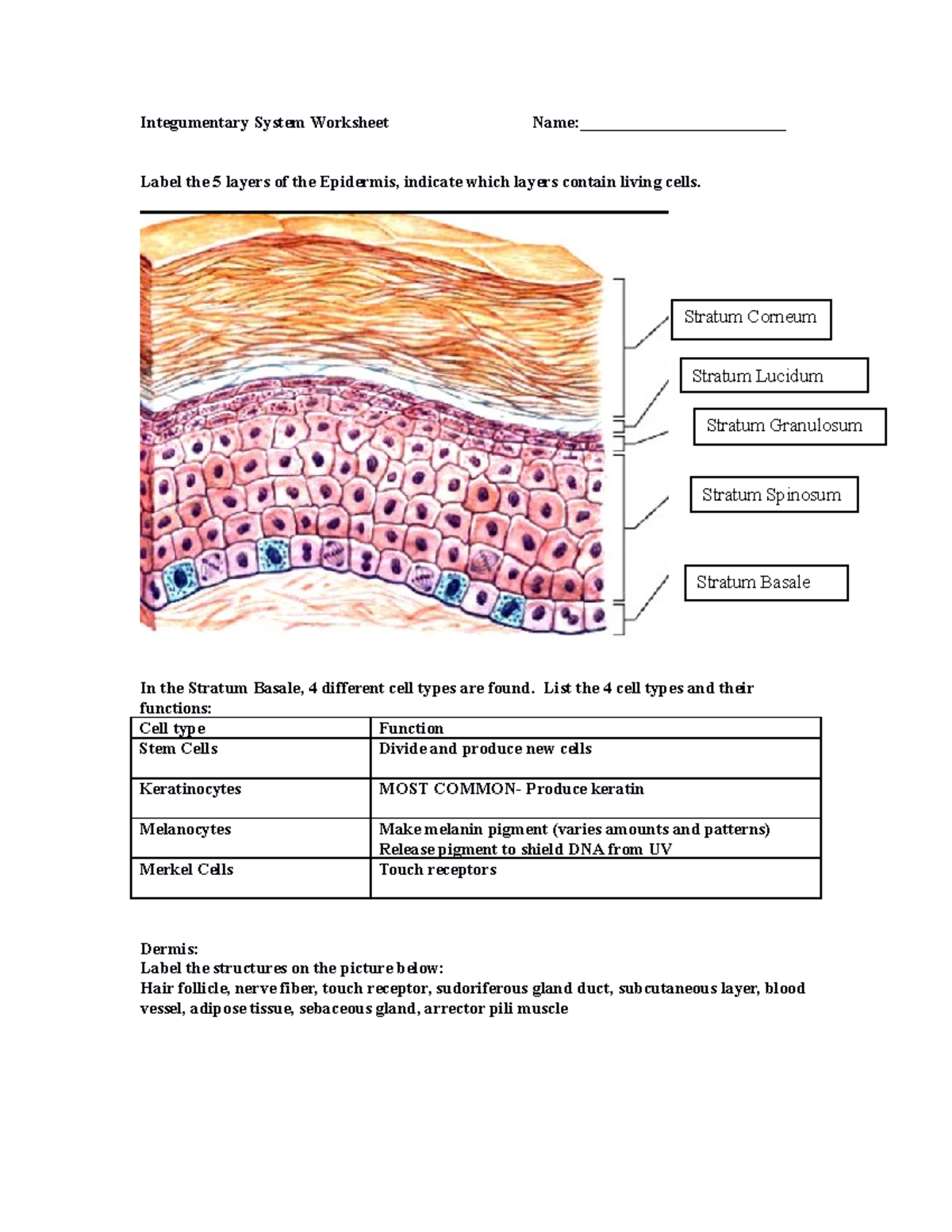
Question: List the layers of the epidermis in order, from superficial to deep.
- Answer: Stratum corneum, Stratum lucidum (only in thick skin), Stratum granulosum, Stratum spinosum, Stratum basale.
-
Question: What type of tissue primarily makes up the dermis?
- Answer: Dense irregular connective tissue. This provides strength and elasticity to the skin.
-
Question: What is the function of melanocytes?
- Answer: Melanocytes produce melanin, a pigment that absorbs UV radiation and protects the skin from sun damage. Melanin also contributes to skin color.
-
Question: Describe the role of keratinocytes in the epidermis.
- Answer: Keratinocytes are the most abundant cell type in the epidermis. They produce keratin, a tough fibrous protein that provides protection and waterproofing to the skin. As they migrate toward the surface, they accumulate keratin and eventually die, forming the protective stratum corneum.
-
Question: What are the functions of the subcutaneous layer (hypodermis)?
- Answer: The hypodermis, primarily composed of adipose tissue, provides insulation, energy storage, cushioning, and connects the skin to underlying tissues.
-
Question: Differentiate between eccrine and apocrine sweat glands.
- Answer: Eccrine sweat glands are found all over the body and produce watery sweat for thermoregulation. Apocrine sweat glands are found primarily in the axillary and genital regions and produce a thicker, oily sweat that contains pheromones. They become active at puberty.
-
Question: What is the function of sebaceous glands?
- Answer: Sebaceous glands secrete sebum, an oily substance that lubricates the skin and hair, preventing them from drying out. Sebum also has antibacterial properties.
-
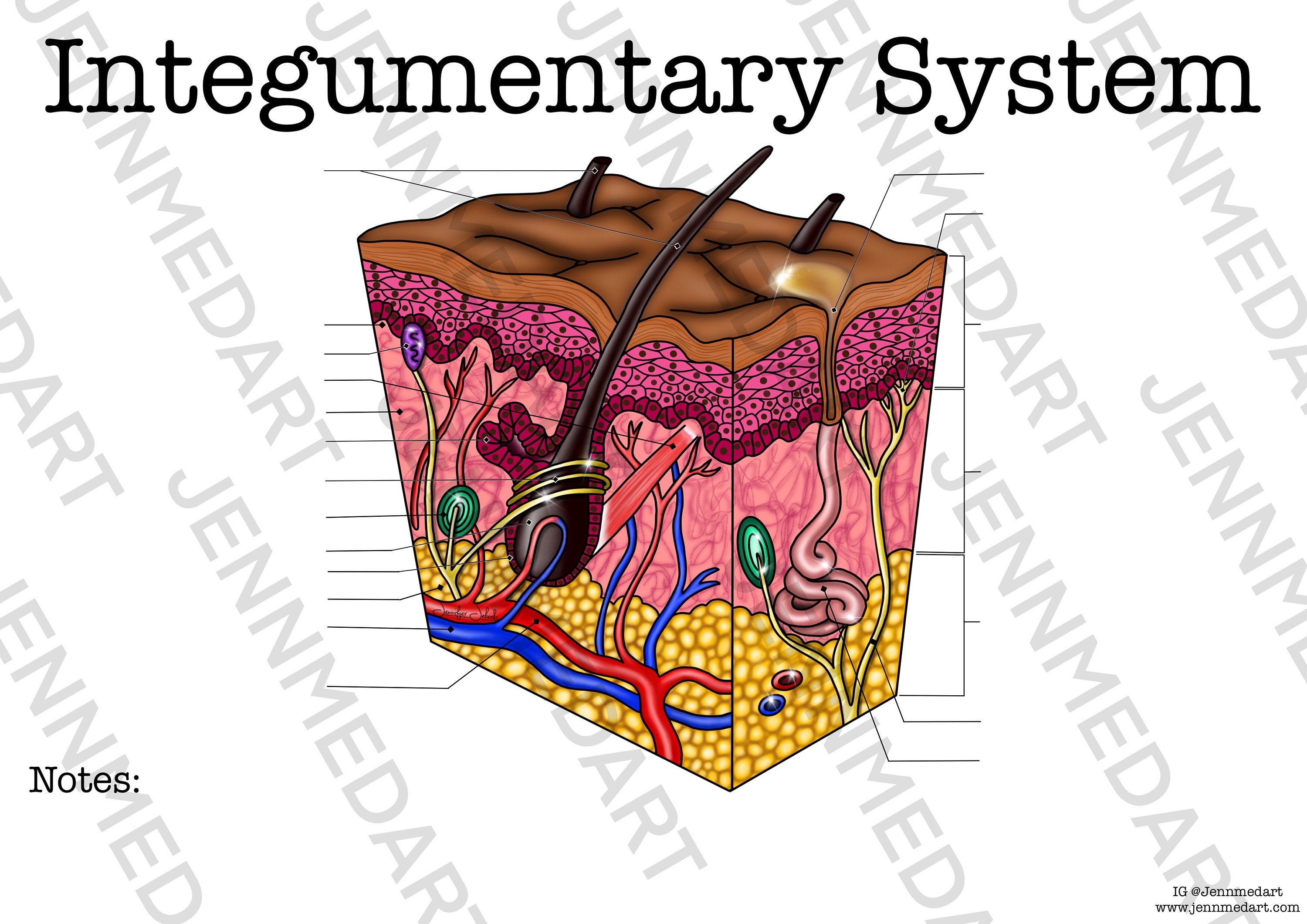
Question: Describe the structure of a hair follicle.
- Answer: A hair follicle is a tube-like invagination of the epidermis that extends into the dermis or hypodermis. It contains the hair root, which is surrounded by the hair bulb where hair growth occurs. The hair follicle also contains the arrector pili muscle, which causes “goosebumps” when contracted.
-
Question: What is the function of the arrector pili muscle?
- Answer: The arrector pili muscle is a small smooth muscle attached to the hair follicle. When it contracts, it pulls the hair follicle upright, causing the hair to stand on end, and creates “goosebumps.” This can help trap a layer of air near the skin for insulation or can be a response to fear or excitement.
-
Question: How does the integumentary system contribute to thermoregulation?
-
Answer: The integumentary system helps regulate body temperature through various mechanisms:
- Sweat glands release sweat, which cools the body through evaporation.
- Blood vessels in the dermis can dilate (vasodilation) to release heat or constrict (vasoconstriction) to conserve heat.
- Adipose tissue in the hypodermis provides insulation.
- Arrector pili muscles raise hairs to trap a layer of air for insulation (though less effective in humans compared to animals with thick fur).
-
Answer: The integumentary system helps regulate body temperature through various mechanisms:
-
Question: How does the integumentary system contribute to vitamin D synthesis?
- Answer: The skin contains a precursor molecule that, when exposed to UV radiation from sunlight, is converted to vitamin D3 (cholecalciferol). This vitamin D3 is then processed by the liver and kidneys to form active vitamin D, which is essential for calcium absorption and bone health.
Remember, this is not an exhaustive list, but it covers some of the key concepts you’re likely to encounter in an integumentary system worksheet. Understanding these concepts will not only help you answer worksheet questions but will also give you a solid foundation for further studies in anatomy and physiology. Don’t just memorize the answers; strive to understand the *why* behind them. Good luck with your studies!
If you are searching about Integumentary System Labeling Worksheet you’ve came to the right web. We have 20 Pictures about Integumentary System Labeling Worksheet like Integumentary System Worksheet for 12th – Higher Ed | Lesson Planet, Skin and Integumentary System Stations Activity – Flying Colors and also Integumentary System Worksheet With Answers. Here you go:
Integumentary System Labeling Worksheet
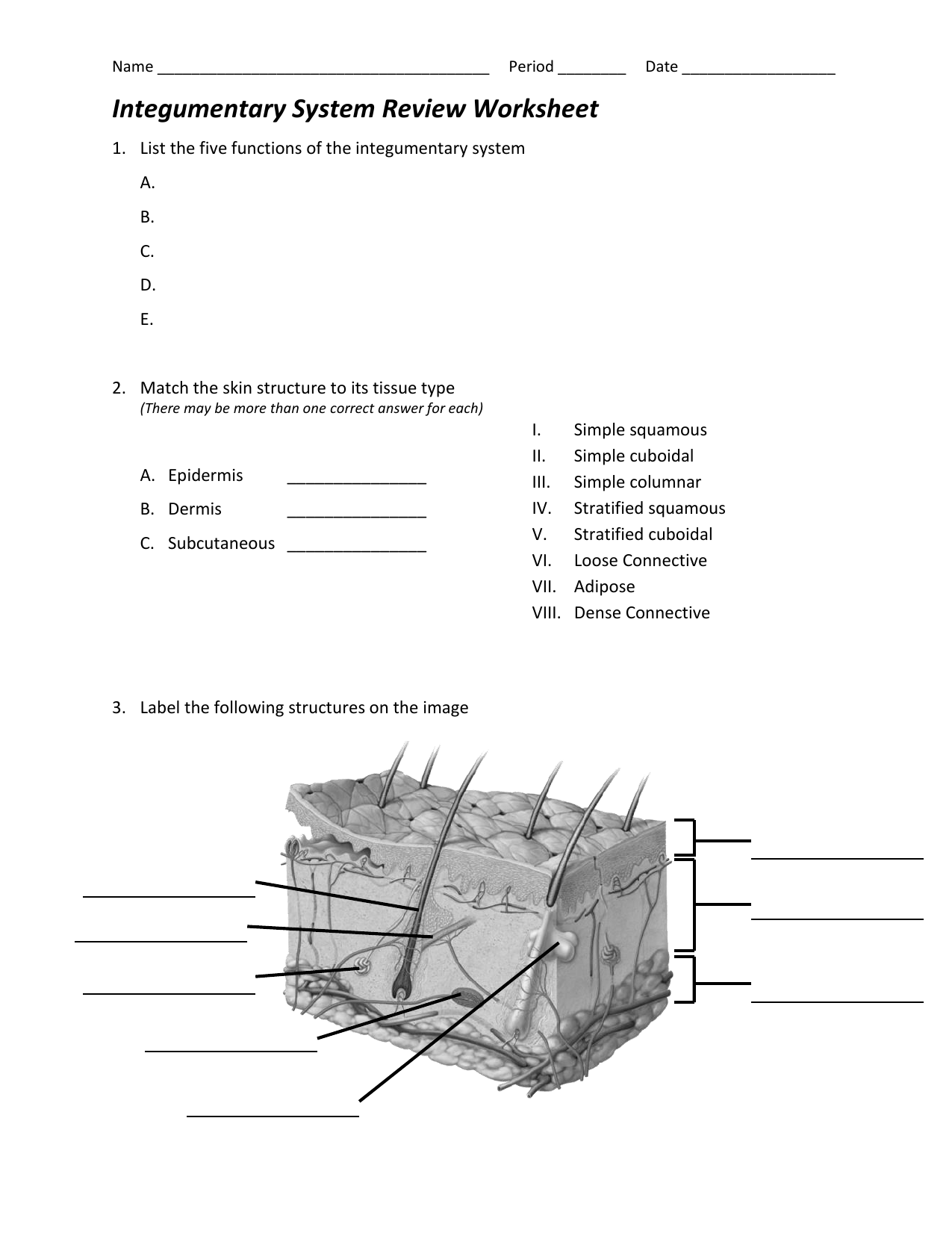
studyrodstangerkl.z21.web.core.windows.net
Integumentary System Worksheet – The Integumentary System Label The
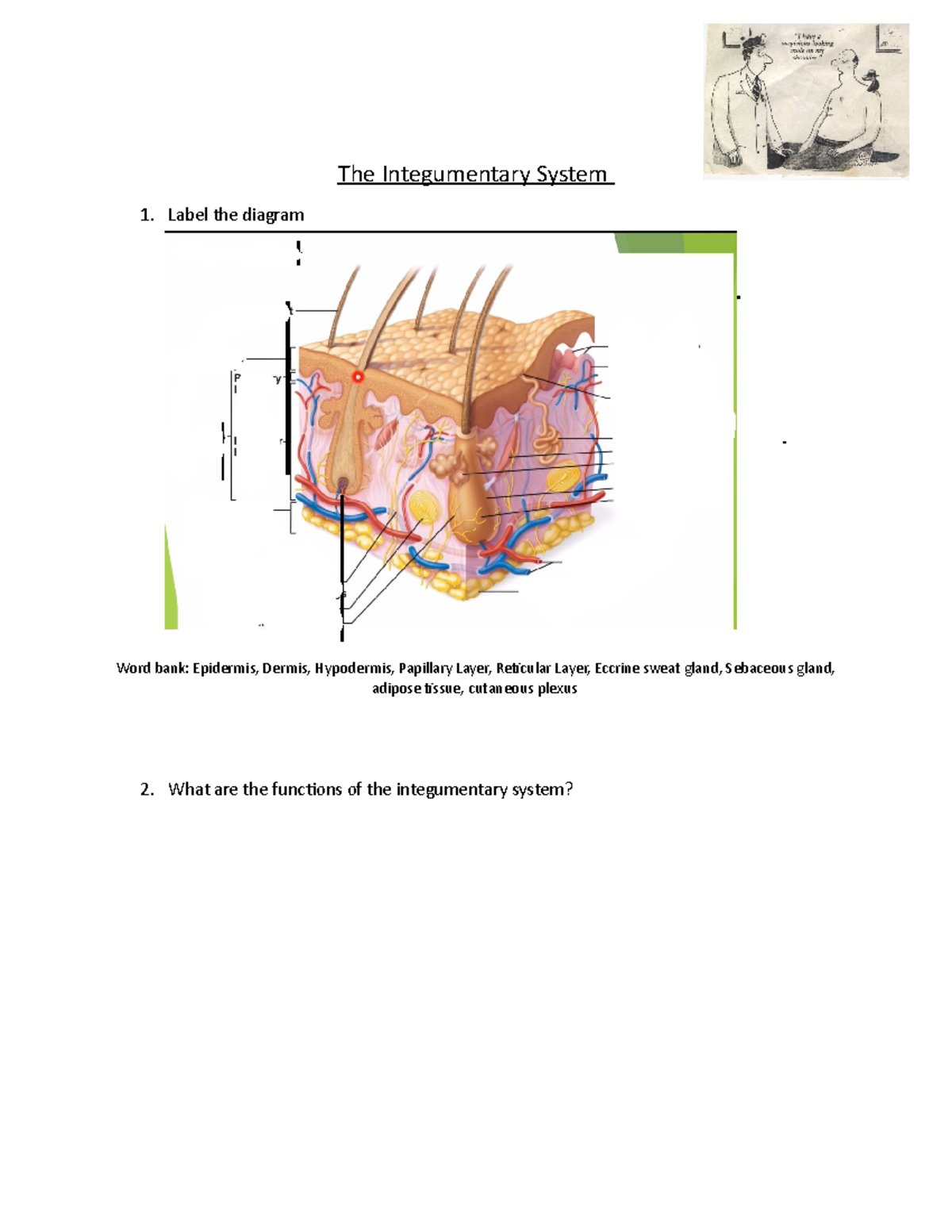
www.studocu.com
Integumentary System Worksheet With Answers
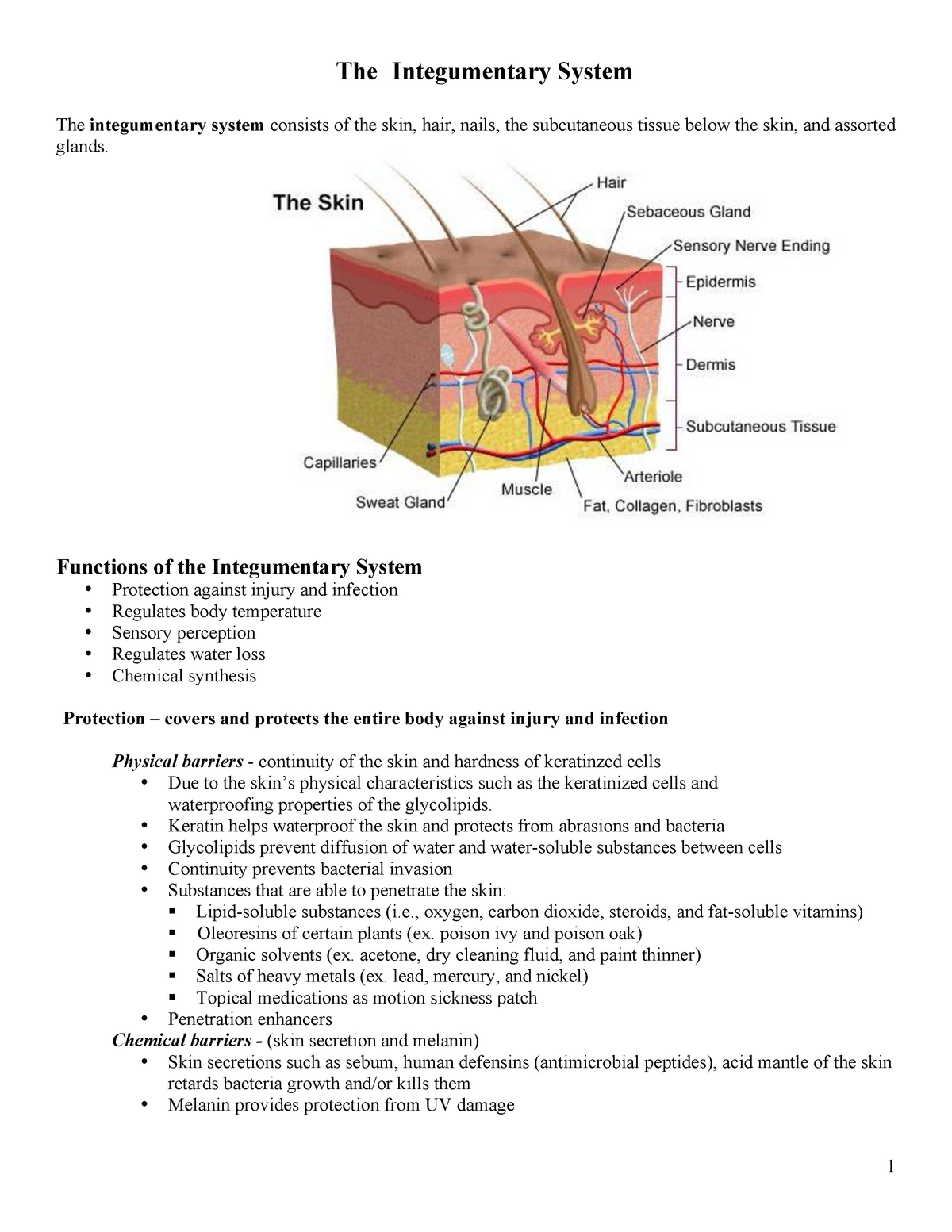
neergaan7pydblearning.z13.web.core.windows.net
Printable Integumentary System Labeling Worksheet – Free Worksheets For

italojohnson.com
Integumentary System Diagram Worksheet
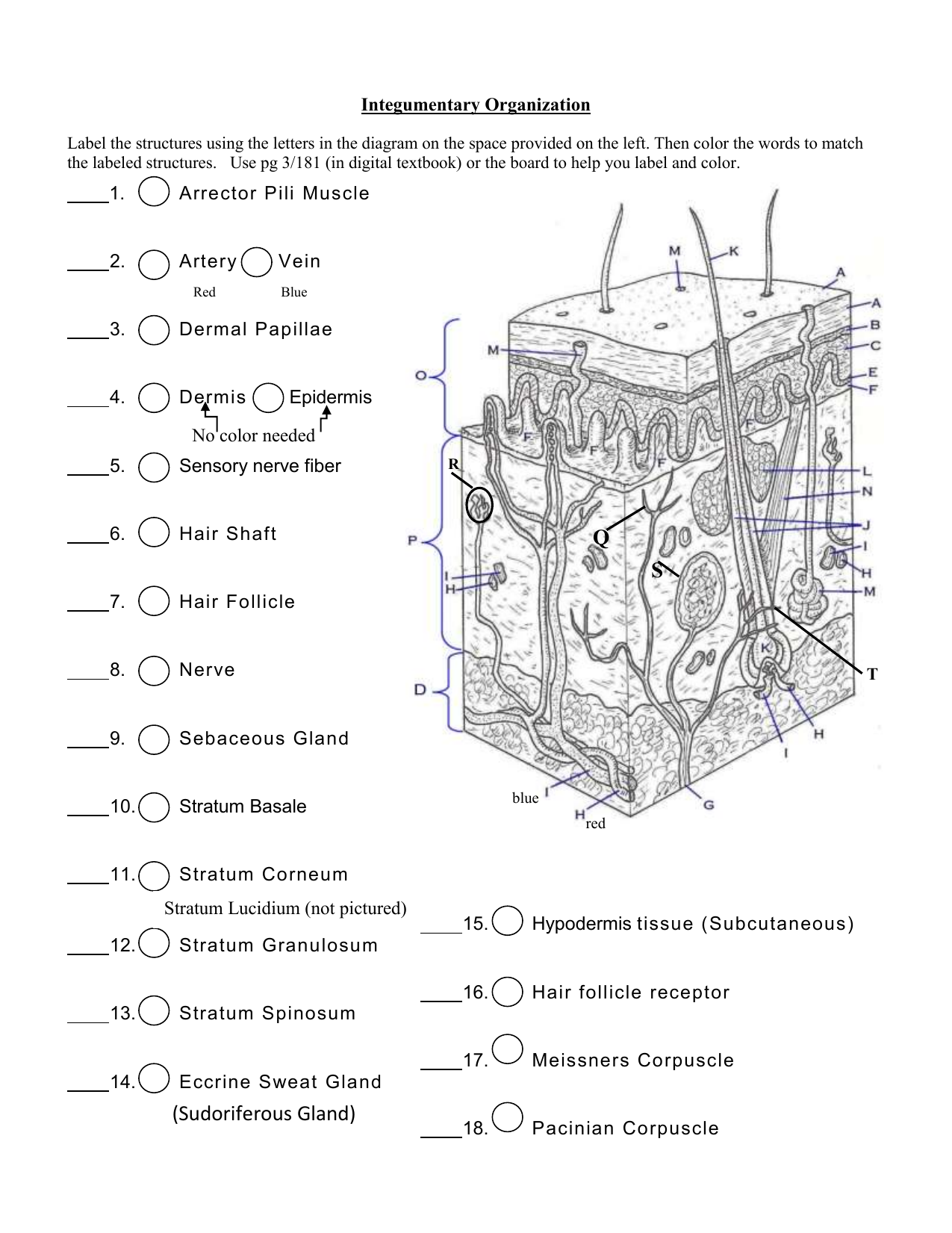
learningschoolparish.z21.web.core.windows.net
The Integumentary System Review Sheet Exercise | Exercises English

worksheets.clipart-library.com
SOLUTION: Integumentary System Worksheet – Studypool

www.studypool.com
Integumentary System Worksheet For 12th – Higher Ed | Lesson Planet

worksheets.clipart-library.com
Skin And Integumentary System Stations Activity – Flying Colors

worksheets.clipart-library.com
Integumentary System Worksheet Answers – Proworksheet.my.id
www.proworksheet.my.id
Integumentary System Worksheet Coloring
printabletiriterao4.z22.web.core.windows.net
SOLUTION: Integumentary System Review Worksheet Key Physio 2013

worksheets.clipart-library.com
Free The Skin Integumentary System Worksheet Answers, Download Free The

worksheets.clipart-library.com
Integumentary System Word Search Puzzle Worksheet Activity PDF

worksheets.clipart-library.com
Integumentary System Worksheet Answers | Integumentary System

www.pinterest.com
SOLUTION: Integumentary System Worksheet With Answers – Studypool

www.studypool.com
Integumentary System Anatomy Worksheet Single FILLABLE Digital Download
www.etsy.com
Integumentary System Worksheet For 12th – Higher Ed | Lesson Planet

worksheets.clipart-library.com
Integumentary System Worksheet – In The Stratum Basale, 4 Different
www.studocu.com
Review Worksheet – Integumentary (Ch 5) KEY – BIOL 2210 – A&P

worksheets.clipart-library.com
Integumentary system worksheet. Integumentary system word search puzzle worksheet activity pdf. The integumentary system review sheet exercise