Struggling with your Periodic Trends Practice Worksheet? You’re not alone! Many students find understanding the trends of electronegativity, ionization energy, atomic radius, and metallic character a bit challenging. The periodic table is more than just a colorful chart; it’s a roadmap to understanding the properties of elements and predicting their behavior. Mastering these trends is crucial for success in chemistry. This post aims to provide you with the answers and, more importantly, a deeper understanding of *why* those answers are correct. Think of it less as simply copying and more as checking your work and reinforcing your knowledge. Remember, understanding the underlying principles is key to truly conquering the periodic table!
Periodic Trends Practice Worksheet Answers
Below are the answers to a typical Periodic Trends Practice Worksheet. Before diving in, remember that understanding the *reasons* behind these trends is critical. Each answer is based on the interplay of effective nuclear charge (the net positive charge experienced by valence electrons) and shielding (the blocking of nuclear charge by inner electrons).
Definitions & Important Concepts
- Electronegativity: The ability of an atom in a chemical bond to attract electrons to itself. Generally increases across a period and decreases down a group. Fluorine is the most electronegative element.
- Ionization Energy: The energy required to remove an electron from a gaseous atom or ion. Generally increases across a period and decreases down a group. High ionization energies indicate strong attraction to electrons.
- Atomic Radius: A measure of the size of an atom, typically the distance from the nucleus to the outermost electron shell. Generally decreases across a period and increases down a group.
- Metallic Character: How readily an element loses electrons in chemical reactions. Generally decreases across a period and increases down a group. Metals are good conductors of heat and electricity.
- Effective Nuclear Charge (Zeff): The net positive charge experienced by an electron in a multi-electron atom. This is less than the actual nuclear charge due to shielding by core electrons.
Answer Key (Sample Worksheet)
This answer key assumes a common type of periodic trends worksheet. Your specific worksheet might have different questions, but the principles behind the answers will remain the same. Use this as a guide to understanding, not just copying!
- Question 1: Which element has the highest electronegativity?
- Answer: Fluorine (F)
- Explanation: Electronegativity generally increases across a period and decreases down a group. Fluorine is located in the upper right corner of the periodic table (excluding noble gases).
- Answer: Cesium (Cs) or Francium (Fr) (Francium is highly radioactive and often excluded)
- Explanation: Ionization energy generally increases across a period and decreases down a group. Cesium and Francium are located in the lower left corner of the periodic table. Elements in this region readily lose electrons.
- Answer: Cesium (Cs) or Francium (Fr) (Francium is highly radioactive and often excluded)
- Explanation: Atomic radius generally decreases across a period and increases down a group. Cesium and Francium are located in the lower left corner of the periodic table. As you move down a group, you add electron shells, increasing the size.
- Answer: Cesium (Cs) or Francium (Fr) (Francium is highly radioactive and often excluded)
- Explanation: Metallic character generally decreases across a period and increases down a group. Cesium and Francium are located in the lower left corner of the periodic table. Elements with low ionization energies and large atomic radii tend to exhibit the most metallic properties.
- Answer: Na < Mg < S < Cl
- Explanation: Locate the elements on the periodic table. Sodium (Na) and Magnesium (Mg) are in Period 3, Group 1 and 2 respectively. Sulfur (S) and Chlorine (Cl) are in Period 3, Group 16 and 17 respectively. Electronegativity increases as you move from left to right.
- Answer: Br > Se > Ca > K
- Explanation: Locate the elements on the periodic table. Potassium (K) and Calcium (Ca) are in Period 4, Group 1 and 2 respectively. Selenium (Se) and Bromine (Br) are in Period 4, Group 16 and 17 respectively. Ionization energy increases as you move from left to right.
- Answer: As you move across a period, the number of protons in the nucleus increases, leading to a greater effective nuclear charge (Zeff). This stronger positive charge pulls the electrons closer to the nucleus, resulting in a smaller atomic radius. Although the number of electrons also increases, they are added to the same energy level (same principal quantum number), and the shielding effect remains relatively constant. Therefore, the increasing nuclear charge dominates.
- Answer: As you move down a group, the number of electron shells increases. The outermost electrons are further from the nucleus and are shielded more effectively by the inner electrons. This reduces the effective nuclear charge experienced by the valence electrons, making it easier to remove them. Therefore, the ionization energy decreases.
By understanding the underlying principles of effective nuclear charge and shielding, you can confidently predict the periodic trends and apply them to various chemical concepts. Don’t just memorize the answers; strive to understand the “why” behind them. Good luck with your chemistry studies!
If you are searching about Periodic Trends Practice Worksheets Answers you’ve visit to the right page. We have 20 Pictures about Periodic Trends Practice Worksheets Answers like Periodic Trends Worksheet – Name Period Date Tuesday, November 1, Periodic Table Worksheet Answers – Pro Worksheet and also Periodic Trends Practice Worksheets Answers. Here you go:
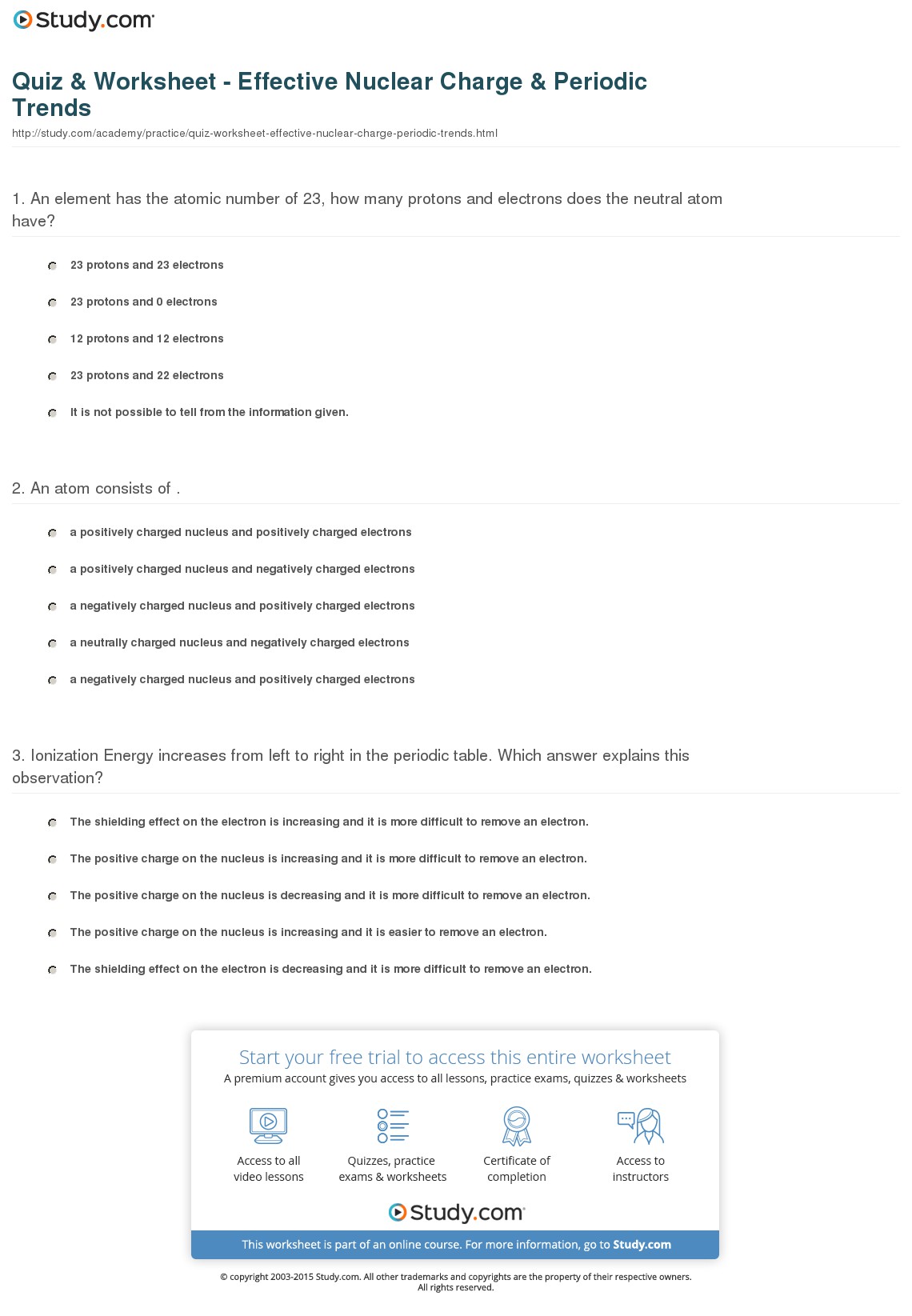
Periodic Trends Practice Worksheets Answers
www.housview.com
Periodic Table Trends Worksheet Answers – Printable Word Searches

davida.davivienda.com
Periodic Trends Worksheet Answer Key – Pro Worksheet

www.proworksheet.my.id
Periodic Trends Worksheet – Name Period Date Tuesday, November 1

worksheets.clipart-library.com
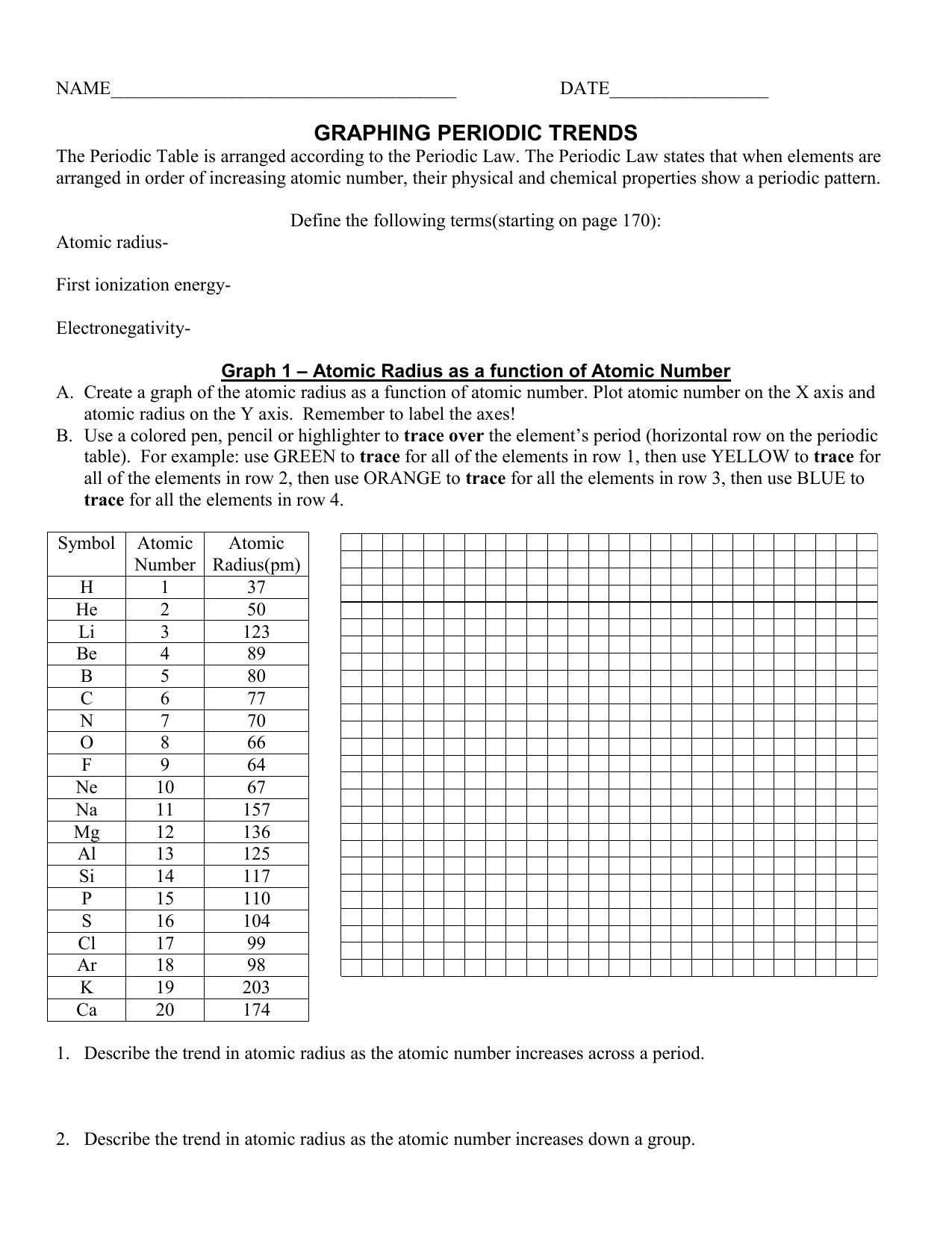
Worksheet On Periodic Trends With Answers Worksheet Periodic
poslanjuwrmdblearning.z14.web.core.windows.net
Chemical Periodicity Worksheet Periodicity Definition In Che

birkilaufmhbdblearning.z21.web.core.windows.net
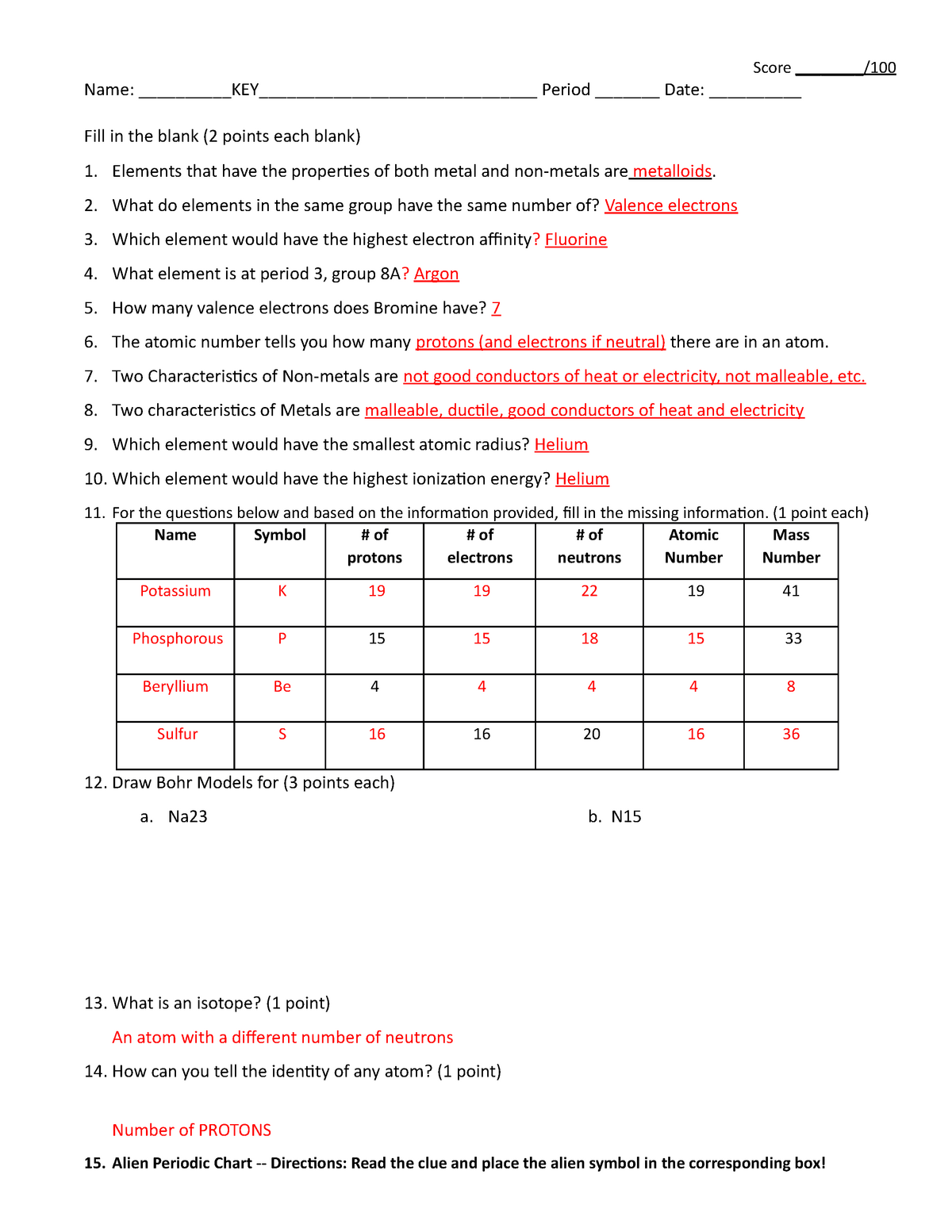
Periodic Trends Practice Worksheet Answers – E-streetlight.com
www.e-streetlight.com
Periodic Table Questions And Answers – Worksheets Library

worksheets.clipart-library.com
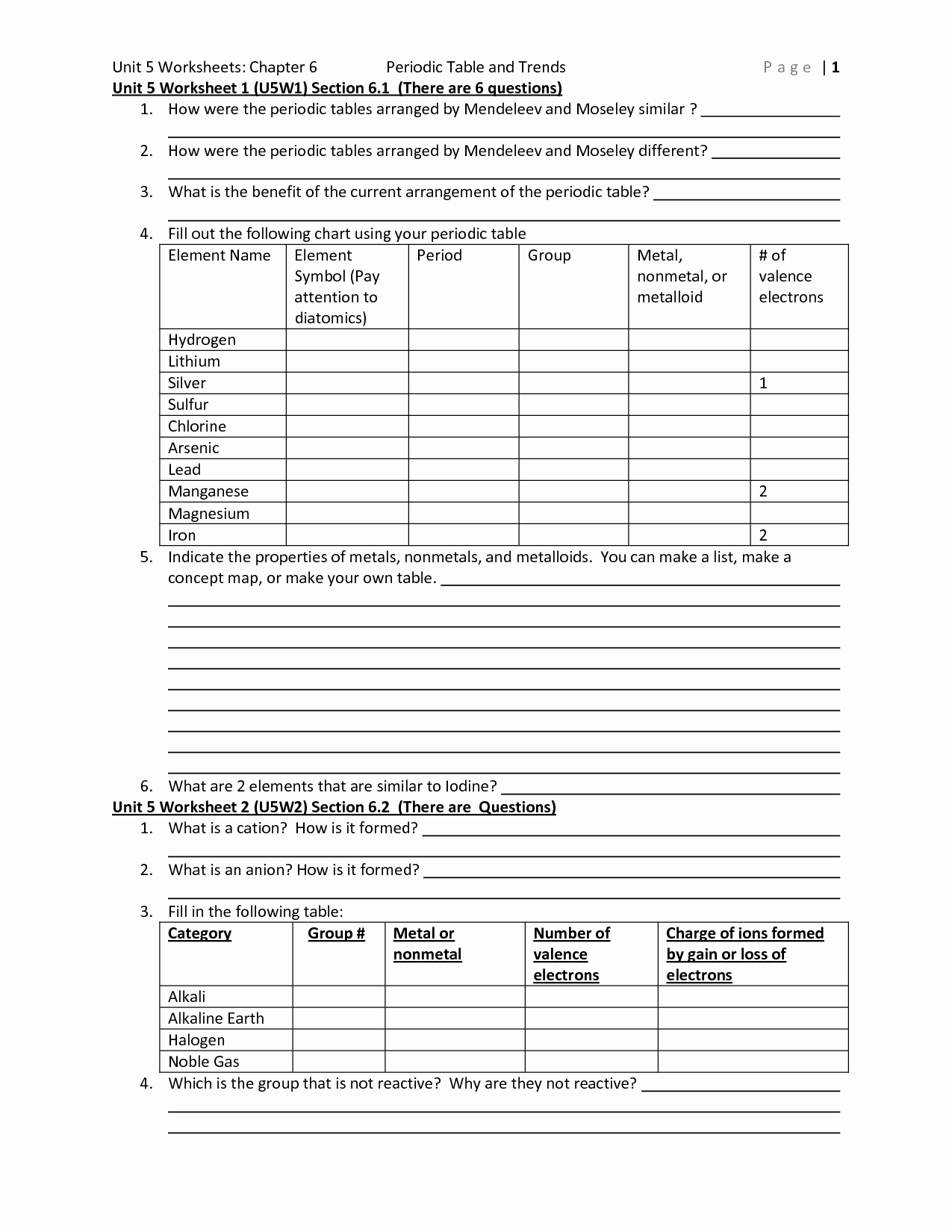
Periodic Trends Practice Worksheet
learningzonetegardi9o.z21.web.core.windows.net
SOLUTION: Chemistry Periodic Table Answer Key Wksht Answers

worksheets.clipart-library.com
Periodic Trends Worksheet Answers

materialmagicyuliana55.s3-website-us-east-1.amazonaws.com
Periodic Trends Answer Key Pdf

learningzonetegardi9o.z21.web.core.windows.net
Free Periodic Trends Worksheet Answers For Students – Worksheets Library

worksheets.clipart-library.com
Periodic Trends Worksheet With Answers – Printable Word Searches
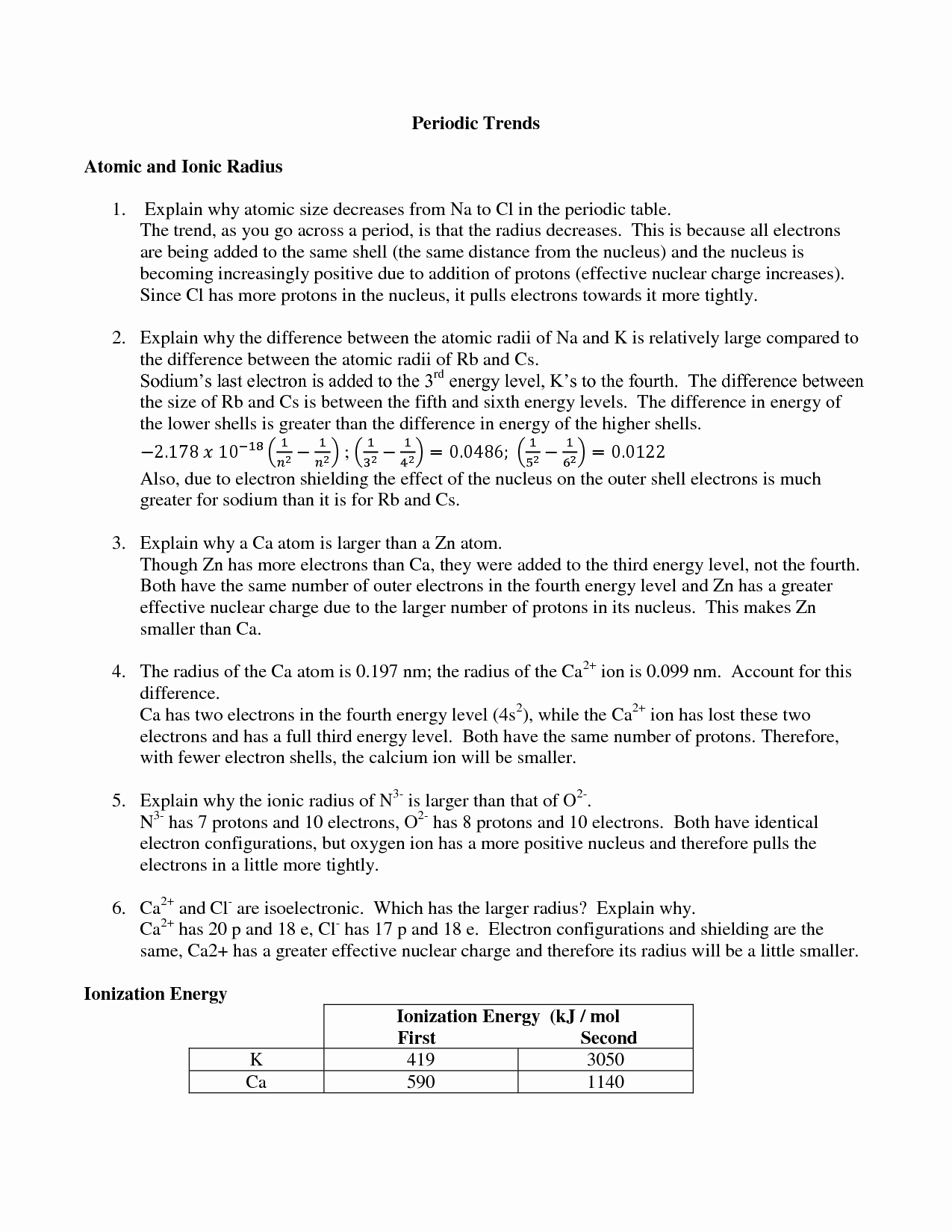
davida.davivienda.com
Periodic Table Trends Answer Sheet
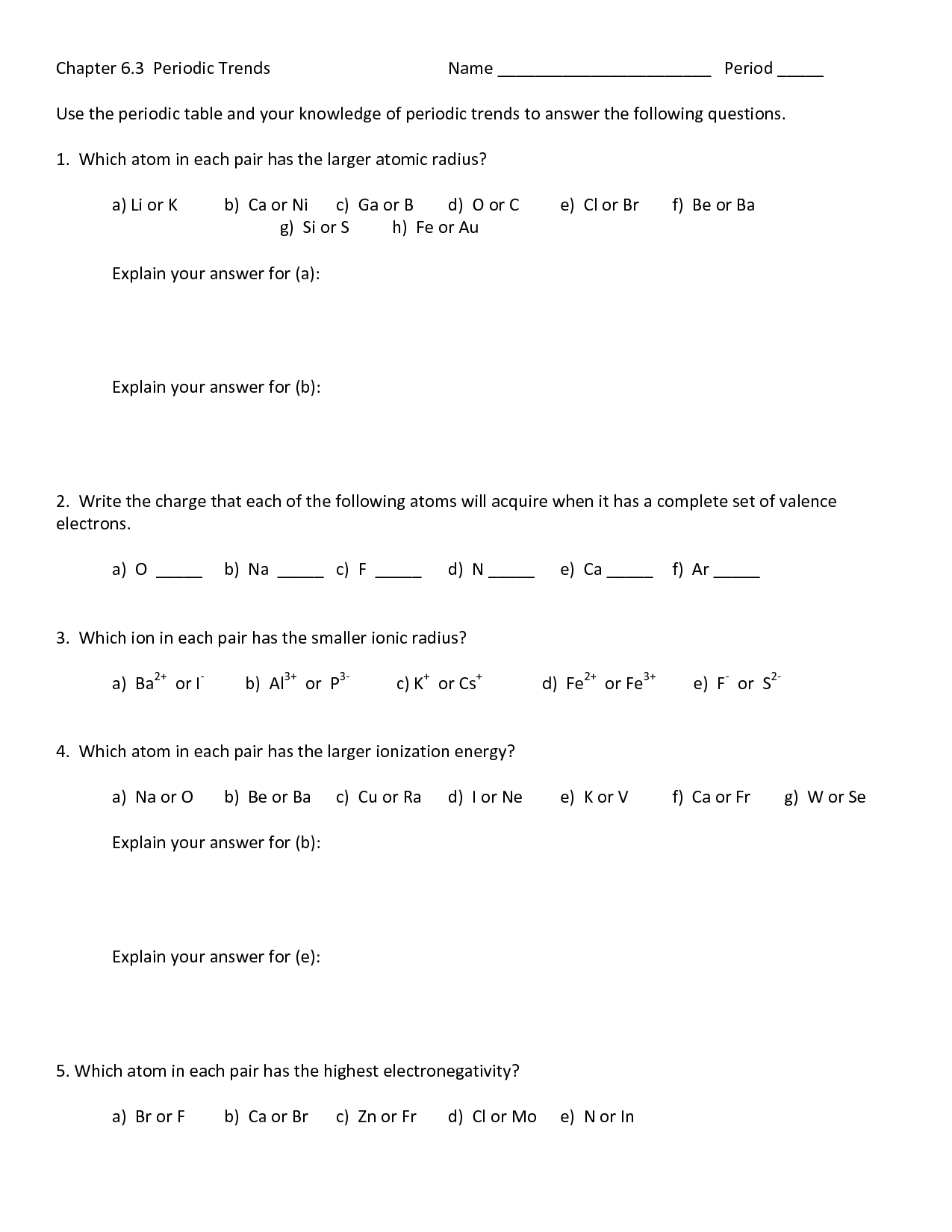
learningravnihym.z21.web.core.windows.net
Periodic Trends Worksheet – Atomic Radius Which Atom In Each Pair Has

www.studocu.com
Periodic Table Trends Worksheet Answers – Printable Word Searches

davida.davivienda.com
Periodic Table Puzzle Worksheet Answers Best Of Periodic Table Of

www.pinterest.co.kr
Worksheet Periodic Trends Answers Worksheet For Education – Artofit

www.artofit.org
Periodic Table Worksheet Answers – Pro Worksheet
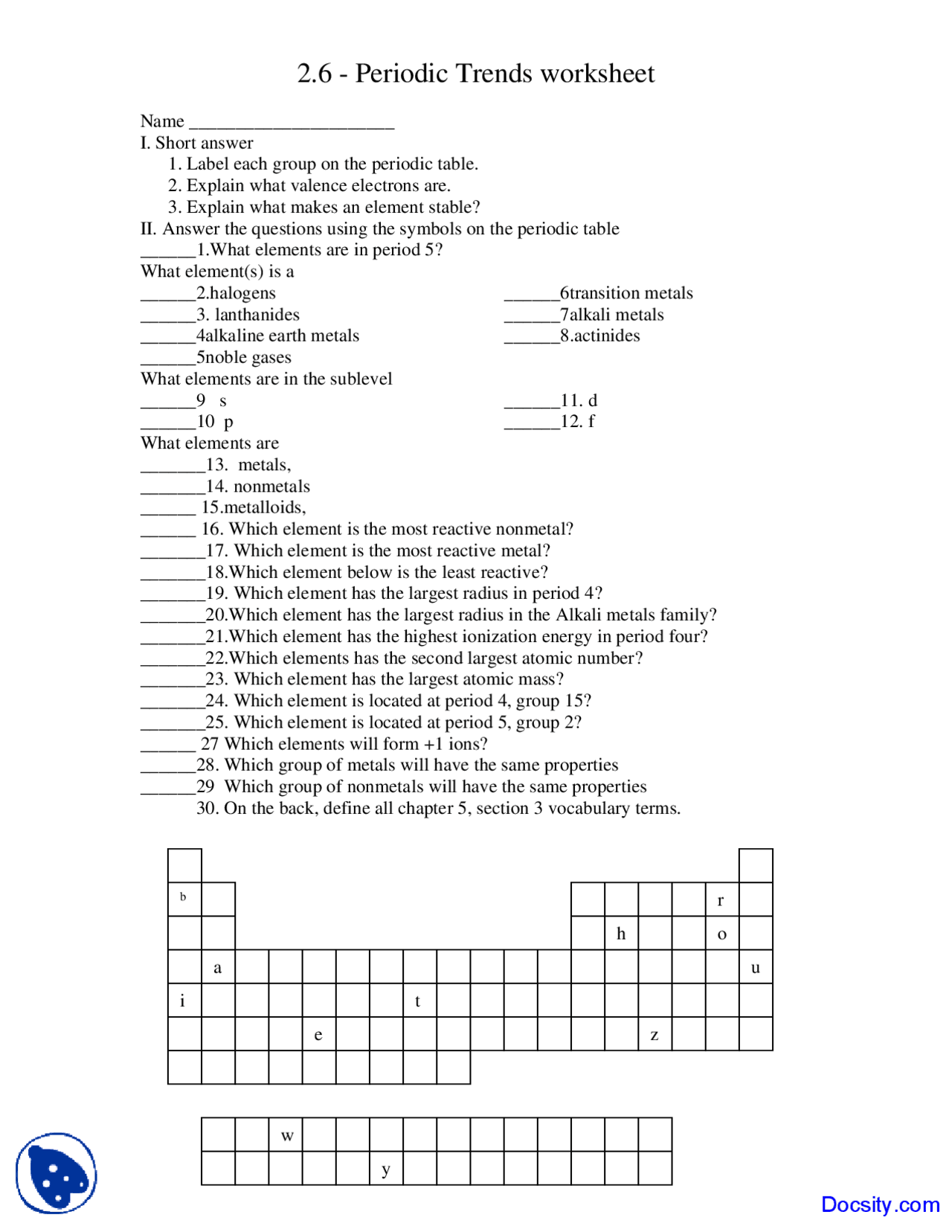
www.proworksheet.my.id
Worksheet periodic trends answers worksheet for education – artofit. Chemical periodicity worksheet periodicity definition in che. periodic trends worksheet answers